Gym Equipment Names: The Complete 2026 List & Guide
Walking into a gym for the first time can feel like stepping into a foreign country where everyone speaks a language you don’t understand. That confusion usually starts with one thing: gym equipment names.
Between treadmills, lat pulldowns, Smith machines, and power cages, it’s easy to feel lost – especially when different gyms sometimes use different terms for the same machine. This guide clears up that confusion completely.
Here’s the direct answer: gym equipment generally falls into five main categories – cardio machines, strength machines, free weights, functional training tools, and accessories – each designed to serve a specific fitness goal. Below, you’ll find clear names, uses, and explanations for every major piece of equipment you’ll encounter, whether you’re training at a commercial gym or building a home setup.
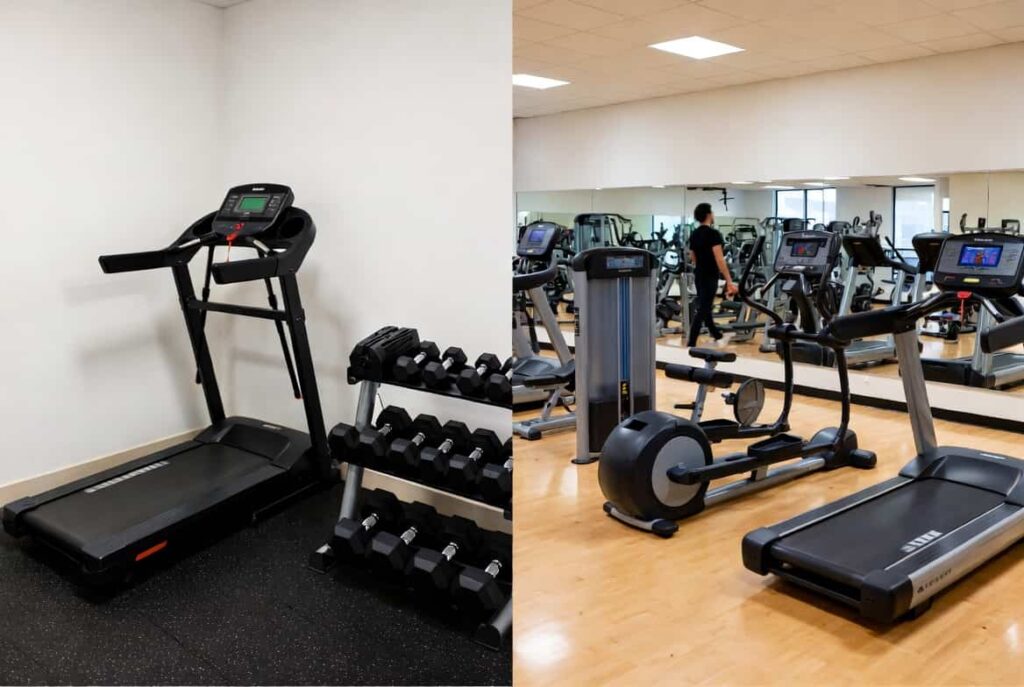
see visual examples of gym equipment
What Are Gym Equipment Names?
Gym equipment names refer to the specific terms used to identify the machines, tools, and accessories found in fitness facilities. The confusion around these names usually comes from one simple fact: the fitness industry doesn’t have a single universal naming standard, so the same piece of equipment can go by two or three different names depending on the gym, the brand, or the region.
A few examples of this naming overlap:
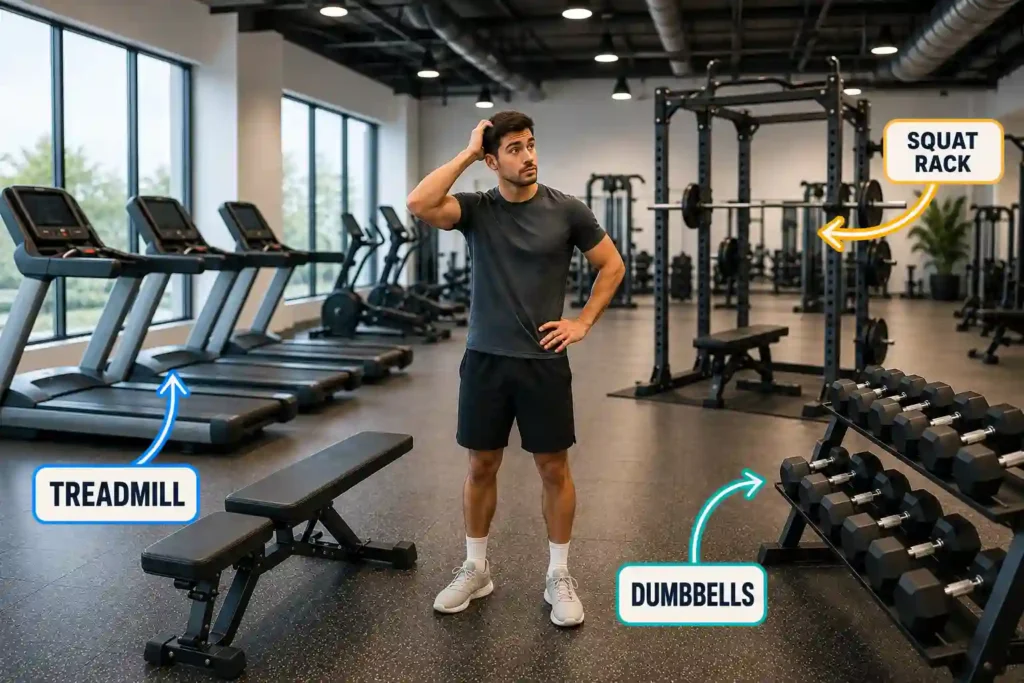
- A “squat rack” is sometimes called a “power cage” or “power rack,” depending on whether it has 4 posts or 6
- An “elliptical” is sometimes labeled a “cross-trainer,” especially outside the US
- A “stationary bike” might be called an “exercise bike” or “spin bike” depending on its design
Understanding gym equipment names becomes much easier once you stop thinking of them as individual items and start thinking of them by category – what muscle group or fitness goal each one serves. Most fitness centers organize their floor layout this way too, grouping cardio machines together, strength machines together, and free weights in their own section.
This categorization approach is exactly how we’ll break down the rest of this guide – starting broad with the five major equipment types, then drilling into specific names within each one.
Types of Gym Equipment (Category Overview)
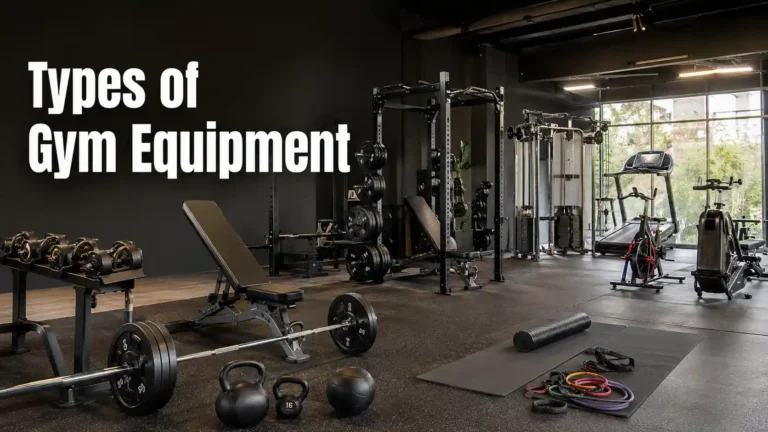
Before diving into individual machine names, it helps to understand the five major categories that nearly all gym equipment falls into. Every fitness facility, whether a large commercial gym or a small home setup, builds its equipment selection around these core types.
The five main types of gym equipment are:
- Cardio Equipment – machines that raise your heart rate and build cardiovascular endurance (treadmills, ellipticals, bikes)
- Strength/Selectorized Machines – guided resistance machines using weight stacks for controlled, beginner-friendly training (leg press, lat pulldown)
- Free Weights – traditional, unguided resistance tools that build functional strength (dumbbells, barbells, kettlebells)
- Functional & Calisthenics Equipment – tools for bodyweight training, mobility, and athletic performance (pull-up bars, battle ropes, sleds)
- Racks, Benches & Accessories – supporting structures and small equipment that enable other exercises (power racks, adjustable benches, resistance bands)
Each category serves a distinct training purpose, and most well-rounded workout routines pull from at least three of these five types. Beginners typically start with strength machines and free weights, since these directly build the foundational strength needed before progressing to more advanced functional training tools.
Understanding this five-category structure is the fastest way to navigate any gym floor with confidence, since nearly every machine you encounter fits neatly into one of these groups.
Cardio Equipment Names
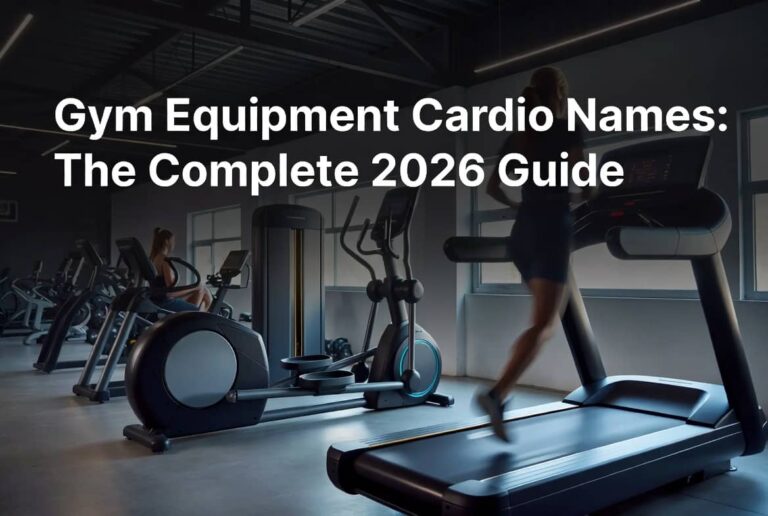
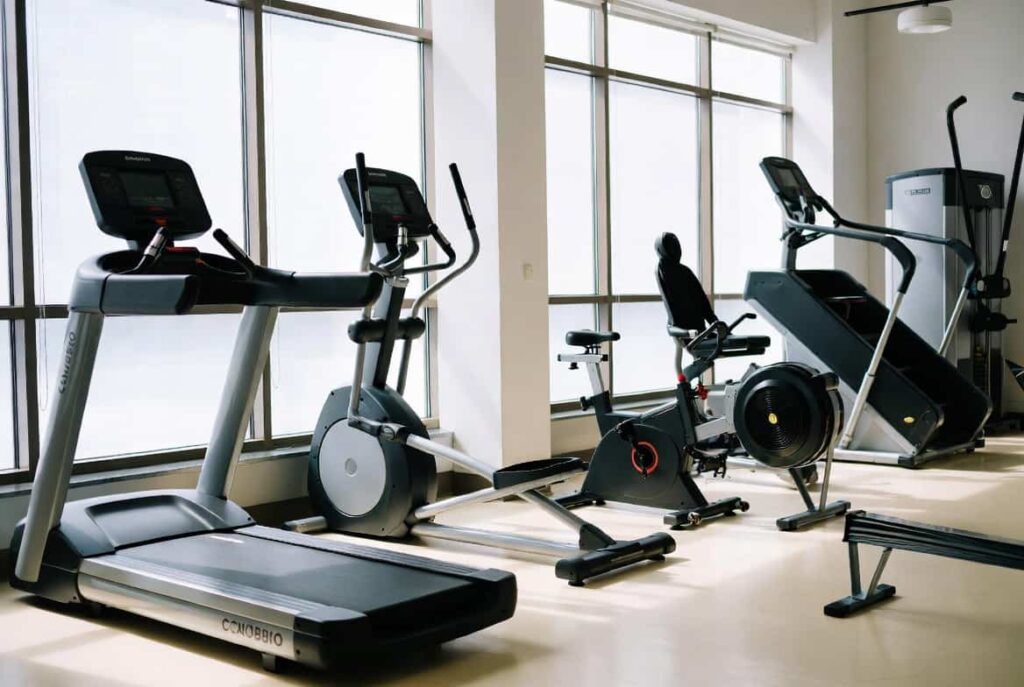
Cardio equipment builds cardiovascular endurance and burns calories, and it’s usually the first section people see when walking into a gym. Here are the core cardio equipment names you’ll encounter:
- Treadmill – allows walking, jogging, or running indoors with adjustable speed and incline
- Elliptical Trainer (sometimes called a cross-trainer) – a low-impact machine that engages both upper and lower body simultaneously
- Stationary Bike – available in upright or recumbent styles, focused on legs and cardiovascular endurance
- Rowing Machine – simulates watercraft rowing for a full-body cardio workout engaging legs, core, back, and arms
- Stair Climber (Stair Stepper) – simulates climbing stairs for an intense lower-body and cardio workout
- Arc Trainer – a hybrid between an elliptical and stepper, offering a unique stride path with less joint impact
A quick answer for anyone wondering what to call the running machine at the gym: it’s simply called a treadmill, though older or informal references sometimes call it a “running machine.”
Each cardio machine offers a different impact level, which matters for injury prevention. Treadmills and stair climbers are higher-impact, while ellipticals and recumbent bikes are considered low-impact options, making them popular choices for beginners, seniors, or anyone recovering from joint issues.
Strength & Selectorized Machine Names
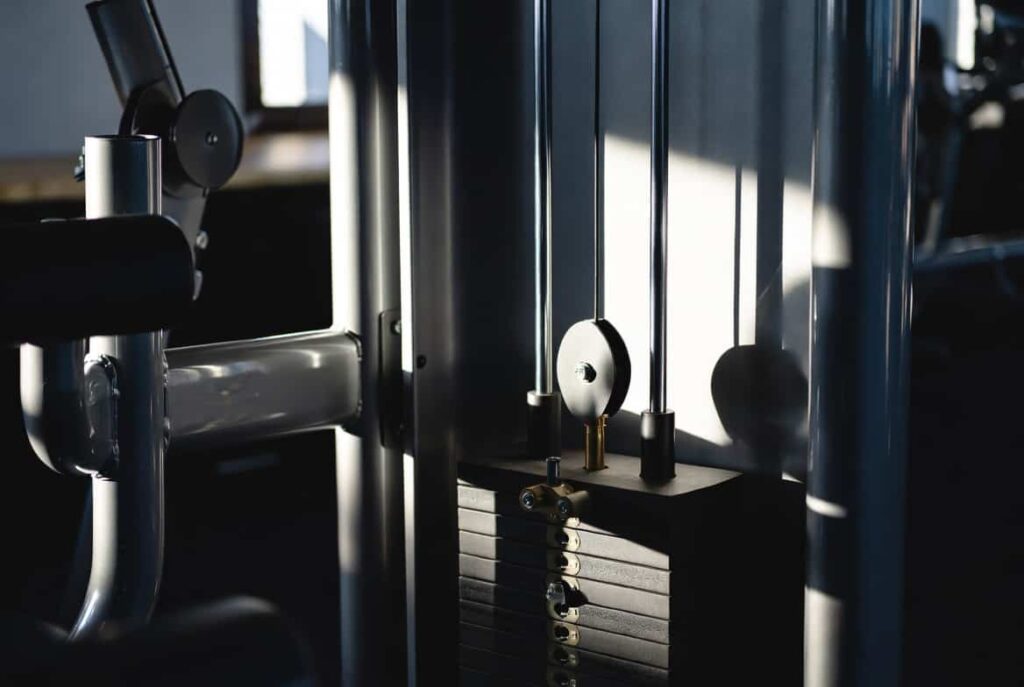
Selectorized strength machines use a weight stack with a pin, letting you change resistance instantly without loading plates manually. These machines are especially beginner-friendly since they guide your movement pattern and reduce injury risk.
Common strength machine names you’ll find in most gyms:
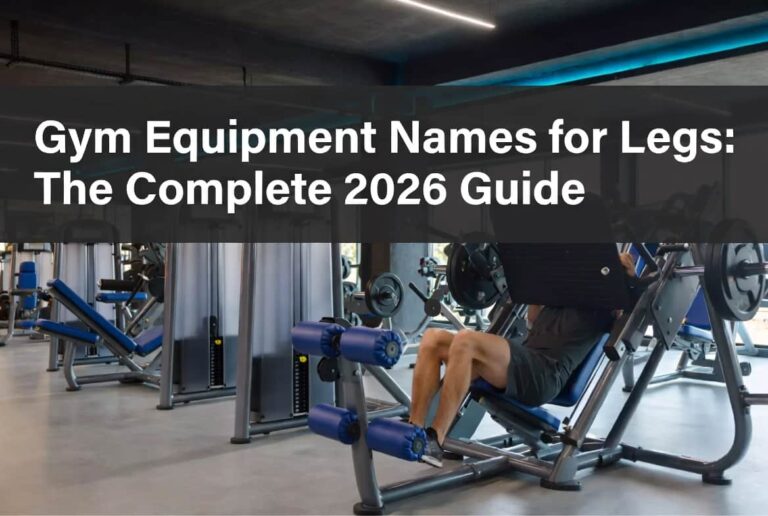
- Leg Press Machine – seated position, pushing a weight stack upward to train the entire lower body without needing a spotter
- Chest Press Machine – targets the pectorals, shoulders, and triceps through a guided pressing motion
- Lat Pulldown Machine – works the upper back and shoulders, ideal for both beginners and advanced lifters
- Leg Curl Machine – targets the hamstrings by curling the legs against resistance
- Leg Extension Machine – isolates the quadriceps through a controlled extending motion
- Shoulder Press Machine – builds shoulder strength through a guided vertical press
- Cable Crossover Machine – a versatile station using adjustable cables for a wide variety of upper body exercises
The direct answer to “what is the machine called that works your legs”: there are actually several – the leg press, leg curl, and leg extension machines each target different parts of the legs (quads, hamstrings, and glutes respectively), so the right one depends on which muscle group you’re focusing on.
Selectorized machines are generally recommended for beginners, seniors, or anyone recovering from injury, since they reduce the risk of improper form compared to free weights.
Free Weight Equipment Names
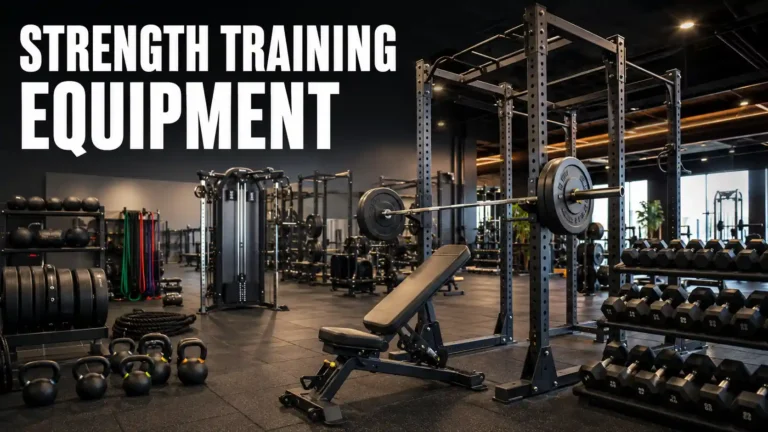
Free weights are unguided resistance tools that require your body to control balance and movement, making them essential for building functional, real-world strength. Unlike machines, they work stabilizer muscles in addition to the primary target muscle.
Common free weight names every gym-goer should recognize:
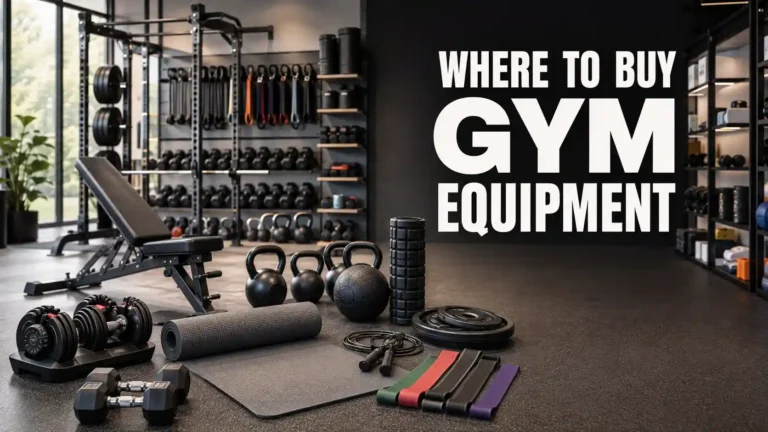
- Dumbbells – handheld weights with a handle connecting two heads, available in fixed or adjustable versions; used for bicep curls, shoulder presses, and countless other exercises
- Barbells – long bars used for compound exercises like squats, bench presses, and deadlifts, training the full body
- Weight Plates – added to barbells for progressive resistance, available in Olympic and standard sizes
- Kettlebells – bell-shaped free weights popular for swings and explosive, functional movements
- Adjustable Dumbbells – combine multiple weight increments into one compact unit, ideal for home gyms with limited space
A quick note on terminology: when people ask about “free weights definition” or “what is free weight,” the simple answer is any resistance equipment that isn’t fixed to a machine or guided track – meaning your body controls the full range of motion and stabilization.
Free weights are considered the foundation of muscle building for a reason: they activate more stabilizer muscles than machines, translating more directly into real-world strength and balance.
Functional & Calisthenics Equipment Names
Functional training equipment builds real-world strength, balance, and coordination rather than isolating a single muscle. This category has grown significantly in popularity alongside the rise of HIIT and athletic-style training.
Key functional equipment names to know:
- Pull-Up Bar – a bar mounted in a doorway, wall, or power rack, used for pull-ups and chin-ups targeting the lats, biceps, and core
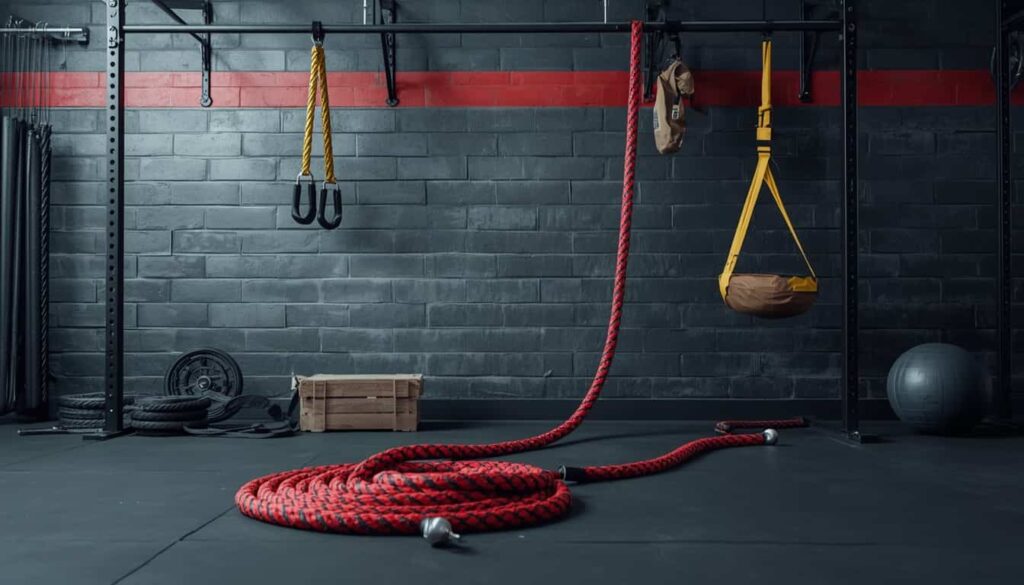
- Battle Ropes – heavy ropes anchored to a fixed point, used for intense full-body cardio and grip strength training
- Weighted Sled – a sled pushed or pulled for strength and conditioning work, popular in athletic training programs
- Plyo Box – a box used for jumping, step-ups, and explosive power training, available in wood, foam, or stackable designs
- TRX Suspension Trainer – a strap-based system anchored to a door, ceiling, or rig, used for full-body bodyweight movements
- Medicine Ball – a weighted ball used for slams, throws, and rotational power exercises
- Parallel Bars – used for triceps dips, chest dips, or advanced calisthenics moves like L-sits
Functional training tools are particularly valuable for personal training studios and smaller gyms, since a handful of these tools can support dozens of exercise variations without needing a large equipment footprint.
Most functional equipment also doubles as excellent conditioning tools – battle ropes and sleds, for example, combine strength and cardiovascular training in a single movement, making them efficient options for time-limited workouts.
Racks, Benches & Accessories
Racks, benches, and accessories don’t get the same attention as cardio or strength machines, but they’re essential supporting equipment that enables many of the exercises performed with free weights.
Common gym accessories names and structural equipment:
- Power Rack (Power Cage) – a four-post (or larger 6-post) structure used for squats, bench presses, and other barbell movements, offering built-in safety catches
- Squat Rack – similar to a power rack but sometimes limited to two vertical posts, designed specifically for barbell squats
- Smith Machine – a barbell fixed within steel rails, allowing controlled, guided movement for squats, bench presses, and lunges
- Adjustable Bench – a padded seat and backrest with flat, incline, and decline positions, used for bench presses, dumbbell rows, and core work
- Resistance Bands – elastic bands used for strength training and physical therapy, offering tension without heavy weights
- Dip Station – a stand with parallel handles used for triceps and chest dips
A quick clarification many beginners ask about: the difference between a squat rack and a power cage comes down to structure – a power cage (or power rack) typically has 4 or more posts forming a full cage with safety bars on multiple sides, while a squat rack often has just 2 vertical posts, offering less built-in safety support.
These supporting pieces of equipment are often what separates a basic gym floor from a fully functional one, since barbells and free weights need proper racks and benches to be used safely and effectively. arm workout equipment names
Complete Gym Equipment List (Quick-Reference Format)
For a fast, scannable reference, here’s the complete gym equipment list covering every category discussed so far, organized for quick lookup:
Cardio: Treadmill, Elliptical Trainer, Stationary Bike (upright/recumbent), Rowing Machine, Stair Climber, Arc Trainer
Strength Machines: Leg Press, Chest Press, Lat Pulldown, Leg Curl, Leg Extension, Shoulder Press, Cable Crossover, Hack Squat Machine
Free Weights: Dumbbells, Barbells, Weight Plates, Kettlebells, Adjustable Dumbbells
Functional/Calisthenics: Pull-Up Bar, Battle Ropes, Weighted Sled, Plyo Box, TRX Suspension Trainer, Medicine Ball, Parallel Bars
Racks, Benches & Accessories: Power Rack, Squat Rack, Smith Machine, Adjustable Bench, Resistance Bands, Dip Station
This list covers the equipment you’ll find in the vast majority of commercial gyms, home setups, and personal training studios. While specialty facilities (like powerlifting gyms or CrossFit boxes) may include additional niche equipment, these core categories represent roughly 90% of what you’ll encounter during a typical gym visit.
For anyone building a home gym on a budget, prioritizing items from the free weights and racks/benches categories typically delivers the most training versatility per dollar spent, since a single adjustable bench combined with dumbbells and a power rack can support dozens of different exercises.
Gym Equipment Names by Muscle Group
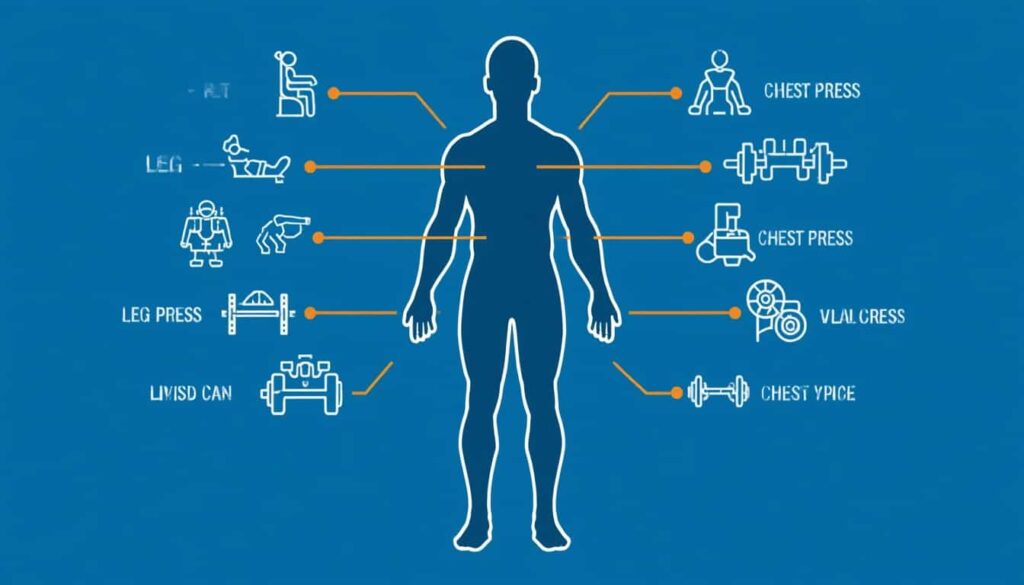
Organizing gym equipment names by the muscle group they target is one of the most practical ways to plan a balanced workout routine, since it lets you quickly identify which machines to use for specific training goals.
Legs (Quads, Hamstrings, Glutes):
- Leg press, leg curl, leg extension, hack squat machine, Smith machine
Chest:
- Chest press machine, bench press (with barbell/rack), cable crossover
Back:
- Lat pulldown, seated row, pull-up bar
Shoulders:
- Shoulder press machine, dumbbells (for lateral raises)
Arms (Biceps/Triceps):
- Dumbbells, cable crossover (for curls and pushdowns), dip station, barbell
Core:
- Medicine ball, parallel bars (for hanging leg raises), resistance bands
Full Body:
- Rowing machine, TRX suspension trainer, battle ropes, weighted sled
This muscle-group breakdown answers one of the most common beginner questions directly: which equipment is best for a full-body workout. The rowing machine stands out here since it simultaneously trains the legs, core, back, and arms in a single continuous movement, making it one of the most time-efficient pieces of equipment in any gym.
For beginners building a weekly routine, a good starting structure covers at least one machine from the legs, chest, back, and core categories, rotating through the full list over 2-3 sessions per week rather than trying to hit every muscle group in a single workout.
Commonly Confused Gym Equipment Names
Some of the most frequent confusion in gyms comes down to equipment that looks similar or shares overlapping names. Clearing these up directly helps you navigate any gym floor with more confidence.
Squat Rack vs. Power Cage: As covered earlier, a squat rack typically has 2 vertical posts, while a power cage (or power rack) has 4 or more posts forming a full enclosure with safety catches on multiple sides. Both are used for barbell squats, but the power cage offers more built-in safety.
Elliptical vs. Cross-Trainer: These are actually the same machine – “cross-trainer” is simply the more common term used outside the US, particularly in the UK and Europe, while “elliptical” is the standard US term.
Stationary Bike vs. Spin Bike: A stationary bike is a general term covering upright and recumbent styles used for steady-state cardio, while a spin bike specifically refers to a bike designed for high-intensity indoor cycling classes, typically with a heavier flywheel and no back support.
Smith Machine vs. Power Rack: These are often mistaken for each other since both involve a barbell and vertical posts. The key difference: a Smith machine’s barbell is fixed within steel rails, moving only vertically, while a power rack’s barbell is completely free, offering natural, unrestricted movement.
Rowing Machine vs. Rower: These terms are interchangeable – “rower” is simply the shortened, informal version of “rowing machine.”
Getting comfortable with these distinctions removes most of the naming confusion that trips up beginners during their first few gym visits.
How to Read Gym Equipment for Beginners
Once you know the names, the next challenge is actually using unfamiliar equipment confidently and safely. Most modern gyms are designed to make this easier than it looks at first glance.
A few practical strategies for navigating gym equipment as a beginner:
- Use the instructional diagrams. Nearly every machine includes a sticker or plate showing proper form, seat adjustments, and the muscles it targets – these diagrams exist specifically to help first-time users.
- Start with lighter weight and fewer reps. Focus on learning the correct movement pattern before adding resistance; form matters more than weight when you’re new to a machine.
- Adjust the machine to your body first. Seat height and positioning should match your height and limb length – most machines have adjustable settings for exactly this reason.
- Ask gym staff or a trainer. Nearly all gyms expect beginners to ask questions, and staff are typically happy to demonstrate proper machine setup and usage.
- Group equipment by category mentally, using the same five-category system covered earlier in this guide (cardio, strength machines, free weights, functional tools, accessories) to reduce the “what does this do” overwhelm.
A direct answer to one of the most common beginner questions – what gym equipment should a beginner start with – is simple: dumbbells, resistance bands, and an adjustable bench. These three items alone support a huge range of beginner-friendly strength exercises without requiring machine-specific knowledge.
Confidence with gym equipment comes from repetition, not memorization – most people naturally learn machine names and functions within their first few weeks of consistent gym visits.
Home Gym vs Commercial Gym Equipment Names
The equipment names themselves generally stay the same between home and commercial settings, but the scale, brand terminology, and typical selection often differ in ways worth understanding.
Key differences to know:
- Compact and foldable versions. Home gyms often use space-saving variants of commercial equipment – foldable treadmills, compact ellipticals, and adjustable dumbbells that combine multiple weights into one unit – while commercial gyms typically stock full-size, fixed equipment.
- All-in-one combination units. Home setups frequently rely on multi-function equipment (like an all-in-one trainer combining a Smith machine, power rack, and lat pulldown) to save space, whereas commercial gyms usually have separate, single-purpose machines for each function.
- Brand naming conventions. Some equipment names shift slightly by brand – what one manufacturer calls a “functional trainer,” another might call a “cable station” or “jungle gym,” even though the equipment serves the same purpose.
- Smart/connected equipment. Home gyms increasingly include connected fitness equipment (workout mirrors, app-integrated bikes) that’s less common in traditional commercial gym floors, where equipment tends to be more straightforward and mechanical.
For anyone building a home gym, prioritizing versatile, multi-functional equipment first – like an adjustable bench, a set of adjustable dumbbells, and resistance bands – typically delivers more training variety per square foot than trying to replicate a full commercial equipment lineup at home.
Regardless of setting, the core equipment names and categories covered throughout this guide remain consistent – once you understand them, you’ll recognize the same machines whether you’re at a large commercial gym or a compact home setup.
Frequently Asked Questions
What are the basic names of gym equipment?
The basics include dumbbells, barbells, a treadmill, an adjustable bench, and resistance bands. These five items alone support most beginner strength and cardio routines, covering the foundational categories: free weights, cardio, and accessories.
What is the difference between a squat rack and a power cage?
A squat rack typically has 2 vertical posts designed specifically for barbell squats, while a power cage (or power rack) has 4 or more posts forming a full enclosure with built-in safety catches, offering more protection during heavy lifts.
What do you call the running machine at the gym?
It’s called a treadmill. This is the standard term used across gyms in the US and internationally, allowing users to walk, jog, or run indoors with adjustable speed and incline settings.
What are the 5 main types of gym equipment?
The five main types are cardio equipment, strength/selectorized machines, free weights, functional/calisthenics equipment, and racks/benches/accessories. Nearly every machine in a gym fits into one of these five categories.
What is the machine called that works your legs?
Several machines target the legs specifically: the leg press works the full lower body, the leg curl targets the hamstrings, and the leg extension isolates the quadriceps. The right choice depends on which muscle group you want to focus on.
What is a Smith machine used for?
A Smith machine is a barbell fixed within steel rails, used for squats, bench presses, and lunges. It provides guided, controlled movement, making it a safer option for beginners lifting without a spotter.
What gym equipment should a beginner start with?
Beginners should start with dumbbells, resistance bands, and an adjustable bench. These versatile tools support a wide variety of strength exercises without requiring machine-specific knowledge, making them ideal for building foundational confidence.
What’s the difference between an elliptical and a cross-trainer?
There’s no real difference – they’re the same machine. “Elliptical” is the common US term, while “cross-trainer” is more frequently used in the UK and Europe to describe the identical low-impact cardio machine.
What is the machine that simulates rowing called?
It’s called a rowing machine, or simply a “rower.” This machine simulates watercraft rowing, providing a full-body cardio workout that engages the legs, core, back, and arms simultaneously.
What equipment is best for a full-body workout?
The rowing machine is one of the most efficient choices, since it trains the legs, core, back, and arms in a single continuous movement. TRX suspension trainers and battle ropes also offer strong full-body training options.
Conclusion
Understanding gym equipment names doesn’t require memorizing an overwhelming list all at once – it just takes recognizing the five core categories (cardio, strength machines, free weights, functional training, and accessories) that nearly every machine falls into. Once that framework clicks, unfamiliar equipment stops feeling intimidating and starts feeling like just another tool with a clear purpose.
Whether you’re building a home gym, training at a commercial facility, or working with a personal trainer at a boutique studio, the same core equipment names apply across nearly every setting. As fitness trends continue evolving through 2026, with more connected and multi-functional equipment entering both home and commercial spaces, having a solid grasp of these fundamentals will only make navigating new gym floors easier.