12 Best Fitness Equipment Brands to Know in 2026
Buying fitness equipment feels overwhelming when every brand claims to be the best. You spend money, only to end up with a squeaky treadmill or a bike that gathers dust in the corner. The truth is, most equipment problems trace back to one decision: picking the wrong brand.
The best fitness equipment brands combine solid engineering, real warranty backing, and a track record of standing behind their products. Brands like Rogue Fitness, Life Fitness, and Technogym didn’t earn their reputations overnight. They built trust through consistent quality across thousands of gyms and homes.
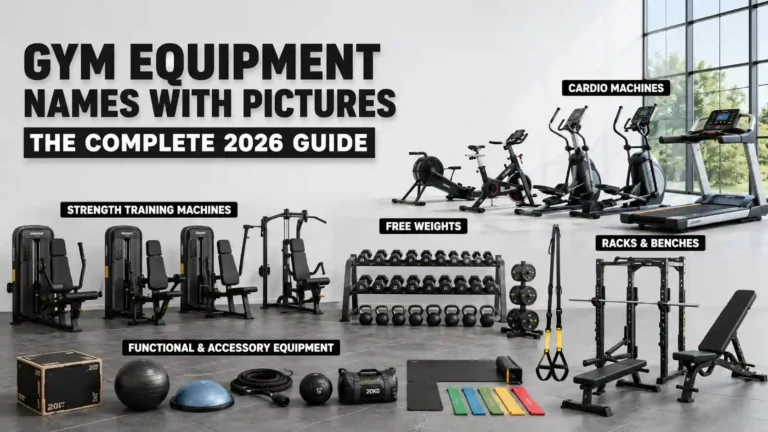
This guide breaks down the top fitness equipment brands for 2026, how to evaluate them, and which one fits your goals, budget, and space. For a broader look at every machine type you’ll encounter, see our complete gym equipment guide. You’ll walk away knowing exactly what separates a smart purchase from a costly mistake.
Table of Contents
What Makes a Fitness Equipment Brand Trustworthy
A trustworthy fitness equipment brand backs its products with real warranty coverage, uses certified materials, and has a documented history of durability. Anyone can slap a logo on a treadmill. Few brands survive a decade of gyms putting their equipment through daily abuse.
Look for these markers before trusting a brand with your money:
- Warranty length and scope: Frames often carry lifetime coverage, but motors, electronics, and parts usually get shorter terms. Read the fine print.
- Certifications: NSF and UL certifications signal that equipment met independent safety and performance testing, not just marketing claims.
- Commercial use history: Brands used in actual gyms, not just sold online, tend to hold up better under real world stress.
- Customer support responsiveness: A brand’s replacement parts policy matters more once your equipment is three years old.
Rogue Fitness, for example, built its reputation supplying CrossFit gyms worldwide, which forced its equipment to survive constant, heavy use. That’s a stronger trust signal than a five star review count alone.
How to Evaluate Fitness Equipment Before You Buy
Before comparing brands, figure out how and where you’ll actually use the equipment. Skipping this step is the top reason people regret their purchase.
Start with these questions:
- Home or commercial use? Home gym equipment isn’t built for eight hours of daily use. Commercial grade machines cost more but survive heavier traffic.
- What’s your available space? Measure your area first. A power rack that looks compact online can dominate a small room.
- What’s your budget ceiling? Set a realistic number, then compare brands within that range rather than chasing the cheapest option.
- How much noise is acceptable? Apartment dwellers should prioritize belt driven treadmills and quieter resistance mechanisms over motorized machines.
- What’s your maintenance tolerance? Some equipment needs regular lubrication, belt adjustments, or part replacements. Others are close to maintenance free.
A simple example: someone buying a treadmill for occasional walking doesn’t need the same motor horsepower as a runner training for a marathon. Matching equipment specs to actual use prevents overspending and underdelivering. If you’re starting from scratch, our home gym equipment buyer’s guide walks through this in more depth.
Best Overall Fitness Equipment Brands
The fitness equipment market includes dozens of brands, but a handful consistently rank as the most reliable across categories.
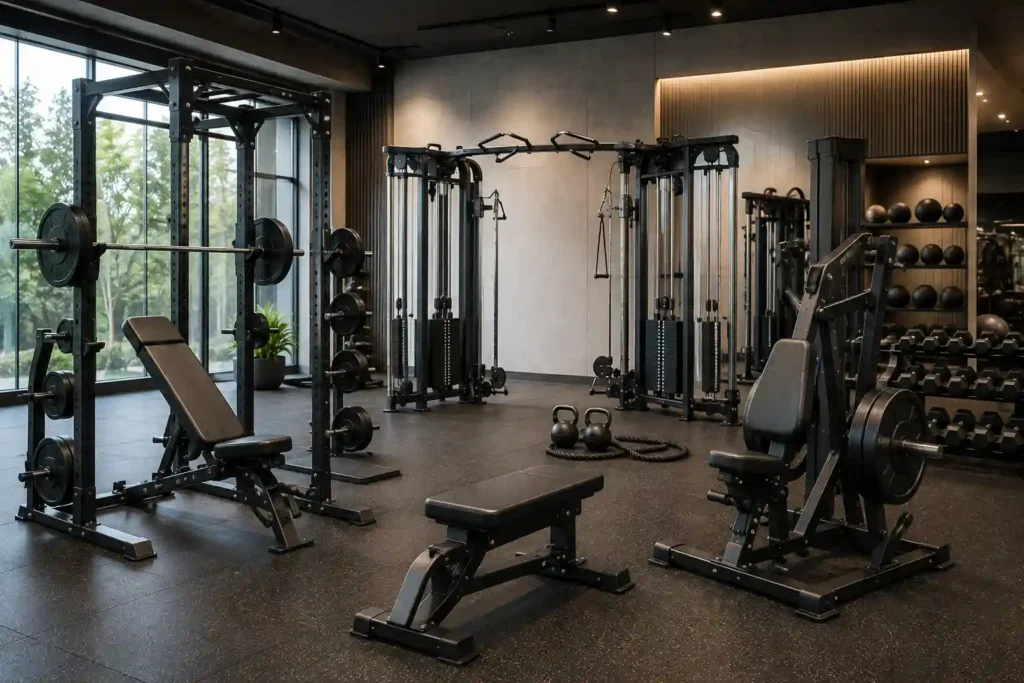
Rogue Fitness built its name on rugged strength equipment, particularly power racks, barbells, and plates. It’s the go to choice for CrossFit boxes and serious home gyms.
Life Fitness dominates the commercial cardio and strength space. Most hotel gyms and large fitness centers run Life Fitness treadmills and ellipticals.
Technogym is an Italian brand known for premium design and advanced connected features. It’s a favorite among luxury gyms and hotel chains.
Precor specializes in commercial grade cardio machines with a strong reputation for smooth, quiet operation.
Hammer Strength focuses on plate loaded strength machines built for serious lifters and commercial gyms.
Bowflex targets the home fitness market with compact, multi function strength and cardio machines.
NordicTrack offers a wide range of home cardio equipment, often paired with the iFit training platform for guided workouts.
Peloton popularized connected fitness, combining hardware with live and on demand class streaming.
Each brand serves a different niche, so the best overall pick depends on whether you’re outfitting a home gym, a commercial facility, or something in between.
Best Cardio Equipment Brands
Cardio equipment demands different engineering than strength machines, since motors, belts, and electronics take on more wear. A few brands stand out specifically in this category.
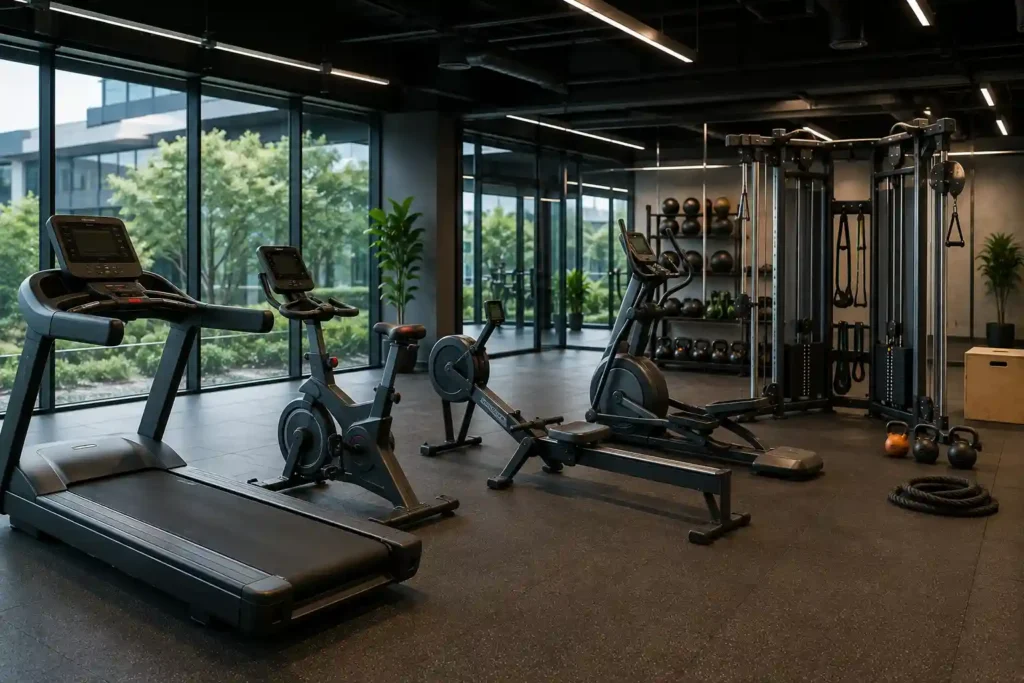
Concept2 is the standard for rowing machines. Nearly every CrossFit gym and rowing club uses its Model D or RowErg, prized for durability and consistent performance data.
Sole Fitness makes commercial grade treadmills and ellipticals at more accessible price points than Life Fitness or Precor, making it popular for serious home users.
NordicTrack leads in incline training and interactive treadmills, especially for runners who want varied terrain simulation without leaving home.
Peloton remains the top choice for stationary bikes with a strong class based community, though its equipment carries a higher price tag and requires a subscription for full features.
Schwinn offers reliable, budget friendly exercise bikes that balance quality with affordability, making it a solid entry point for beginners. For a full rundown of machine types in this category, check our cardio equipment names guide.
For most home users, treadmill motor size, belt cushioning, and console durability matter more than brand name alone. Commercial grade motors above 3.0 CHP tend to outlast budget models by years.
Best Strength Training Equipment Brands
Strength equipment takes a beating from repeated loading, so frame construction and weld quality matter more here than in almost any other category.
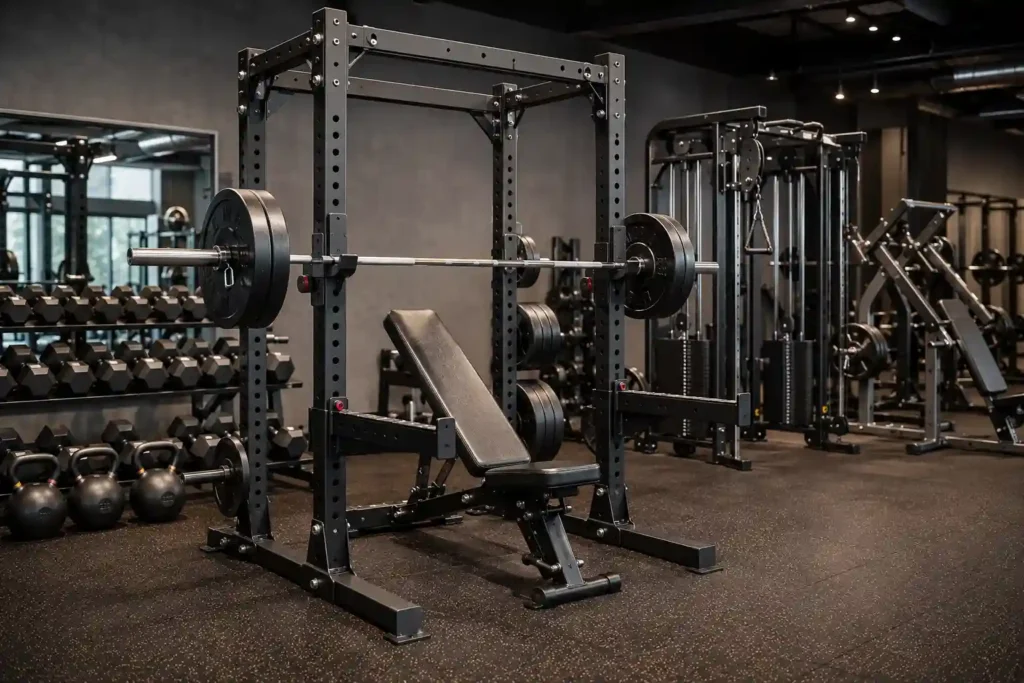
Rogue Fitness remains the top choice for barbells, power racks, and plates, backed by steel that holds up under years of heavy lifting.
Hammer Strength built its reputation on plate loaded machines designed for serious strength athletes, and it’s a staple in commercial strength facilities.
Titan Fitness offers a budget friendly alternative to Rogue, with racks and barbells that perform well for home gyms without the premium price tag.
Cybex specializes in selectorized strength machines commonly found in commercial gyms, known for smooth cable systems and biomechanically correct movement paths.
Body-Solid covers a wide range of home strength equipment, from power racks to functional trainers, at mid range pricing. For a deeper walkthrough of choosing a full setup, see our strength training equipment guide.
A quick way to judge strength equipment quality: check the steel gauge and weld points. Thicker steel, 11 gauge or lower number, and continuous welds signal a frame built to last, not one that will wobble under heavy loads.
Best Budget Fitness Equipment Brands
You don’t need a premium budget to get functional, safe equipment. Several brands focus specifically on affordability without cutting every corner.
Titan Fitness consistently ranks as the top value pick for strength equipment, offering racks, benches, and barbells at a fraction of Rogue’s pricing.
Schwinn delivers dependable exercise bikes and basic cardio machines that suit beginners or occasional users who don’t need commercial grade durability.
XMark Fitness produces budget strength equipment, including benches and dumbbells, popular for garage gyms on a tight budget.
Sunny Health & Fitness covers a wide range of affordable cardio and strength equipment, frequently recommended for first time home gym builders.
A word of caution: budget doesn’t mean low quality across the board, but it often means fewer warranty years and lighter gauge steel. If you’re a beginner testing whether a home gym habit sticks, starting budget makes financial sense. If you already train consistently, investing in a mid tier brand like Titan often pays off through longer equipment life.
Commercial Gym Equipment Brands vs Home Fitness Brands
Commercial and home fitness equipment aren’t just different price tiers, they’re built to different engineering standards entirely.
| Factor | Commercial Grade | Home Grade |
| Daily use tolerance | 8+ hours | 1 to 2 hours |
| Warranty length | Often 3 to 5 years parts | Often 1 to 2 years parts |
| Motor / frame strength | Heavy duty, higher CHP | Lighter, lower CHP |
| Price | Higher upfront cost | More accessible |
| Where sold | Direct to gyms, dealers | Retail, online direct |
Commercial gym equipment brands like Life Fitness, Precor, and Hammer Strength design machines to survive constant use by dozens of different users daily. That durability comes at a cost, both in price and often in footprint. Browse more on this category in our commercial gym equipment section.
Home fitness brands like Bowflex, NordicTrack, and Sole Fitness build for lighter, more intermittent use. Buying commercial grade equipment for home use isn’t wasteful, it just may be overkill unless you’re training multiple people daily or want equipment that lasts fifteen plus years instead of five to seven.
The smart approach: match the grade to your actual usage frequency, not your aspirations.
Emerging and Direct to Consumer Fitness Brands
The fitness equipment industry has shifted toward connected, direct to consumer models over the past several years, and newer brands are capitalizing on that trend.
Tonal makes a wall mounted digital strength system that uses electromagnetic resistance instead of traditional weights, appealing to space conscious buyers who still want a full strength workout.
Hydrow focuses on connected rowing machines with live and on demand classes, competing directly with Peloton’s model but in the rowing category.
Tempo combines strength training equipment with 3D sensors that track form and rep count, aimed at users who want guided coaching without a personal trainer.
Speediance offers compact, app connected functional trainers designed for smaller apartments and home offices.
These brands share a common thread: they blend hardware with software, often requiring a subscription for full functionality. That model works well for users who want accountability and guided programming, but it adds an ongoing cost beyond the equipment itself.
Before choosing a connected brand, check whether the hardware still functions if you cancel the subscription. Some equipment loses key features without an active membership.
How to Choose the Right Brand for Your Fitness Goals
The right fitness equipment brand depends less on overall reputation and more on matching the equipment to your specific training goals.
- If your goal is strength training, prioritize brands like Rogue Fitness, Titan Fitness, or Hammer Strength. Look for thick steel frames, sturdy weight capacity ratings, and accessible replacement parts.
- If your goal is cardio conditioning, Life Fitness, Precor, or Sole Fitness offer reliable motors and consoles built for consistent, repeated use. Runners in particular should prioritize belt size and motor horsepower.
- If your goal is guided or class based training, Peloton, Hydrow, or NordicTrack with iFit deliver structured programming that keeps motivation high, especially for beginners who benefit from instruction.
- If your goal is rehabilitation or low impact training, look for brands offering smooth, adjustable resistance machines, such as Cybex or Technogym, which are common in physical therapy and recovery focused facilities.
- If your goal is general, well rounded fitness, a mix of budget friendly brands like Titan or Sunny Health & Fitness for strength basics, paired with a mid range cardio machine, often covers most needs without overspending.
Match the brand’s strength to your training focus rather than picking based on name recognition alone.
Common Mistakes When Choosing a Fitness Equipment Brand
Even well intentioned buyers make avoidable mistakes when picking a fitness equipment brand. Knowing these in advance saves money and frustration.
- Chasing the lowest price without checking specs. A cheaper treadmill often means a weaker motor, thinner belt cushioning, and a shorter lifespan. Compare specs, not just sticker price.
- Ignoring warranty terms. Many buyers assume lifetime warranty covers everything, when it often applies only to the frame, not motors or electronics. Read the actual coverage before purchasing.
- Buying commercial grade equipment for occasional home use. Overspending on heavy duty machines rarely makes sense unless multiple people train daily or you want decades of use from one machine.
- Underestimating space requirements. Equipment often looks smaller in product photos than it is in person. Measure your space, including clearance for movement, before buying.
- Overlooking replacement parts availability. Newer or smaller brands sometimes struggle to supply parts years down the line. Established brands with a strong dealer network tend to hold up better long term.
- Skipping reviews from actual owners. Marketing copy rarely mentions long term durability issues. Look for reviews from people who’ve owned the equipment for a year or more, not just first impressions.
Avoiding these mistakes upfront leads to equipment that actually lasts, rather than a costly do over in a year or two.
Frequently Asked Questions
- What is the most trusted fitness equipment brand? Rogue Fitness and Life Fitness are widely considered the most trusted, thanks to their track record in commercial gyms and CrossFit facilities. Both back their products with strong warranties and durable construction that holds up under years of heavy use.
- What is the difference between commercial and home gym equipment? Commercial equipment is built for eight plus hours of daily use with heavier frames, stronger motors, and longer parts warranties. Home equipment is designed for lighter, intermittent use and typically costs less upfront but wears out faster under heavy demand.
- Which fitness equipment brand has the best warranty? Life Fitness and Rogue Fitness generally offer some of the strongest warranties, often including lifetime frame coverage. Always check whether motors, electronics, and parts are covered separately, since those terms are usually shorter.
- Are expensive fitness equipment brands worth the extra cost? It depends on usage frequency. Daily users benefit from premium brands’ durability and longer lifespan. Occasional users often get equal value from mid range or budget brands like Titan Fitness or Sole Fitness.
- What brand do most commercial gyms use? Life Fitness, Precor, Hammer Strength, and Technogym are the most common brands in commercial gyms and hotel fitness centers, chosen for their durability under constant, varied use.
- What is the best fitness equipment brand for beginners? Schwinn, Sunny Health & Fitness, and Titan Fitness offer reliable, budget friendly options ideal for beginners testing whether a home gym habit sticks before investing more.
- How do I know if a fitness equipment brand is good quality? Check for NSF or UL certification, read warranty terms closely, and look for a documented history of commercial gym use, which indicates the equipment survives real world stress.
- What are the best budget friendly fitness equipment brands? Titan Fitness, Schwinn, XMark Fitness, and Sunny Health & Fitness consistently rank as strong budget options without sacrificing basic safety and functionality.
- Which fitness equipment brands make smart or connected equipment? Peloton, NordicTrack, Tonal, Hydrow, and Tempo lead the connected fitness space, combining hardware with app based coaching and live or on demand classes.
- How long should quality fitness equipment last? Commercial grade equipment typically lasts ten to fifteen years with proper maintenance, while home grade equipment averages five to seven years depending on usage frequency and care.
Conclusion
Choosing the right fitness equipment brand comes down to matching quality, warranty, and design to how you’ll actually use it. Brands like Rogue Fitness, Life Fitness, and Technogym earned their reputations through durability, not marketing alone, while budget options like Titan Fitness and Schwinn offer real value for beginners and casual users.
Before buying, evaluate your space, budget, and training goals rather than chasing brand name recognition. A treadmill built for a hotel gym rarely makes sense for a spare bedroom, just as a budget bike won’t hold up to daily marathon training.
As connected fitness and AI powered coaching continue shaping the industry through 2026, the smartest buyers will keep prioritizing what’s always mattered most: solid engineering, honest warranties, and equipment built to last. Start with your goals, then let the right brand follow.