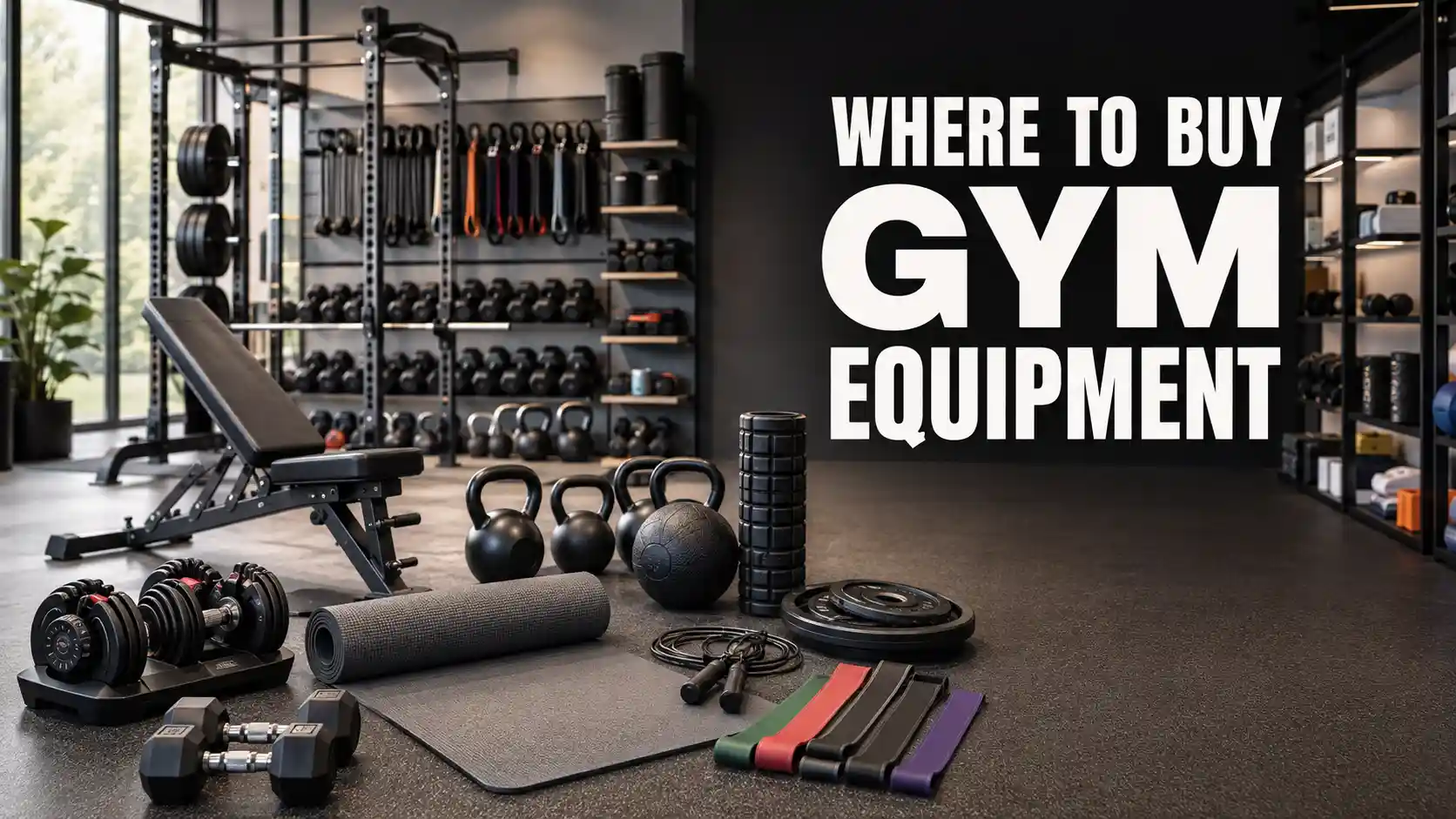
Where to Buy Gym Equipment: The Complete 2026 Buying Guide
Buying gym equipment feels simple until you actually try to do it. One search turns up dozens of retailers, wildly different prices, and no clear answer about which one deserves your money.
Here is the short version: the best place to buy gym equipment depends on what you are buying and how much guidance you want. Big box stores like Dick’s Sporting Goods and Walmart work well for basic accessories and quick pickup. Specialty retailers like Rogue Fitness, REP Fitness, and Titan Fitness offer better quality strength equipment for serious training. Online marketplaces such as Amazon give convenience, while secondhand options can save serious money if you know what to inspect.
This guide breaks down every major option, what each one does best, and how to match your purchase to your budget, space, and fitness goals so you spend money once and get equipment that actually lasts.
Whether you are outfitting a spare bedroom with a few essentials or planning a full commercial buildout, the same core principles apply: know your budget, understand your space, and choose a seller whose strengths line up with what you actually need.
Table of Contents
What to Know Before You Buy Gym Equipment
Before comparing retailers, get clear on three things: budget, available space, and how often you will actually use the equipment. These factors matter more than which store you choose, because even the best retailer cannot fix a purchase that does not fit your life.
Start with budget. A basic home gym setup can run anywhere from a few hundred dollars for adjustable dumbbells and a bench to several thousand for a full power rack system with attachments. Decide your ceiling first, then shop within it rather than letting a sale price pull you into overspending.
Space comes next. Measure your area before buying anything, including ceiling height if you are considering a power rack, squat stand, or pull up bar. Many first time buyers underestimate how much room strength equipment needs once you account for movement space around it during a lift.
Finally, weigh new versus used equipment. New gear comes with full manufacturer warranties and zero wear, while used equipment can cut costs by 30 to 50 percent if it is inspected properly before purchase. Neither option is automatically better; it depends on the type of equipment and your tolerance for risk.
A few quick questions worth answering before you buy:
- What is my total budget, including shipping and assembly costs?
- How much floor space and ceiling height do I actually have?
- Will I use this equipment three or more times a week, or only occasionally?
- Do I need a full warranty, or am I comfortable buying used to save money?
Answering these questions first makes every retailer comparison that follows much easier, since you will already know what type of buyer you are before you compare a single price tag.
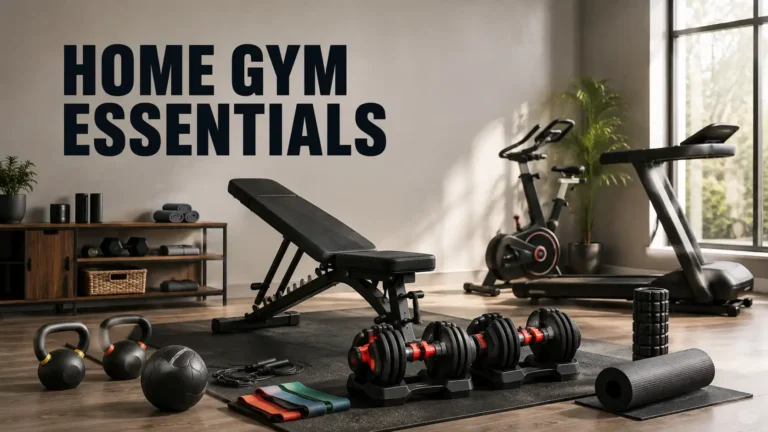
It also helps to think about how your needs might change over the next year or two. If you are starting from scratch, our Home Gym Essentials beginner’s guide walks through exactly what a first time buyer actually needs before spending on anything else.
Big Box Retailers for Gym Equipment
For buyers who want convenience and the ability to see equipment in person, big box retailers remain a solid starting point. They work best for basic accessories, entry level cardio machines, and situations where same day pickup matters more than specialized expertise.
Dick’s Sporting Goods carries a wide range of exercise equipment including treadmills, stationary bikes, dumbbells, and yoga gear. Their buy online, pick up in store option is useful when you need something quickly, and in store staff can offer basic guidance for beginner level purchases. Selection leans toward recognizable consumer brands rather than commercial grade equipment.
Walmart works well for budget conscious shoppers looking for resistance bands, yoga mats, light dumbbells, or simple cardio accessories. Prices tend to be some of the lowest available for entry level gear, though selection for serious strength training equipment is limited, so it suits casual fitness needs better than dedicated training programs.
Best Buy may seem like an unusual choice for fitness shopping, but the retailer carries a solid selection of smart treadmills and connected cardio equipment, often bundled with extended warranties and financing options through their credit programs. Buyers who want technology integrated into their workout tend to gravitate here.
Target also deserves a mention for smaller accessories such as foam rollers, jump ropes, and light resistance equipment, particularly for buyers who prefer combining a fitness purchase with a regular shopping trip rather than a dedicated fitness retailer visit.
| Retailer | Best For | Limitation |
| Dick’s Sporting Goods | General fitness gear, in store pickup | Limited heavy strength equipment |
| Walmart | Budget accessories and basics | Weak selection for serious lifters |
| Best Buy | Smart and connected cardio machines | Fewer dedicated strength options |
| Target | Small accessories, casual shoppers | Very limited equipment range |
If your needs go beyond entry level gear, specialty retailers are usually a better fit, which the next section covers in detail.
Specialty Fitness Equipment Retailers
If you are building a serious home gym or outfitting a commercial space, specialty retailers are where most experienced buyers end up. These companies focus exclusively on fitness equipment, which usually means better build quality, more configuration options, and staff who genuinely understand strength training rather than general retail.
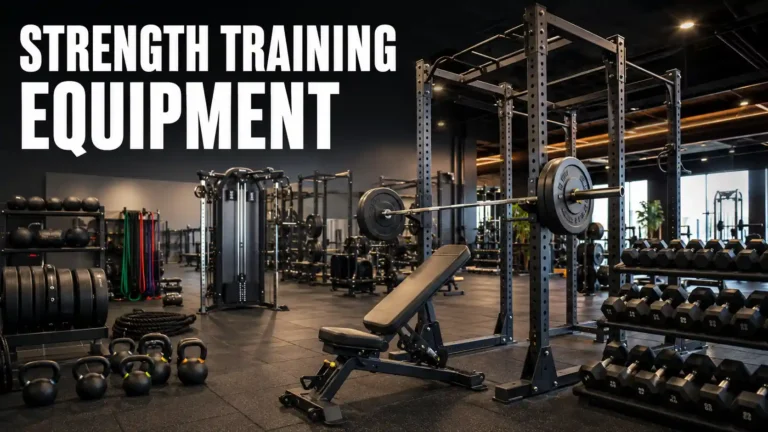
Rogue Fitness is widely regarded as a top choice for power racks, barbells, and competition grade strength equipment. Their gear is built to withstand heavy daily use, which explains why so many CrossFit boxes and commercial gyms rely on them as a primary supplier. Pricing sits at the premium end of the market, reflecting the durability buyers receive in return.
REP Fitness has earned a strong reputation for offering commercial quality equipment at more accessible prices, making it popular with home gym owners who want durability without paying full commercial rates. Their power racks and benches frequently appear in independent product testing as top value picks.
Titan Fitness targets budget minded lifters who still want solid strength equipment, particularly racks, benches, and plates, without the premium price tag of top tier brands. It is a common entry point for buyers building their first serious home gym on a tighter budget.
RitFit focuses on coordinated home gym packages, bundling racks, benches, and weights together, which helps buyers avoid the trial and error of sourcing pieces from multiple sellers and worrying about compatibility between components.
Top Fitness carries premium cardio and strength brands like Precor, True, and Inspire, and offers hands on guidance through both online consultation and physical showroom locations for buyers who want expert input before spending significant money.
A quick tip from experienced home gym owners: buying a coordinated package from a specialty retailer often costs less in the long run than piecing together equipment from several different sellers, since shipping costs, compatibility issues, and mismatched dimensions add up fast when buying piece by piece.
What Makes Specialty Retailers Different
- Equipment is rated for frequency of use, not just consumer level wear
- Customer support staff typically have training or coaching backgrounds
- Warranty terms are often longer and more specific to strength equipment
- Product lines are designed to expand, so attachments and add ons fit existing setups
For a deeper look at which manufacturers consistently earn their reputation, see our guide to the best fitness equipment brands, which breaks down what sets each one apart beyond just price.
Buying Gym Equipment on Online Marketplaces
Online marketplaces offer the widest selection and often the lowest prices, but they require more research on the buyer’s part since quality and seller reliability vary widely from one listing to the next.
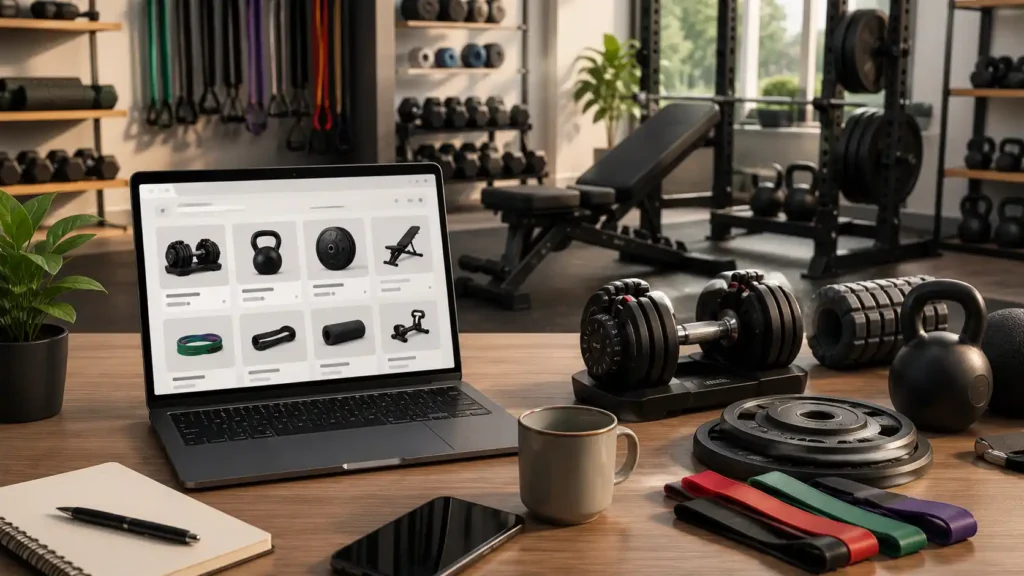
Amazon is a common first stop for smaller items like resistance bands, yoga mats, jump ropes, and adjustable dumbbells. The convenience is hard to beat, but for larger equipment like racks or benches, checking seller ratings and return policies matters more than usual, since third party sellers vary in quality control and after sale support.
Walmart.com mirrors much of the in store selection but with a broader catalog online, which is useful for comparing budget options side by side without visiting multiple physical locations.
eBay works well for buyers hunting for discontinued models, bulk lots, or unique pieces that specialty retailers no longer stock. It requires more caution since listings range from legitimate sellers offering fair prices to poorly described used gear with hidden defects.
Newer platforms and niche marketplaces focused specifically on fitness equipment have also grown in relevance, often aggregating listings from smaller retailers and independent sellers, giving buyers a wider comparison pool than any single store could offer alone.
A few practical tips for buying fitness equipment on marketplaces:
- Check return windows before purchasing anything heavy or expensive
- Read the most recent reviews, not just the overall star rating
- Confirm whether assembly instructions and tools are included in the box
- Factor in shipping cost separately, since heavy equipment shipping can add significantly to the final price
Marketplaces are strongest for accessories and smaller equipment, and weakest for large strength equipment where quality control and long term durability matter most.
Direct to Consumer Fitness Brands
Buying directly from the manufacturer has become one of the most popular routes for home gym equipment, especially for connected fitness products that combine hardware with a subscription based training experience.
Bowflex is known for space saving strength machines and adjustable dumbbells, making it a strong option for buyers with limited square footage who still want full body training capability from a single piece of equipment.
NordicTrack focuses heavily on cardio equipment, particularly treadmills and ellipticals with interactive training screens, appealing to buyers who want guided workouts built directly into the machine rather than relying on a separate app.
Peloton built its brand around connected cardio equipment paired with live and on demand classes, and buying direct typically includes delivery and professional setup as part of the purchase price.
Tonal takes a different approach entirely, offering a wall mounted strength training system that uses digital resistance instead of traditional weights, aimed at buyers who want a compact all in one solution for a smaller living space.
Buying direct from these brands usually means:
- Full manufacturer warranty with no third party markup
- Access to the newest models before they reach general retailers
- Bundled financing options, often including promotional interest free plans
- Direct customer support if something breaks or needs servicing
The tradeoff is price. Direct to consumer brands rarely discount as aggressively as retailers do during major sales events, so this route suits buyers who value the complete package, including setup and support, over finding the absolute lowest price. It is also worth noting that direct to consumer equipment often relies on an ongoing subscription for full functionality, particularly with connected cardio machines. Buyers should factor the monthly subscription cost into the total cost of ownership, not just the upfront hardware price, when comparing this route against a traditional retailer purchase
Buying Used or Secondhand Gym Equipment
Used equipment is one of the fastest ways to build a serious home gym without spending serious money, but it requires more diligence than buying new. Strength equipment in particular holds up well over time, which makes it a smart category to buy secondhand.
Facebook Marketplace has become one of the most active spaces for local secondhand fitness equipment, often listed by people downsizing home gyms or by gyms replacing their inventory during renovations. Prices in this space tend to run 30 to 50 percent below retail for comparable items.
OfferUp functions similarly, with a slightly smaller but still active pool of local listings, useful for buyers comparing multiple secondhand sources in the same geographic area before committing to a purchase.
Commercial gym liquidation sales happen when gyms close, relocate, or upgrade their equipment lineup, and they can be a source of heavily discounted, commercial grade machines that were built to withstand years of daily, high volume use.
Craigslist, though less structured than newer platforms, still surfaces genuine deals in many regions, particularly for larger items where local pickup avoids the freight shipping costs that make new heavy equipment expensive.
Before buying used equipment, always check the following:
- Test moving parts for smooth motion, listening for grinding or catching sounds
- Inspect cables, belts, and welds for visible wear, fraying, or cracking
- Ask about the equipment’s age and how frequently it was actually used
- Confirm you can test the item in person before paying, especially for larger machines
A practical rule from experienced buyers: strength equipment like racks, plates, and benches ages well and is generally safe to buy used, while cardio machines with electronic components carry more risk since repairs on motors and consoles can be costly.
If you would rather compare new equipment listings side by side before deciding between new and used, our gym equipment for sale buying guide covers how to evaluate pricing and condition across both options.
Local Gym Supply and Sporting Goods Stores
Buying locally still has real advantages, even in a market dominated by online shopping. The biggest benefit is being able to physically test equipment before committing to a purchase, something no product photo or spec sheet can fully replace.
Local sporting goods stores let you feel the resistance on a machine, check the padding quality on a bench, or test how a treadmill belt handles your stride. This matters most for equipment you will use daily, where small comfort issues become bigger problems over months of regular use.
Specialty fitness supply stores, often independently owned, can also offer something big retailers cannot: personalized advice based on your specific goals, available space, and experience level. Staff at these stores are frequently former trainers or competitive lifters themselves.
A few situations where buying local makes the most sense:
- You are unsure which equipment size or resistance level fits your body
- You want to avoid the cost and hassle of returning large, heavy items
- You prefer immediate delivery or the option to transport equipment yourself
- You value being able to ask detailed questions before spending money
The main tradeoff is selection and pricing. Local stores typically carry less inventory than online retailers and may not match online sale pricing, but the ability to test before you buy can prevent costly returns and mismatched purchases later.
Not sure which category of equipment to prioritize first? Our complete guide to types of gym equipment breaks everything down by cardio, strength, and accessory categories.
Typical Price Ranges for Gym Equipment by Category
Prices vary enormously across the fitness equipment market, and understanding realistic ranges before you shop helps you spot a genuinely good deal versus a listing that looks cheap but cuts corners on build quality.
Cardio equipment tends to carry the widest price spread of any category. A basic manual treadmill can start under two hundred dollars, while a connected, motorized treadmill with an interactive screen from a brand like Peloton or NordicTrack can run well over two thousand dollars once financing fees and delivery are included.
Strength equipment pricing depends heavily on load capacity and materials. Entry level adjustable dumbbells often start around one hundred fifty dollars for a modest weight range, while a full power rack system with a bar, plates, and a bench can range from six hundred dollars at the budget end to well over two thousand dollars for commercial grade steel construction.
Accessories remain the most affordable entry point into home fitness. Resistance bands, yoga mats, foam rollers, and jump ropes typically cost between ten and sixty dollars each, making them a low risk way to start building a home gym before committing to larger equipment purchases.
| Equipment Category | Budget Range | Mid Range | Premium Range |
| Cardio machines | Under $300 | $300 to $1,200 | $1,200 and up |
| Strength racks and benches | $300 to $700 | $700 to $1,500 | $1,500 and up |
| Adjustable dumbbells | $150 to $300 | $300 to $600 | $600 and up |
| Accessories and small gear | $10 to $30 | $30 to $60 | $60 and up |
These ranges are general guidelines rather than fixed rules, since sales events, seasonal discounts, and used equipment listings can shift any category significantly lower for a limited time. Comparing a listed price against these baseline ranges is a quick way to judge whether a deal is genuinely competitive.
Reading Reviews and Verifying Retailer Trustworthiness
Price and product specifications only tell part of the story. Before completing any significant gym equipment purchase, it is worth spending a few extra minutes verifying that the retailer or seller is actually trustworthy.
Start with recent reviews rather than the overall star rating alone. A retailer with thousands of reviews and a 4.5 star average can still have a pattern of recent complaints about shipping delays or damaged freight deliveries, which only shows up if you sort reviews by most recent rather than most helpful.
For specialty and direct to consumer brands, independent review sites and long form equipment testing publications often provide more detailed, hands on evaluations than a typical product page, covering things like assembly time, noise level, and long term durability that a retailer’s own marketing rarely mentions.
When buying secondhand, trustworthiness looks different. Verify the seller’s account history and prior transaction feedback where available, ask specific questions about maintenance history, and treat a seller’s unwillingness to allow an in person inspection before payment as a warning sign rather than a minor inconvenience.
- Sort online reviews by most recent, not just highest rated
- Look for mentions of assembly difficulty, noise, or missing parts
- Check whether a retailer has a clear, published return and warranty policy
- For secondhand sellers, prioritize listings that allow in person inspection
A small amount of research at this stage prevents the majority of buyer’s regret stories that circulate around large fitness equipment purchases, and it costs nothing beyond a few extra minutes of reading.
Buying Gym Equipment for a Commercial Gym Versus a Home Gym
The right place to buy equipment often shifts depending on whether you are outfitting a personal home setup or a commercial facility open to paying members. The two buying processes look similar on the surface but differ significantly in scale and requirements.
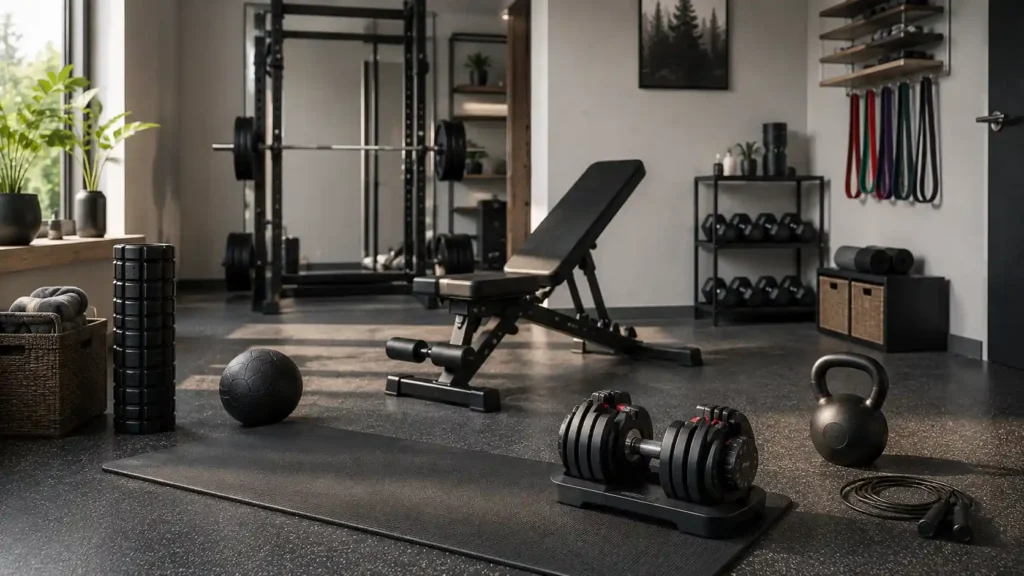
Commercial gym owners typically buy from manufacturers rated for commercial use, since equipment in a public facility faces far more frequent use than anything in a private home. Brands like Rogue Fitness, Precor, and Life Fitness build machines specifically engineered for high volume daily traffic, and most commercial insurance policies require equipment that meets certain safety and durability standards.
Commercial buyers also tend to work directly with sales representatives rather than shopping a standard online catalog, since large equipment orders often include custom layout planning, bulk pricing, and coordinated delivery schedules for an entire facility.
Home gym buyers have more flexibility. Consumer grade equipment from retailers like Dick’s Sporting Goods or Walmart is perfectly adequate for someone training a few times a week, and there is no need to pay commercial pricing for equipment that will see a fraction of the use.
Key Differences to Consider
- Usage frequency: commercial spaces need equipment rated for constant daily use
- Warranty terms: commercial warranties are often shorter due to heavier expected wear
- Purchasing process: commercial orders frequently involve direct sales representatives
- Budget scale: commercial buildouts require significantly larger upfront investment
Understanding which category you fall into before you start shopping prevents two common mistakes: home users overpaying for commercial grade durability they do not need, and commercial buyers underbuying equipment that fails under real world gym traffic.
For home buyers specifically, our home gym equipment buyer’s guide goes deeper into building out a residential setup room by room.
Financing and Payment Options When Buying Gym Equipment
Gym equipment, particularly strength racks, commercial machines, and connected cardio systems, can represent a significant purchase, which is why financing has become a common part of the buying process across nearly every retailer type.
Many direct to consumer brands, including Peloton, NordicTrack, and Bowflex, offer financing plans directly at checkout, often with promotional interest free periods for buyers who qualify. This allows the cost of a large purchase to be spread across monthly payments rather than paid upfront.
Big box retailers like Best Buy and Dick’s Sporting Goods typically offer store branded credit cards with financing promotions, particularly during major sales periods, though standard interest rates apply once any promotional window ends.
Specialty retailers increasingly partner with third party financing services that allow buyers to split large equipment purchases, such as full power rack systems, into scheduled payments independent of a traditional credit card.
Before choosing a financing option, it helps to confirm a few details:
- The exact length of any promotional interest free period
- What the standard interest rate becomes after the promotional period ends
- Whether early payoff carries any penalty
- Whether the financing appears as a standard credit inquiry
Paying in full remains the simplest option when the budget allows, but financing can make sense for buyers who want to spread out a large strength equipment purchase without depleting savings all at once.
Shipping, Delivery, and Assembly: What to Expect
The buying decision does not end once you choose a retailer. How equipment gets to your home and how much assembly it requires can significantly affect the total cost and overall experience.
Standard shipping for smaller items like resistance bands, dumbbells, and yoga mats typically takes three to seven business days through most retailers. Large equipment, including power racks, treadmills, and benches, often ships via freight carrier, which can take one to three weeks depending on the retailer and your location.
Freight shipping for heavy equipment usually arrives on a pallet and may require curbside delivery only, meaning the carrier will not bring the equipment inside your home or garage. It is worth confirming this detail before ordering anything over roughly 150 pounds.
Assembly requirements vary widely. Some retailers, particularly direct to consumer brands like Peloton, include professional assembly as part of the purchase price. Others, especially budget focused retailers, expect the buyer to assemble equipment using included tools and instructions, which can take anywhere from thirty minutes for a simple bench to several hours for a full power rack system.
A few questions worth asking before checkout:
- Does delivery include bringing the equipment inside, or only to the curb?
- Is professional assembly included, or is it an optional paid add on?
- What tools are provided, and what tools will I need to supply myself?
- What is the estimated delivery window for my specific location?
Factoring shipping and assembly into your decision prevents an unpleasant surprise when a low sticker price turns out to include a significant freight charge or a multi hour assembly project you were not expecting.
For buyers who are not confident assembling equipment themselves, many local moving and handyman services now offer dedicated gym equipment assembly, typically charging a flat rate per item. This can be a worthwhile add on cost for larger pieces like power racks, where incorrect assembly could affect both safety and the manufacturer warranty.
Common Mistakes to Avoid When Buying Gym Equipment
Even experienced buyers make avoidable mistakes when purchasing fitness equipment, often because excitement about a new home gym overshadows practical planning. Recognizing these patterns ahead of time is one of the simplest ways to protect both your budget and your long term satisfaction with a purchase.
Buying Equipment That Does Not Fit the Space
Skipping careful measurements is one of the most common and expensive mistakes. A power rack that looks reasonably sized in a product photo can overwhelm a small room once ceiling height, clearance, and safe movement space are factored in.
Prioritizing Price Over Long Term Durability
The cheapest option is not always the best value. Equipment that wears out or breaks within a year often ends up costing more than a slightly pricier option built to last, especially for frequently used items like benches and cable machines.
Ignoring Return and Warranty Policies
Many buyers focus entirely on price and overlook return windows and warranty coverage. This becomes a costly oversight if a treadmill motor fails or a cable machine arrives with a manufacturing defect outside a short return window.
Buying Everything at Once
New home gym owners frequently overbuy in the first few weeks, purchasing equipment they are not yet ready to use consistently. Starting with core equipment and adding pieces gradually as training habits solidify tends to produce a more useful, better used home gym.
Forgetting About Flooring and Noise
Heavy equipment can damage flooring and transmit noise through floors and walls, particularly in apartments or multi story homes. Rubber gym flooring tiles are a relatively small additional cost that prevents dropped weights from cracking tile or denting hardwood, and they also reduce impact noise for anyone living below.
Flooring falls into the broader category of accessories most buyers underestimate. Our exercise and fitness accessories guide covers flooring, storage, and other small add ons that make a big difference in daily use.
Avoiding these mistakes comes down to slowing down slightly during the buying process, measuring twice, reading the actual warranty terms, and resisting the urge to fill every corner of a room on day one.
How to Choose the Right Place to Buy Gym Equipment
With so many options covered, the right choice comes down to matching the retailer type to your specific situation rather than chasing a single best answer that applies to every buyer.
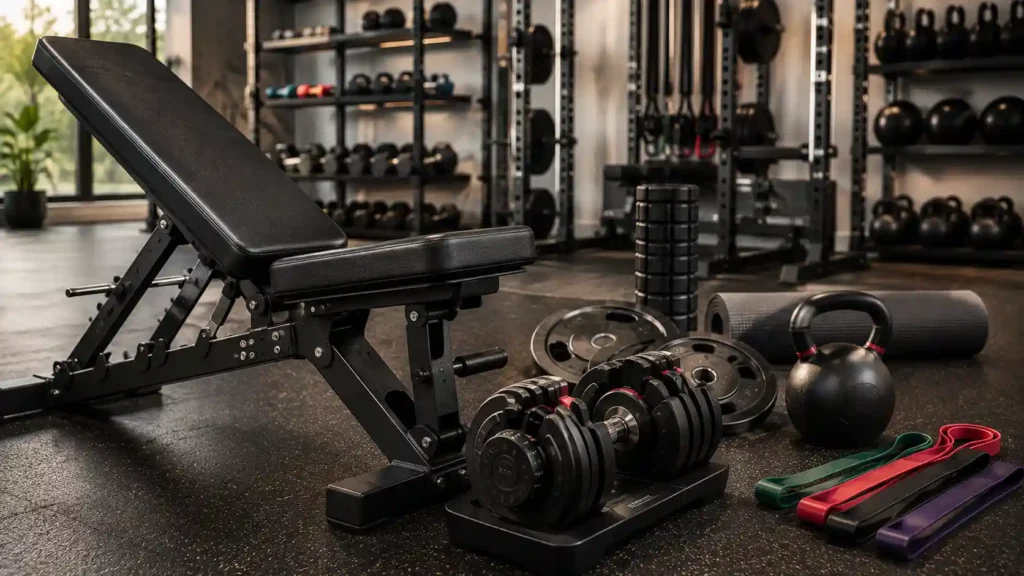
Use this framework to narrow things down quickly:
| If you want… | Best option |
| Fast, in person pickup for basics | Big box retailers like Dick’s or Walmart |
| Commercial grade strength equipment | Specialty retailers like Rogue or REP Fitness |
| Budget friendly strength gear | Titan Fitness or RitFit |
| Connected cardio with guided workouts | Direct to consumer brands like Peloton or NordicTrack |
| Lowest possible price | Used equipment via Facebook Marketplace or liquidation sales |
| Hands on testing before buying | Local sporting goods or specialty stores |
A practical approach many experienced home gym owners use is mixing sources. Buy your core strength equipment new from a specialty retailer for durability and warranty coverage, then fill in accessories like mats, bands, and smaller items secondhand or through marketplaces to save money without sacrificing quality where it matters most.
Before finalizing any purchase, confirm three things regardless of where you buy: the return policy, whether assembly is included or required, and the total cost after shipping. These three factors affect the real value of a purchase more than the sticker price alone, and overlooking any one of them is how buyers end up paying more than they originally planned.
Frequently Asked Questions
Where is the cheapest place to buy gym equipment?
Used equipment through Facebook Marketplace or local liquidation sales typically offers the lowest prices, often 30 to 50 percent below retail. For new equipment, Titan Fitness and Walmart tend to offer the most budget friendly options across strength and cardio categories.
Is it worth buying used gym equipment?
Yes, especially for strength equipment like racks, plates, and benches, which hold up well over time. Inspect moving parts and welds before buying, and be more cautious with used cardio machines since electronic repairs can be costly.
What is the best online store for gym equipment?
Rogue Fitness and REP Fitness are widely regarded as top choices for strength equipment quality, while Amazon works well for smaller accessories. The best choice depends on whether you need commercial grade gear or basic add ons.
Can you buy gym equipment at Walmart?
Yes, Walmart carries resistance bands, yoga mats, light dumbbells, and entry level cardio machines both in store and online. Selection for serious strength training equipment is limited compared to specialty retailers.
How much should I budget for a home gym?
A basic setup with adjustable dumbbells and a bench can start around a few hundred dollars, while a full power rack system typically runs one thousand to three thousand dollars or more depending on brand and features.
Is Amazon good for buying gym equipment?
Amazon works well for smaller items like bands, mats, and dumbbells. For larger equipment, check seller ratings and return policies carefully, since third party sellers vary significantly in build quality and customer support.
Where do gyms buy their commercial equipment?
Commercial gyms typically buy from specialty manufacturers like Rogue Fitness, Precor, or Life Fitness, which build equipment rated for heavy daily use. Some also source from liquidation sales when other facilities close or upgrade.
What should I check before buying used fitness equipment?
Test moving parts for smooth motion, inspect cables and welds for wear, and ask about the equipment’s age and usage frequency. Always test in person when possible, especially for larger or electronic equipment.
Do fitness retailers offer financing?
Many direct to consumer brands like Peloton, NordicTrack, and Bowflex offer financing plans, often with promotional interest free periods for qualified buyers. Big box retailers like Best Buy also provide financing options on select fitness equipment.
How long does gym equipment shipping usually take?
Standard shipping for smaller items typically takes three to seven business days, while large equipment like racks or treadmills can take one to three weeks due to freight shipping requirements and assembly logistics.
Conclusion
Finding where to buy gym equipment ultimately comes down to matching the retailer to your goals, budget, and space. Big box stores work well for basics, specialty retailers deliver the quality serious lifters need, direct to consumer brands offer connected cardio experiences, and used equipment can stretch your budget significantly further.
The smartest approach often blends sources: invest in core strength equipment from a trusted specialty retailer, then fill in accessories through marketplaces or secondhand listings. Whatever path you choose, confirm the return policy, assembly requirements, and total shipping cost before you buy.
As shopping habits continue shifting toward AI powered search and more informed comparison shopping in 2026, buyers who understand these differences will make faster, smarter purchasing decisions and build a home gym that actually lasts.
Take the time to match your budget, available space, and training goals to the retailer type that fits best, and the equipment you choose will support your fitness routine for years rather than becoming an expensive lesson learned.
Ready to start choosing specific equipment? Explore our best home exercise equipment guide and our strength training equipment guide for hands on recommendations by category.