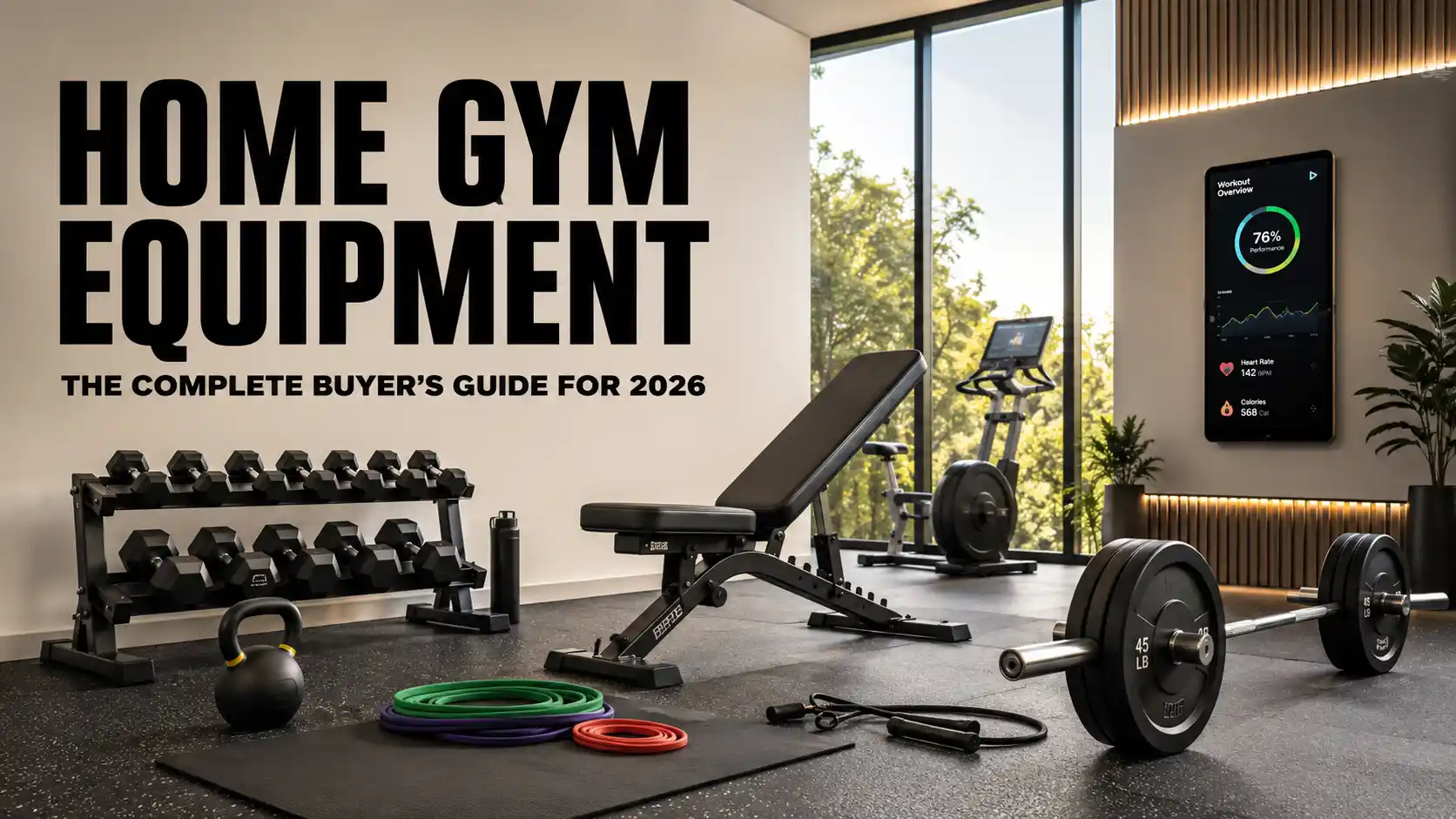
Home Gym Equipment: The Complete Buyer’s Guide for 2026
Staring at an empty corner of your bedroom or garage, wondering where to even start? Buying home gym equipment feels overwhelming when every website pushes a different “must have” list. Here’s the good news: you don’t need a warehouse full of machines to train effectively at home.
The right home gym equipment comes down to three things: your training goal, your available space, and your budget. A few well chosen pieces, like adjustable dumbbells and a folding bench, can support a full body strength routine in less floor space than a yoga mat and a chair. This guide walks through every category of home gym equipment, from beginner basics to smart connected systems, so you can build a setup that actually gets used instead of collecting dust.
By the end, you’ll know exactly what to buy first, what to skip, and how to match your gear to your goals.
Table of Contents
What Counts as Home Gym Equipment?
Home gym equipment simply means any fitness tool or machine designed for use outside a commercial gym setting. This can range from a single resistance band that fits in a drawer to a multi station power rack that takes up half your garage.
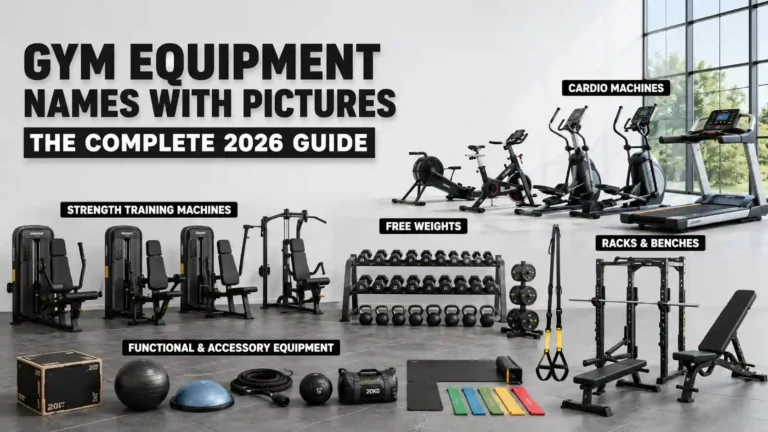
Most home gym equipment falls into four broad categories. Free weights cover dumbbells, kettlebells, and barbells. Machines include cable systems, Smith machines, and all in one home gyms. Cardio equipment covers treadmills, exercise bikes, and rowers. Accessories round things out with mats, benches, and resistance bands.
The biggest difference between home gym equipment and commercial gym gear is footprint and flexibility. Commercial gyms use large, single purpose machines because space isn’t a concern. At home, equipment needs to do more with less. If you want a full breakdown of how every machine is named and categorized, our complete gym equipment names guide covers the five core equipment categories used across both home and commercial gyms.
Not every home needs the same mix. A studio apartment might only fit bands and a mat, while a garage can support a full power rack and cable setup. Understanding these categories first makes it much easier to choose the right pieces later in this guide.
Essential Home Gym Equipment for Beginners
If you’re just starting out, you don’t need to buy everything at once. A handful of versatile pieces will cover most beginner workouts without overwhelming your space or your wallet.
Here’s what to prioritize first:
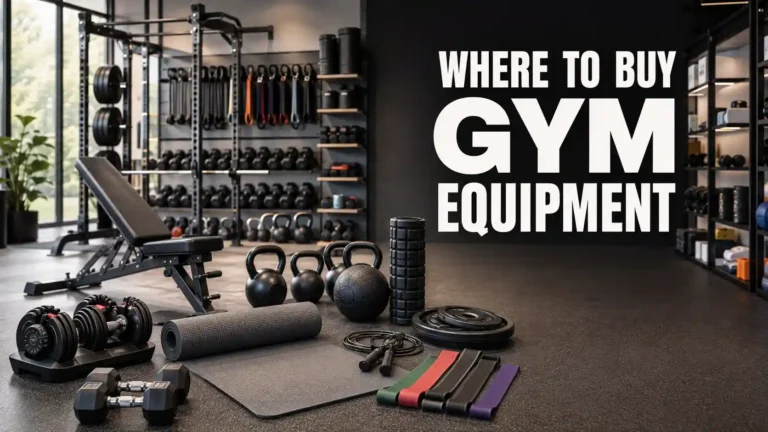
• Adjustable dumbbells. One set that adjusts from light to heavy replaces an entire rack of fixed weights, making them ideal for small rooms.
• Resistance bands. Cheap, portable, and useful for warm ups, mobility work, and added resistance on bodyweight moves.
• A folding or adjustable bench. Turns floor exercises into proper presses, rows, and step ups, and folds away when not in use.
• A kettlebell. Great for full body movements like swings and goblet squats that build strength and cardio fitness at once.
• An exercise mat. Protects floors and joints during core work, stretching, and any exercise done lying down.
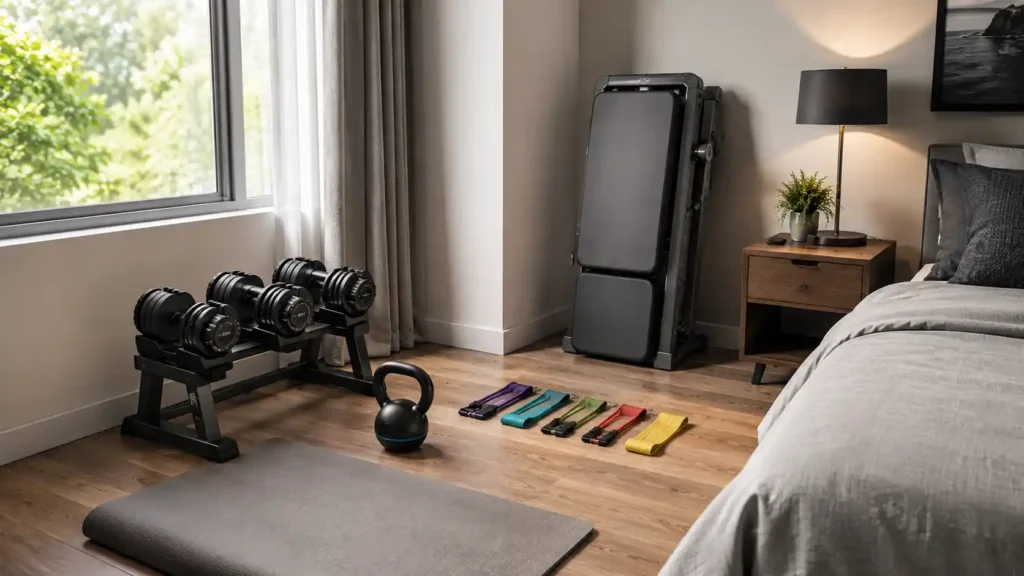
This starter combination supports squats, presses, rows, curls, and core training, which covers most of what a beginner routine actually needs. The goal at this stage isn’t to build a complete gym. It’s to create a setup you’ll actually use consistently. Once these basics become part of your routine, you’ll have a much clearer sense of what to add next, whether that’s a barbell, a rack, or cardio equipment.
Strength Training Equipment for Home Gyms
Once the basics are part of your routine, the next step is equipment that lets you lift heavier and train with more structure. This is where a home gym starts to look less like a corner setup and more like a real training space.
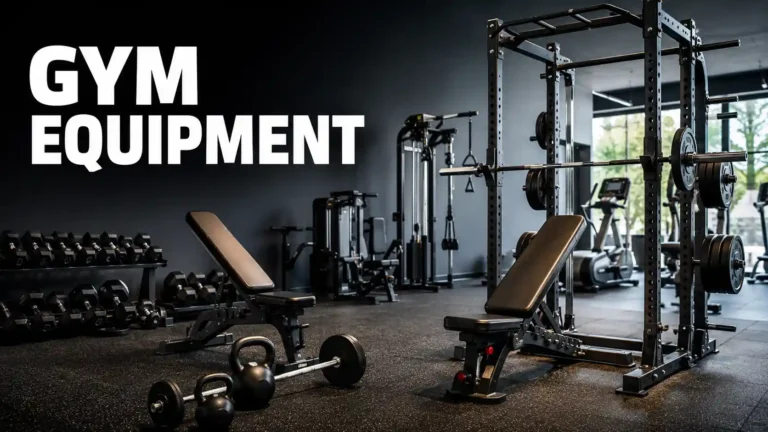
A barbell with weight plates is usually the first upgrade. It allows compound lifts like squats, deadlifts, and bench presses, movements that build far more strength than dumbbells alone can offer. Alongside a barbell, most lifters eventually add a squat rack or power rack, which provides a safe way to lift heavy without a spotter.
For those who want more variety without adding multiple machines, cable systems and Smith machines are worth considering. A cable machine allows pulling and pressing exercises from different angles, which is hard to replicate with free weights. A Smith machine guides the barbell along a fixed path, which can help beginners build confidence with heavier lifts before moving to free weight versions. If any of these terms feel unfamiliar, our gym equipment names guide breaks down the difference between a squat rack, a power cage, and a Smith machine in plain terms.
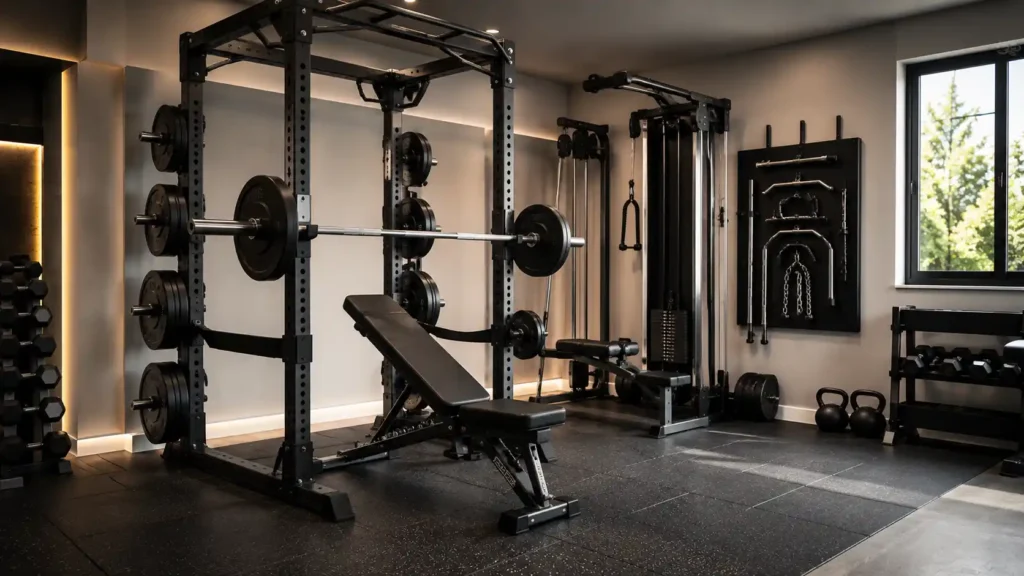
All in one home gyms combine several of these functions into a single frame. They cost more upfront but save space compared to buying a rack, cable system, and bench separately. These setups suit lifters who want full body training from one station without dedicating an entire room to equipment.
This tier of equipment isn’t necessary for everyone. It makes the most sense once bodyweight and dumbbell training start to feel too easy.
Cardio Equipment for Home Workouts
Strength equipment builds muscle, but cardio equipment keeps your heart and lungs in shape and burns calories efficiently. Home gym equipment for cardio ranges from a five dollar jump rope to a treadmill that costs as much as a used car.
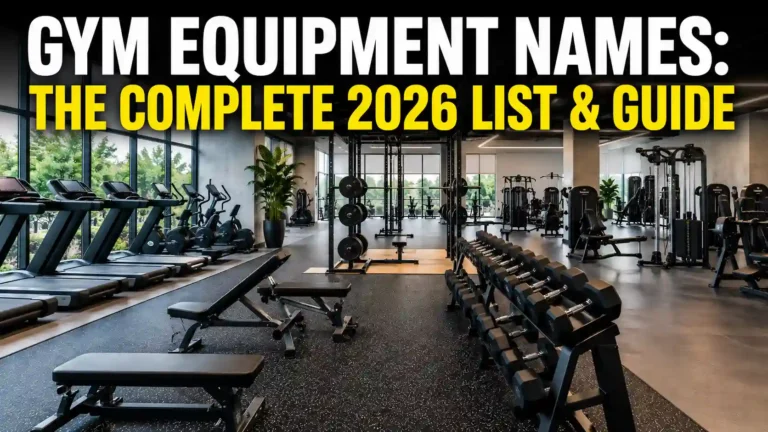
Treadmills remain the most popular choice for home cardio, largely because running and walking are familiar movements that need no learning curve. They do require the most floor space of any cardio option, so measuring your room before buying matters here more than with almost any other equipment.
Exercise bikes are a strong alternative for anyone short on space or dealing with joint pain, since cycling is low impact on the knees and hips. Many modern bikes include screens with guided classes, which can help with motivation on days when training alone feels harder.
Rowing machines work the whole body in a single movement, combining legs, back, and arms in one stroke. They fold flat or stand upright for storage, which makes them a smart pick for apartments.
For those who want cardio without buying a machine at all, a jump rope delivers a genuinely effective workout in a fraction of the space and cost. Ten minutes of rope work can match the calorie burn of a much longer jog.
The right cardio equipment depends entirely on the type of movement you’ll actually stick with, since the best machine is the one that gets used.
Smart and Connected Home Gym Equipment
Home gym equipment has moved well beyond simple weights and machines. A growing share of buyers now want gear that tracks progress, adjusts resistance automatically, and connects to an app for guided coaching.
Global home gym equipment sales are projected to grow from 12.4 billion dollars in 2025 to 19.6 billion dollars by 2035, with multifunction and smart devices leading much of that growth. That shift shows up clearly in buying habits too. Over 124 million fitness devices sold worldwide in 2024, and roughly 63 percent of buyers now prefer smart, connected equipment, with close to half using AI based workout tracking.
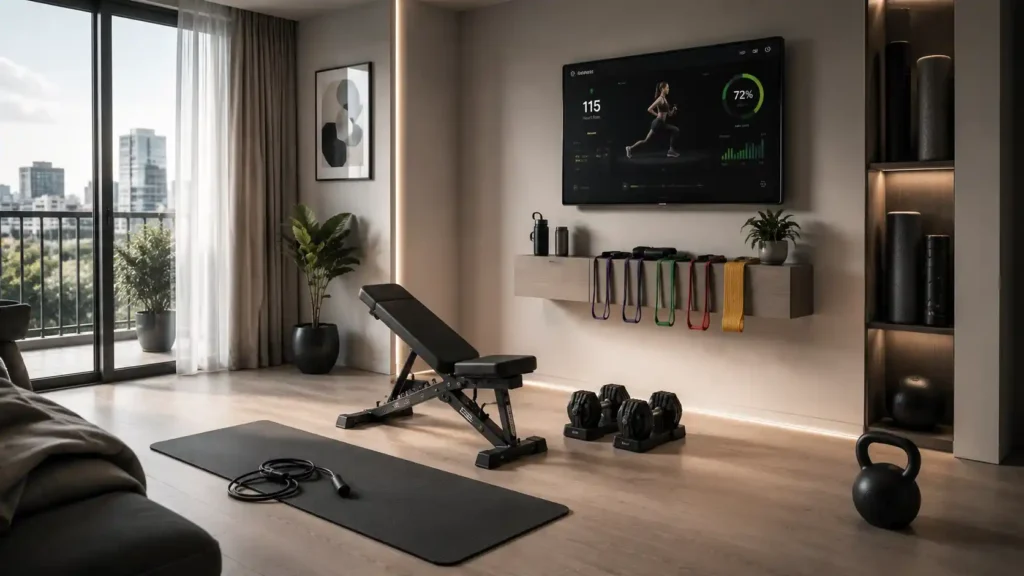
In practice, this category includes wall mounted resistance systems that replace an entire rack of weights with digital resistance, along with compact connected platforms designed for small rooms and easy setup without drilling into walls. Both types typically pair with an app that logs reps, tracks progress over time, and offers guided classes led by real trainers.
Smart equipment isn’t for everyone. It costs significantly more than traditional dumbbells or bands, and it depends on software and connectivity that traditional equipment simply doesn’t need. But for people who want structure, accountability, and detailed tracking without hiring a personal trainer, it’s quickly becoming one of the fastest growing categories of home gym equipment.
How to Choose Home Gym Equipment for Your Space
The best home gym equipment isn’t necessarily the most popular option online. It’s the equipment that actually fits your room, your budget, and the way you plan to train.
Start by measuring more than just floor space. Check ceiling height if you plan to use a rack or do overhead presses, and leave clearance around any machine for full range of motion. A power rack that technically fits against a wall is useless if you can’t safely rack a barbell overhead.
Budget matters just as much as space. A basic setup with bands, a mat, and adjustable dumbbells can cost under 300 dollars, while a full rack and cable system can run well into the thousands. It helps to buy in phases, starting with versatile basics and adding larger equipment once your routine proves you’ll actually use it.
A few other practical points worth checking before you buy:
• Flooring and noise. Rubber mats protect floors from dropped weights and reduce noise for anyone living below or beside you.
• Storage. Foldable benches, stackable plates, and wall mounted racks keep a small space usable when you’re not training.
• Lease or building rules. Renters should confirm whether heavy equipment or wall mounted gear is allowed before buying.
Matching equipment to your actual space and habits, rather than copying someone else’s garage gym, is what makes a home gym setup last.
Home Gym Equipment Maintenance and Safety Tips
Good home gym equipment can last for years, but only if it’s cared for properly. A little regular maintenance protects your investment and, more importantly, keeps you safe while training.
Wipe down benches, handles, and machine surfaces after every session, since sweat left sitting on metal parts speeds up rust and wear. For cable machines and cardio equipment, check moving parts like pulleys, belts, and cables on a monthly basis, and tighten any loose bolts before they become a real problem.
Safety starts with the basics. Always use a mat under free weight areas to protect both your floor and your joints. Inspect resistance bands regularly for small tears or thinning, since a snapped band under tension can cause real injury. If you’re lifting heavy without a spotter, a power rack with adjustable safety bars is worth the investment over a standard bench alone.
Storage plays a role in safety too. Weights left scattered on the floor are a tripping hazard, and equipment stored in damp areas like an uninsulated garage can corrode faster than expected. A simple rack or set of storage bins keeps gear organized and easy to inspect at a glance.
Treating maintenance as part of your routine, not an occasional chore, is what keeps home gym equipment safe and functional for the long run.
Conclusion
Building a home gym doesn’t require buying every piece of equipment at once. Start with versatile basics like adjustable dumbbells, resistance bands, and a folding bench, then add strength or cardio machines only once your routine shows you’ll actually use them. The right home gym equipment matches your space, your budget, and the way you genuinely like to train, not what looks impressive online.
Looking ahead, smart and connected equipment will likely keep growing as more people want guided coaching and progress tracking built into their gear. But the fundamentals covered in this guide, from free weights to proper flooring, will remain the foundation of any effective home gym setup for years to come. Choose thoughtfully, start simple, and let your training habits guide every future purchase.
Frequently Asked Questions
What is the most essential piece of home gym equipment? Adjustable dumbbells are widely considered the single most essential piece of home gym equipment. They support pressing, rowing, curling, and squatting movements in one compact set, making them useful for beginners and experienced lifters alike without taking up much space.
How much does it cost to build a home gym? A basic home gym with a mat, resistance bands, and adjustable dumbbells can cost under 300 dollars. A more advanced setup with a rack, barbell, and cable system typically runs between 1,000 and 3,000 dollars depending on brand and equipment quality.
What home gym equipment is best for small spaces or apartments? Resistance bands, adjustable dumbbells, a folding bench, and a rowing machine that stores upright all work well in small spaces. These pieces offer full body training without permanently taking up floor space when not in use.
Do I need a treadmill for a home gym, or is bodyweight cardio enough? A treadmill isn’t required. Jump rope, bodyweight circuits, and stair climbing can deliver effective cardio without any equipment. A treadmill simply adds convenience for those who prefer walking or running indoors regardless of weather.
What is the difference between a power rack and a Smith machine? A power rack holds a free barbell with adjustable safety bars, allowing natural movement paths for squats and presses. A Smith machine guides the bar along a fixed vertical track, which offers more stability but less natural range of motion.
How much space do I need for a basic home gym? A basic strength setup with dumbbells, a bench, and a mat can fit in about 6 by 8 feet of floor space. Adding a rack or cardio machine generally requires closer to 10 by 10 feet with clearance.
What home gym equipment is best for beginners with a tight budget? Resistance bands, a single adjustable dumbbell set, and an exercise mat cover most beginner strength and mobility needs for well under 200 dollars, making them the most budget friendly starting point for a home gym.
How do I maintain home gym equipment so it lasts longer? Wipe down equipment after each use, inspect cables and bands monthly for wear, tighten loose bolts, and store weights and accessories off the floor. Keeping gear dry and organized significantly extends its usable lifespan.
Are smart or connected home gym machines worth the investment? Smart home gym machines suit people who want guided coaching, automatic resistance adjustment, and detailed progress tracking. They cost more than traditional equipment, so they make the most sense for users who value structure and accountability over lowest upfront cost.
What flooring or mats do I need to protect my home gym equipment? Rubber interlocking mats are the standard choice for home gyms. They protect flooring from dropped weights, reduce noise for neighbors or family members, and provide stable, non slip footing during strength and cardio exercises.