Types of Gym Equipment: A Complete Guide by Category
Walking into a gym for the first time can feel overwhelming. Rows of machines, racks of weights, and a dozen contraptions you have never seen before, all without a manual in sight. That confusion is exactly why understanding the types of gym equipment matters before you start training.
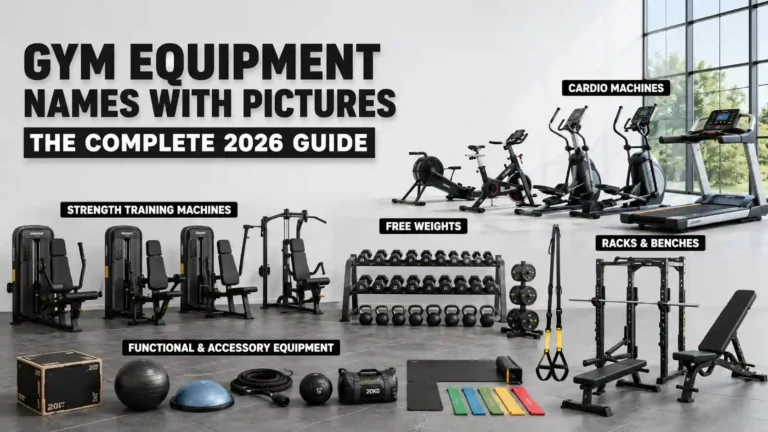
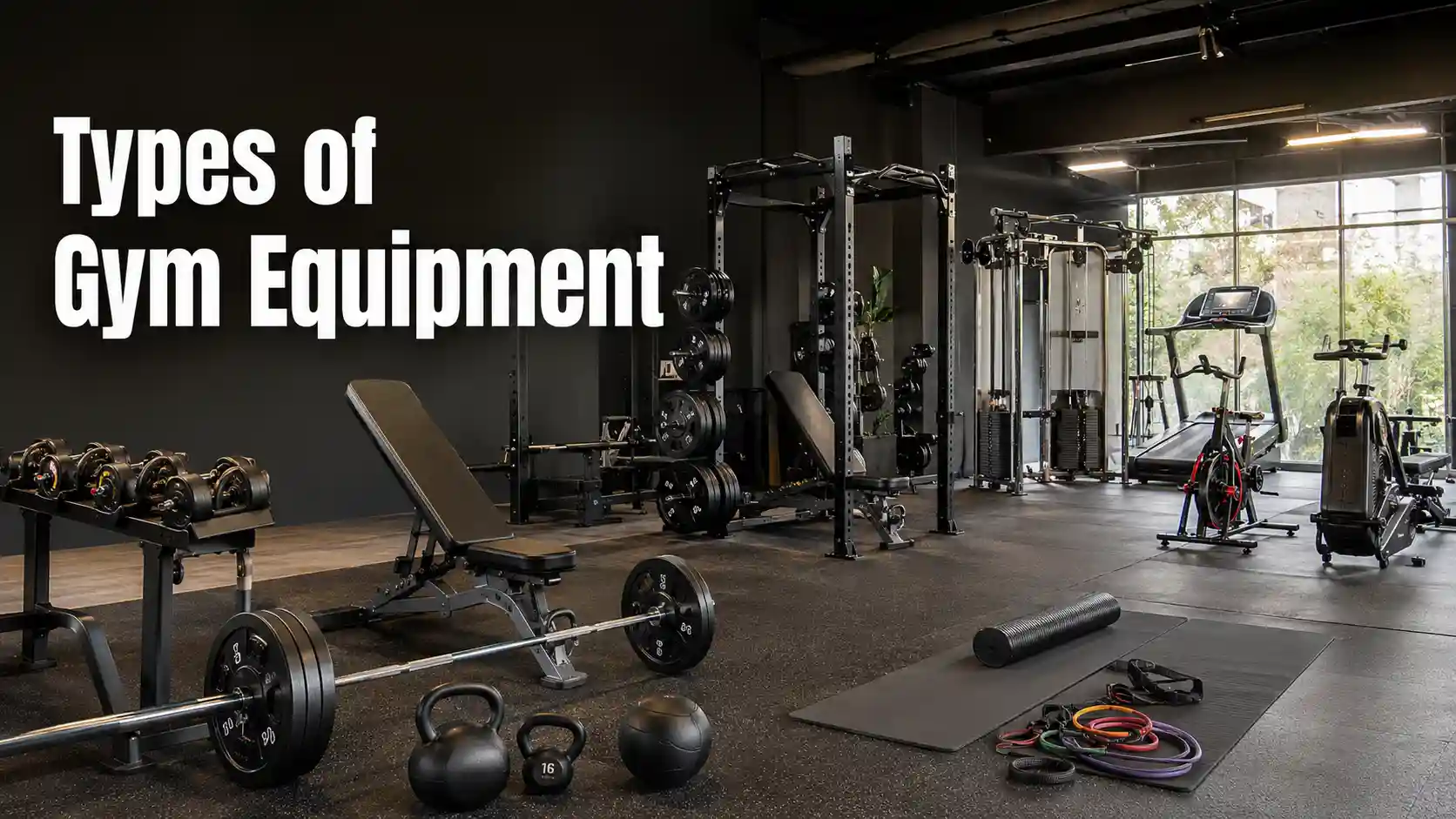
Gym equipment generally falls into six core categories: cardio machines, strength training machines, free weights, bodyweight and functional tools, resistance and mobility accessories, and specialty sport specific gear. Each category serves a different purpose, from building cardiovascular endurance to increasing raw strength to improving mobility and recovery.
In this guide, you will learn what each type of equipment does, who it works best for, and how to choose the right combination for your goals, whether you are setting up a home gym or navigating a commercial fitness center. By the end, equipment that once looked confusing will make complete sense.
Table of Contents
What Counts as Gym Equipment (Quick Overview)
Gym equipment refers to any tool, machine, or device used to perform physical exercise, whether the goal is building strength, improving cardiovascular health, increasing flexibility, or supporting recovery. It ranges from simple items like resistance bands to complex machines with weight stacks and cable pulley systems.
Most gym equipment falls into a few broad groups. Cardio machines raise your heart rate and build endurance. Strength machines guide your body through a fixed motion path. Free weights let you move naturally through space. Bodyweight and functional tools use your own body as resistance. Accessories support mobility and recovery. Specialty equipment serves athletes and sport specific training.
Understanding these categories helps with more than just knowing names. It shapes how you plan a workout, how a gym owner balances a floor layout, and how a beginner avoids wasting time on tools that do not match their goals.
If you want to go a level deeper and match every machine to its exact name, our Gym Equipment Names: The Complete 2026 List & Guide breaks down individual machines piece by piece.
A simple way to think about it: cardio equipment trains your heart, strength equipment trains your muscles, and everything else fills the gaps between the two. Keep that framework in mind as you move through the categories below.
Cardio Equipment
Cardio equipment is designed to elevate your heart rate and build endurance over time. These machines are a staple in almost every gym, commercial or home, because they support weight management, heart health, and stamina regardless of fitness level.
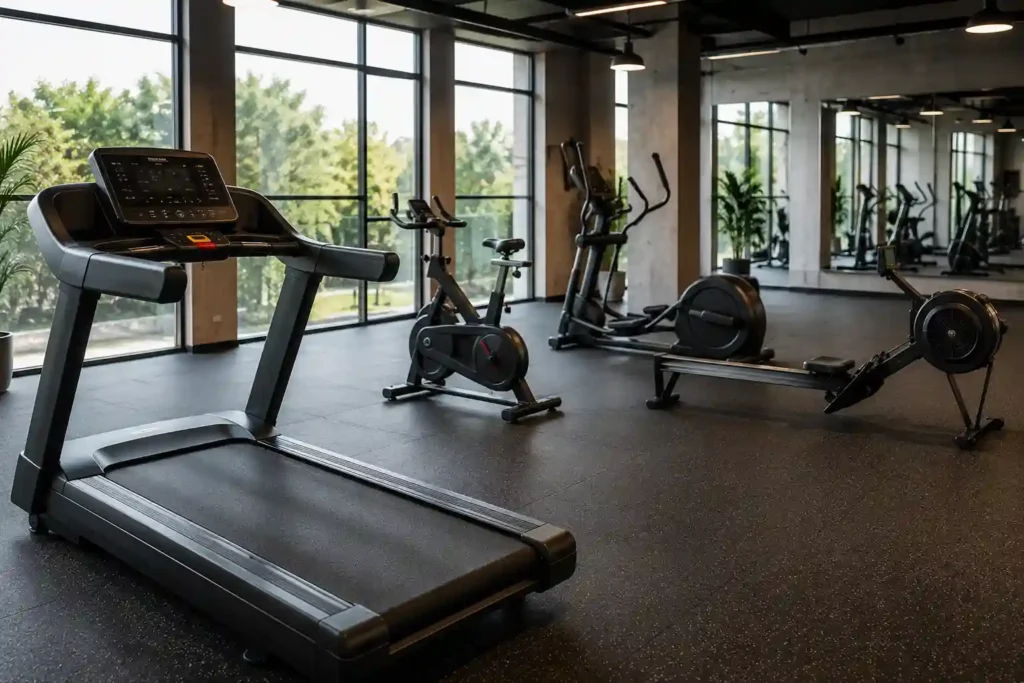
The most common types of cardio machines include:
- Treadmills for walking, jogging, or running with adjustable incline and speed
- Stationary bikes for low impact leg and cardiovascular training
- Ellipticals for a full body, joint friendly cardio workout
- Rowing machines for combined upper body, core, and cardio conditioning
- Stair climbers for lower body endurance and calorie burn
Each machine offers a different impact level and muscle focus, so the right choice depends on your joints, goals, and training preferences.
Treadmills
Treadmills remain one of the most widely used pieces of cardio equipment because they mimic a natural movement pattern. They suit runners, walkers, and anyone building general cardiovascular fitness, and most models allow incline adjustments to increase intensity without adding impact.
Stationary Bikes and Spin Bikes
Stationary bikes are ideal for people who want an effective cardio workout with minimal joint stress. They are especially useful for beginners, older adults, or anyone recovering from a lower body injury.
Ellipticals
Ellipticals combine upper and lower body movement in one low impact machine, making them a strong choice for people who want a full body cardio session without the pounding of running.
Rowing Machines
Rowing machines train the back, arms, legs, and core simultaneously while building cardiovascular endurance, making them one of the most efficient calorie burning tools in the gym.
Stair Climbers and Step Mills
Stair climbers target the glutes and lower body while delivering a demanding cardiovascular challenge, often favored by athletes and those training for lower body endurance.
Strength Training Machines
Strength training machines use a lever, cable, or pulley system paired with a weight stack to guide your body through a fixed, controlled range of motion. This guided path makes them a common starting point for beginners, since it reduces the risk of poor form compared to free weights.
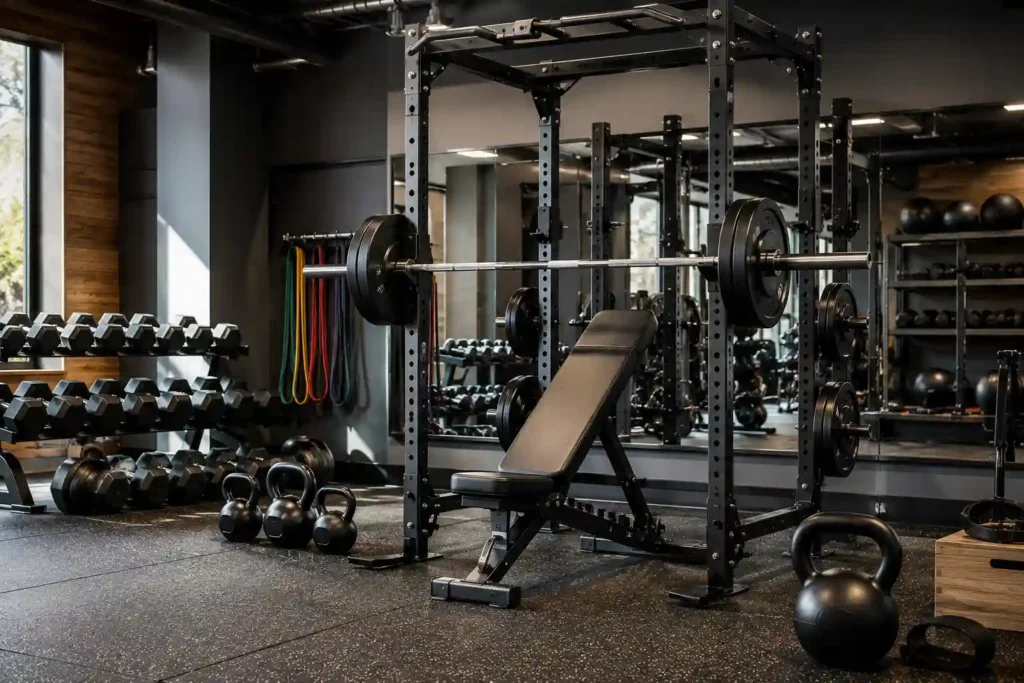
Common strength machines include:
- Leg press for lower body strength
- Chest press for pushing movements and upper body power
- Lat pulldown for back and pulling strength
- Cable machines for versatile, multi angle exercises
- Smith machines for guided barbell style lifts
These machines are especially useful for isolating specific muscle groups, training safely after an injury, or learning proper movement patterns before progressing to free weights.
Leg Press and Lower Body Machines
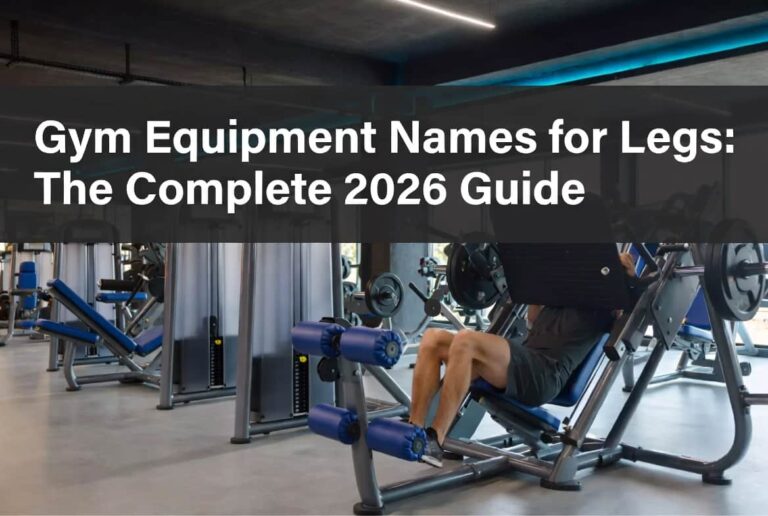
The leg press targets the quads, hamstrings, and glutes while supporting the lower back, making it a safer alternative to squats for people new to lower body training.
Chest Press and Pec Deck
Chest press machines isolate the pectoral muscles and triceps, giving beginners a controlled way to build pushing strength without needing a spotter.
Lat Pulldown and Back Machines
The lat pulldown mimics a pull up motion, helping build back and bicep strength for those who cannot yet perform a full bodyweight pull up.
Cable Machines
Cable machines are among the most versatile pieces of equipment in any gym, allowing for dozens of exercises across nearly every muscle group by adjusting pulley height and attachments.
Smith Machines
Smith machines combine a barbell with a fixed vertical track, offering added stability for squats, presses, and lunges, particularly useful for solo lifters.
Free Weights
Free weights allow your body to move naturally through space, rather than following a fixed machine path. This freedom engages stabilizer muscles that machines often bypass, making free weights a favorite for building functional, real world strength.
The main types of free weights include:
- Dumbbells for single arm and unilateral training
- Barbells for heavy compound lifts
- Kettlebells for dynamic, momentum based movements
- Weight plates and racks for loading barbells and organizing storage
Free weights tend to demand more coordination and control than machines, which makes proper form especially important.
Dumbbells
Dumbbells are among the most versatile pieces of gym equipment available, suitable for isolation exercises, compound lifts, and unilateral training that helps correct muscle imbalances between the left and right sides of the body.
Barbells
Barbells are the standard tool for heavy compound movements like squats, deadlifts, and bench presses, allowing lifters to load significant weight for maximum strength gains.
Kettlebells
Kettlebells support dynamic, swinging movements that build power, grip strength, and cardiovascular conditioning in a single exercise. Because kettlebell swings and lifts can be risky without proper technique, learning correct form is especially important before increasing weight.
Weight Plates and Racks
Weight plates load barbells to the desired resistance, while storage racks keep a gym floor organized and reduce tripping hazards, an often overlooked but important safety detail.
Bodyweight and Functional Training Equipment
Bodyweight and functional equipment uses your own body weight, momentum, or gravity as resistance. This category has grown rapidly in popularity because it builds practical, everyday strength while requiring minimal space, making it ideal for both commercial gyms and home setups.
Common tools in this category include:
- Pull up bars for upper body and back strength
- Dip stations for triceps and chest development
- Suspension trainers for adjustable bodyweight resistance
- Plyo boxes for explosive power training
- Medicine balls for core and rotational strength
These tools emphasize movement quality and control, which makes them valuable for athletes and general fitness enthusiasts alike.
Pull Up Bars and Dip Stations
Pull up bars target the back, arms, and shoulders through a vertical pulling motion, while dip stations focus on the chest and triceps through a pushing movement. Both are simple, durable, and require little maintenance.
Suspension Trainers (TRX Style)
Suspension trainers use straps and handles anchored to a wall or frame, letting users adjust the angle of their body to change exercise difficulty. Their portability makes them popular in home gyms, outdoor bootcamps, and small training studios.
Plyo Boxes and Medicine Balls
Plyo boxes support explosive, jump based training that builds power and athleticism, while medicine balls add a rotational, core focused element to functional workouts. Both tools are commonly used in HIIT and athletic conditioning programs.
Resistance and Mobility Accessories
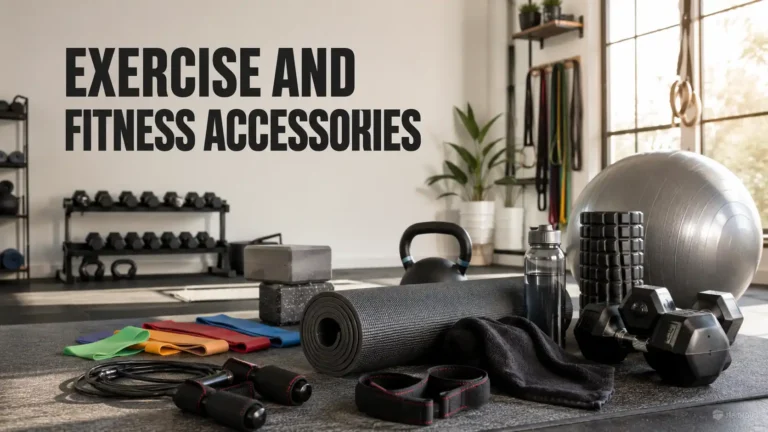
Resistance and mobility accessories round out a gym’s equipment lineup by supporting warm ups, recovery, and lighter intensity training. While smaller and less expensive than machines or free weights, they play a significant role in injury prevention and long term training consistency.
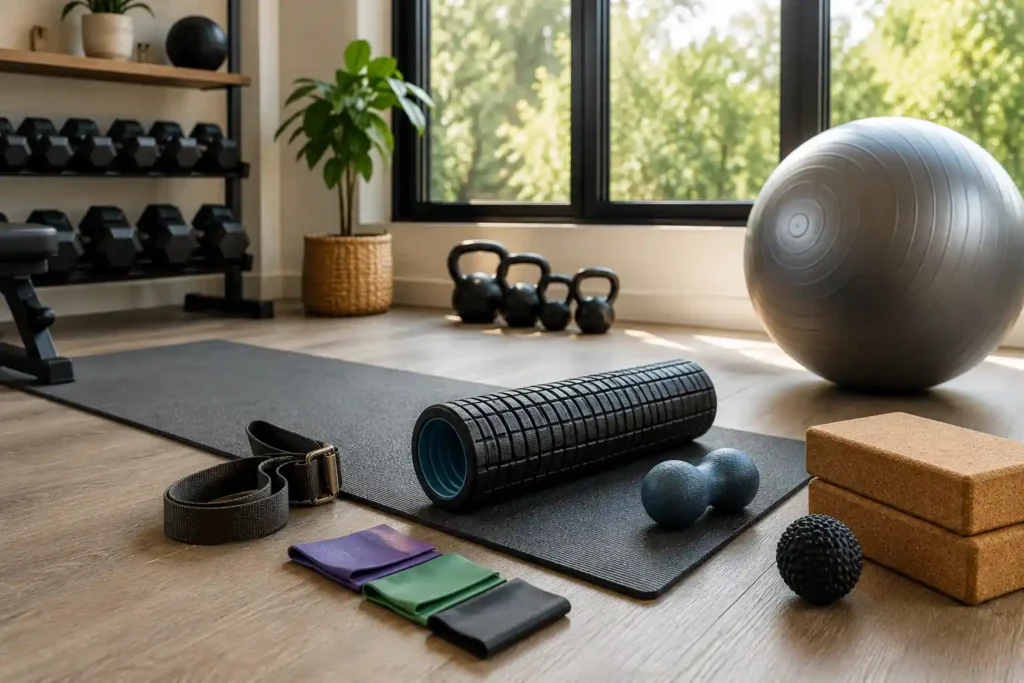
Common accessories include:
- Resistance bands for warm ups, activation, and portable strength training
- Foam rollers for muscle recovery and myofascial release
- Stability balls for core stability and balance work
- Ankle weights for added resistance during bodyweight movements
Resistance bands, in particular, offer high versatility without taking up much floor space, which is why they work well in physical therapy settings, home gyms, and warm up areas of commercial facilities alike.
Foam rollers and stability balls are especially valuable for people recovering from injury or looking to improve flexibility, since they support the connective tissue and joint health that heavier training can strain over time. Together, these accessories fill an important gap between high intensity training and long term physical maintenance.
Specialty and Sport Specific Equipment
Specialty equipment serves athletes and fitness enthusiasts training for specific performance goals rather than general fitness. This category is common in CrossFit style boxes, athletic training facilities, and sports performance centers, though it has increasingly found a place in mainstream commercial gyms.
Notable specialty tools include:
- Battle ropes for high intensity, full body conditioning
- Sleds for pushing and pulling strength
- Agility ladders for footwork and coordination
- GHD machines (glute ham developers) for posterior chain strength
Battle ropes deliver an intense cardiovascular and upper body burn in short bursts, making them a favorite for HIIT style conditioning. Sleds build explosive lower body power through pushing and dragging movements, closely mirroring the demands of field based sports like football and rugby.
Agility ladders improve footwork, coordination, and reaction speed, benefiting athletes across nearly every sport. GHD machines target the hamstrings, glutes, and lower back, an area often undertrained by standard machines and free weights alike.
While this equipment is not essential for general fitness, it adds meaningful value for anyone training toward athletic performance, sport specific conditioning, or advanced strength goals.
How to Choose the Right Gym Equipment for Your Goals
Choosing the right gym equipment starts with a clear goal, not a shopping list. Fat loss, muscle gain, mobility, and rehabilitation each call for a different equipment mix, and understanding that mix prevents wasted money and wasted time.
Here is a simple way to match equipment to common goals:
- Fat loss: prioritize cardio machines like treadmills, rowers, or ellipticals, paired with functional tools like battle ropes or kettlebells for calorie dense circuits
- Muscle gain: focus on free weights and strength machines that allow progressive overload over time
- Mobility and recovery: lean on accessories like foam rollers, resistance bands, and stability balls
- Rehabilitation: favor guided strength machines that limit range of motion and reduce injury risk
Space and budget matter just as much as goals. A home gym with limited square footage benefits from compact, multi purpose tools like adjustable dumbbells, resistance bands, and a suspension trainer, rather than large machines that dominate a room. A commercial gym, by contrast, needs a broader mix across all categories to serve a wide range of members, which is why gym owners often segment their floor into cardio zones, strength zones, and functional training areas.
The goal is not to own every type of gym equipment. It is to own the right combination for how you actually train.
Gym Equipment Safety and Maintenance Basics
Proper form matters more than the equipment itself. Even the best designed machine or free weight can cause injury if used incorrectly, which is why understanding basic safety principles is essential before increasing weight or intensity.
A few core safety practices apply across nearly all equipment types:
- Learn proper form first, ideally with a trainer or reliable instructional resource, before adding heavy resistance
- Use a spotter for free weight exercises like bench presses or heavy squats
- Check machine settings such as seat height and range of motion before each use
- Warm up with light cardio or mobility work to prepare joints and muscles
Selecting the appropriate weight is essential to avoiding strain, particularly with free weights like kettlebells and barbells, where momentum can quickly amplify poor technique.
Maintenance is equally important, especially in commercial settings where equipment sees daily heavy use. A basic maintenance routine includes weekly tasks like cleaning pads and wiping down consoles, along with monthly or quarterly checks for cable wear, bolt tightness, and belt alignment on cardio machines. Neglected equipment does not just wear out faster, it becomes a genuine injury risk for users.
Whether training at home or managing a full commercial floor, treating safety and maintenance as ongoing habits, not one time setup tasks, keeps equipment reliable and workouts effective for years.
Frequently Asked Questions
What are the main types of gym equipment?
The main types are cardio machines, strength training machines, free weights, bodyweight and functional tools, resistance and mobility accessories, and specialty sport specific equipment. Each category targets a different training goal, from cardiovascular endurance to raw strength to recovery, and most well rounded gyms include a mix of all six.
What is the difference between free weights and machines?
Free weights, like dumbbells and barbells, require you to control balance and movement path yourself, engaging more stabilizer muscles. Machines guide you through a fixed range of motion using a lever or cable system, offering more stability and making them generally safer for beginners.
What gym equipment is best for beginners?
Beginners often start with strength machines like the leg press and chest press, since the guided motion reduces injury risk while building foundational strength. Cardio machines like stationary bikes are also beginner friendly due to their low joint impact and simple learning curve.
Which gym equipment burns the most calories?
Rowing machines and stair climbers tend to burn calories fastest because they engage large muscle groups across the full body simultaneously. High intensity tools like battle ropes and kettlebells also deliver strong calorie burn in short, intense bursts.
What equipment do you need for a home gym?
A basic home gym benefits from adjustable dumbbells, resistance bands, a suspension trainer, and a stability ball. These compact tools cover strength, functional training, and mobility without requiring the space or cost of large machines.
Are gym machines safer than free weights?
Generally, yes. Machines guide movement along a fixed path, reducing the chance of poor form causing injury. Free weights allow more natural movement but require greater control, coordination, and often a spotter, especially for heavier compound lifts like squats and bench presses.
What is functional training equipment?
Functional training equipment includes tools like suspension trainers, medicine balls, and plyo boxes that mimic real world movement patterns. It builds practical strength, balance, and coordination rather than isolating a single muscle, making it popular among athletes and general fitness users alike.
How often should gym equipment be cleaned or maintained?
Cardio machine pads and consoles should be wiped weekly, while cables, belts, and bolts need monthly or quarterly inspection. Commercial gyms often follow a documented maintenance schedule, since heavier daily use accelerates wear compared to home equipment.
What equipment is best for building muscle versus losing fat?
Muscle building favors free weights and strength machines used with progressive overload over time. Fat loss responds well to cardio machines and high intensity functional tools like kettlebells or battle ropes, often combined with a consistent strength routine for best results.
What is the most versatile piece of gym equipment?
Dumbbells are widely considered the most versatile, since they support isolation exercises, compound lifts, and unilateral training for nearly every muscle group. Resistance bands are a close second, offering portable, adjustable resistance for strength, mobility, and warm up routines.
Conclusion
Understanding the types of gym equipment takes the guesswork out of training. Cardio machines build endurance, strength machines and free weights build muscle, functional tools improve real world movement, and accessories support recovery and mobility along the way.
The best gym setup, whether at home or in a commercial facility, is not the one with the most equipment. It is the one that matches your specific goals, available space, and training level. Start with the categories that align with what you want to achieve, then expand as your needs evolve.
As fitness technology and training methods continue advancing into 2026, equipment choices will keep growing more specialized and data driven. Understanding these foundational categories now sets you up to make smarter decisions no matter how the equipment landscape changes. The right mix, chosen with intention, is what turns a gym into a space that actually works for you.