Exercise and Fitness Accessories: The Complete Buying Guide
Your gym bag is a mess. Your resistance bands are tangled. You bought a foam roller two years ago and used it once. Sound familiar?
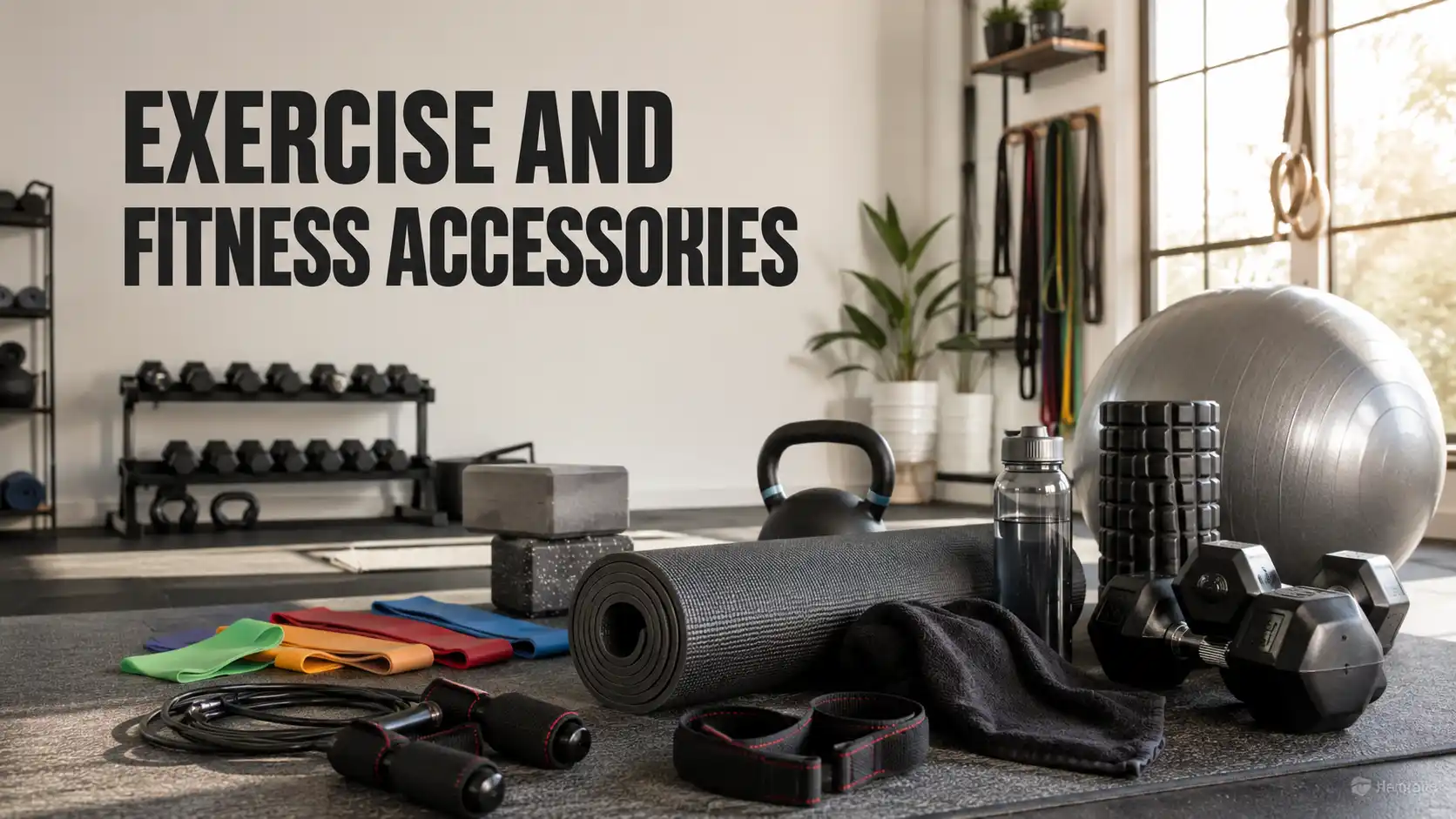
The right exercise and fitness accessories can turn a chaotic workout routine into one that actually sticks. These are the small but essential tools, resistance bands, mats, gloves, recovery gear, and more, that support every stage of your fitness journey without requiring a full home gym overhaul.
This guide breaks down exactly which accessories matter, why they matter, and how to choose gear that fits your space, budget, and goals. Whether you are just starting out or refining a home gym setup, you will walk away knowing what to buy, what to skip, and how to keep your equipment working for you longer.
In short: the best exercise and fitness accessories are the ones that match your training style, fit your space, and hold up to regular use.
Table of Contents
What Are Exercise and Fitness Accessories?
Exercise and fitness accessories are the smaller tools and gear items that support your workouts without being the centerpiece equipment itself. Think resistance bands, yoga mats, gloves, foam rollers, and jump ropes. They are different from major equipment like treadmills, power racks, or exercise bikes, which anchor a home gym. Accessories are what make each workout session safer, more comfortable, and more effective.
Anyone building a home gym setup, whether in a spare bedroom or a corner of an apartment, usually starts here. Accessories cost less, take up little space, and adapt to almost any training style. A single resistance band can replace an entire section of a weight rack, and a mat can turn a hardwood floor into a usable stretching and core training surface in seconds.
The category is broad by design. Some accessories are about performance, helping you lift heavier or move more efficiently. Others are about comfort, protecting your joints, hands, or feet during repeated movement. A third group focuses purely on recovery, helping your body repair itself between sessions so you can keep training consistently instead of sitting out with soreness.
Common categories include:
- Support and comfort gear (mats, gloves, wrist wraps)
- Resistance tools (bands, ankle weights, kettlebells)
- Recovery items (foam rollers, massage tools, balance pads)
- Tracking and hydration gear (fitness trackers, water bottles)
Understanding these categories matters because most people do not need everything at once. A beginner working out three times a week on a mat with bodyweight movements has very different accessory needs than someone training for a powerlifting meet. Knowing which bucket an item falls into helps you build a collection intentionally, rather than buying whatever looks appealing at a store or shows up in an online ad.
In short: fitness accessories are the supporting cast that makes strength training, cardio, and recovery routines work better, regardless of what larger equipment you own or don’t own.
Why Fitness Accessories Matter for Your Workout Routine
Fitness accessories matter because they directly affect whether you stick with your routine. A yoga mat that cushions your joints, gloves that stop calluses, or a foam roller that eases soreness all remove small frictions that add up over time. Removing friction is often what separates a habit that lasts from one that fizzles out after a few weeks. Motivation gets people started, but comfort and convenience are usually what keep people going months later.
They also protect you. Wrist wraps stabilize joints during heavy lifts, and knee sleeves offer support during squats or lunges, which lowers your risk of strain. Even something as simple as a properly cushioned mat can reduce joint impact during high repetition floor exercises like mountain climbers or burpees, where hard surfaces gradually wear on knees and wrists.
There is also a psychological component that often gets overlooked. Having dedicated gear, even something as small as a personal jump rope or a labeled water bottle, creates a sense of ownership over your fitness routine. It signals to your brain that this is a real, ongoing commitment rather than a temporary experiment. Many people report that simply laying out their mat and bands the night before a workout makes them noticeably more likely to follow through the next morning.
Cost is another factor. A full home gym with a rack and barbell can run into the thousands. Fitness accessories for home use, by contrast, often cost far less while still expanding what your workouts can include. A resistance band set, for example, can replicate dozens of cable machine exercises for a fraction of the price of the machine itself.
Key benefits of fitness accessories:
- Support consistency by improving comfort during workouts
- Reduce injury risk through added stability and joint support
- Lower cost compared to major gym equipment
- Increase workout variety without needing more space
- Build psychological commitment to a regular training habit
In short: the right home gym accessories make workouts more comfortable, safer, and easier to maintain as a long term habit.
Essential Fitness Accessories for Home Gyms
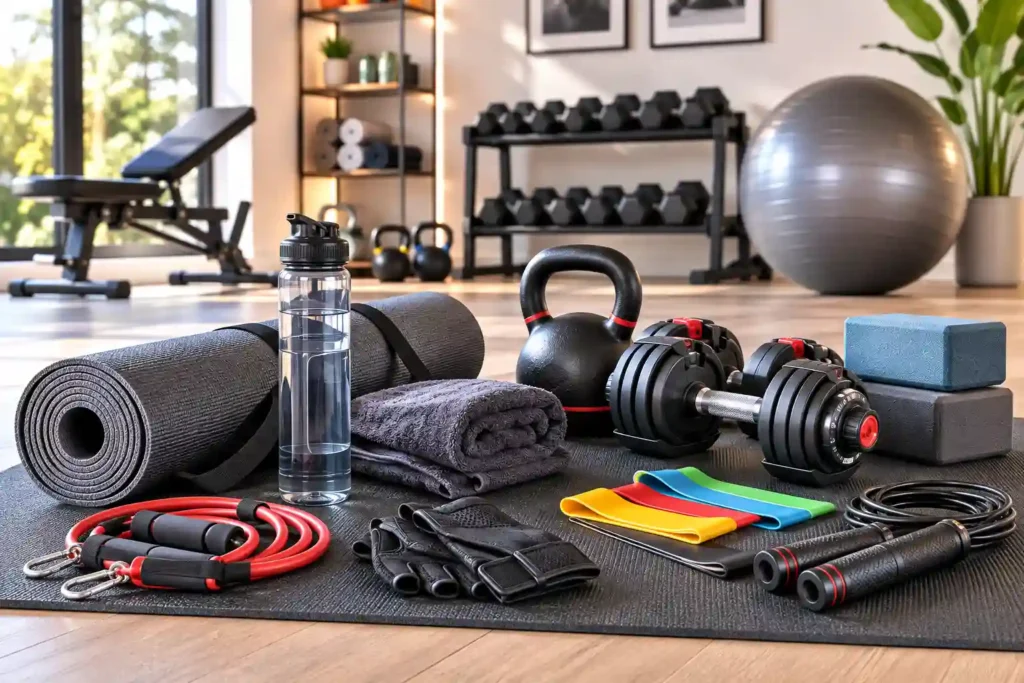
Building a functional home gym starts with a handful of versatile accessories that cover strength, cardio, and mobility. You do not need every item on this list to get started, but understanding what each one offers helps you prioritize based on your specific goals.
Resistance Bands
Resistance bands are one of the most versatile fitness accessories for home workouts. They come in varying tension levels, pack flat, and work for strength training, mobility drills, and warm ups alike. A basic set with multiple resistance levels covers most exercises, from squats to shoulder presses. Loop bands are ideal for lower body activation work, while tube bands with handles more closely mimic cable machine movements for upper body training.
One underrated advantage of bands is variable resistance. Unlike a dumbbell, which applies constant weight throughout a movement, a band gets harder to stretch the further you pull it. This means the resistance increases exactly where your muscles are typically strongest in the movement, which some trainers argue creates a more natural strength curve than free weights alone.
Yoga Mats and Exercise Mats
A quality mat cushions joints during floor work and adds grip during standing exercises. Thicker mats suit yoga and stretching, while denser mats hold up better under weighted movements like planks with added resistance. Material matters here too. Closed cell foam mats resist moisture and are easier to wipe clean, while open cell mats tend to offer more cushioning but absorb sweat more readily.
Thickness is a genuine tradeoff, not just a comfort preference. A mat under a quarter inch thick provides better stability for balance-focused work like yoga, since your foot does not sink into the surface. A thicker mat, closer to half an inch, protects joints better during high impact floor exercises but can make balance poses feel less stable.
Dumbbells and Kettlebells
Adjustable dumbbells save space by replacing an entire rack of fixed weights. Kettlebells add a dynamic, full-body training option that works well for both strength and conditioning goals. Kettlebell movements like swings and Turkish get-ups engage the core and posterior chain in ways that traditional dumbbell exercises often do not, making them a useful complement rather than a direct substitute.
For beginners, a single adjustable dumbbell pair that covers a wide weight range is usually more practical than buying multiple fixed sets. It takes up less floor space and grows with you as your strength increases, delaying the need for a second purchase.
Jump Ropes
A jump rope delivers efficient cardio in a small footprint. Weighted versions add resistance for building shoulder and forearm endurance, while lighter speed ropes are better suited for high repetition cardio intervals. A jump rope session of just ten to fifteen minutes can burn a comparable number of calories to a longer, steady state cardio session, making it one of the most time efficient accessories on this list.
Foam Rollers
Foam rollers support muscle recovery through self-myofascial release, helping loosen tight areas after intense sessions. Denser rollers apply deeper pressure and suit more experienced users, while softer rollers are gentler and better for beginners still adjusting to the sensation of rolling out tight muscle tissue.
A few less obvious additions round out a well-stocked kit once the basics are in place. Ankle weights add resistance to lower body isolation work, such as leg raises or glute kickbacks, without requiring a machine. A pull-up bar that mounts in a doorway opens up an entire category of upper body pulling exercises that bands and dumbbells cannot fully replicate. A stability ball, while less common than the items above, supports core stabilization work and can double as an alternative seat for posture-focused exercises.
It is worth pointing out that quantity is not the goal here. A well-curated set of five or six accessories, used consistently, will always outperform a closet full of gear that only gets touched occasionally. The value of any accessory comes entirely from how regularly it fits into your actual routine, not from how comprehensive your collection looks.
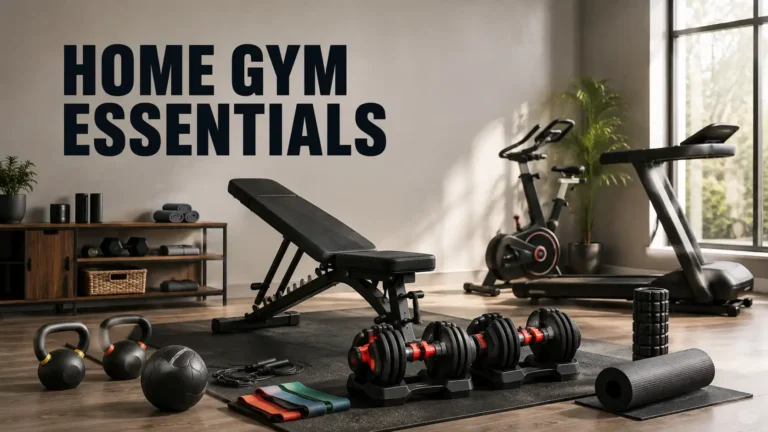
In short: these five accessories form the foundation of nearly any home gym accessories collection, regardless of fitness level. For a deeper look at building out the rest of your setup, our Home Gym Essentials beginner’s guide walks through where to start beyond accessories.
Recovery and Mobility Accessories
Recovery accessories are just as important as the tools you use to train. Without proper recovery, muscles stay tight, soreness lingers, and progress slows down. This is where a dedicated set of mobility tools earns its place in any home gym gear collection. Many people focus heavily on the training side of fitness while treating recovery as an afterthought, but the two are genuinely inseparable. Muscle adaptation happens during rest, not during the workout itself.
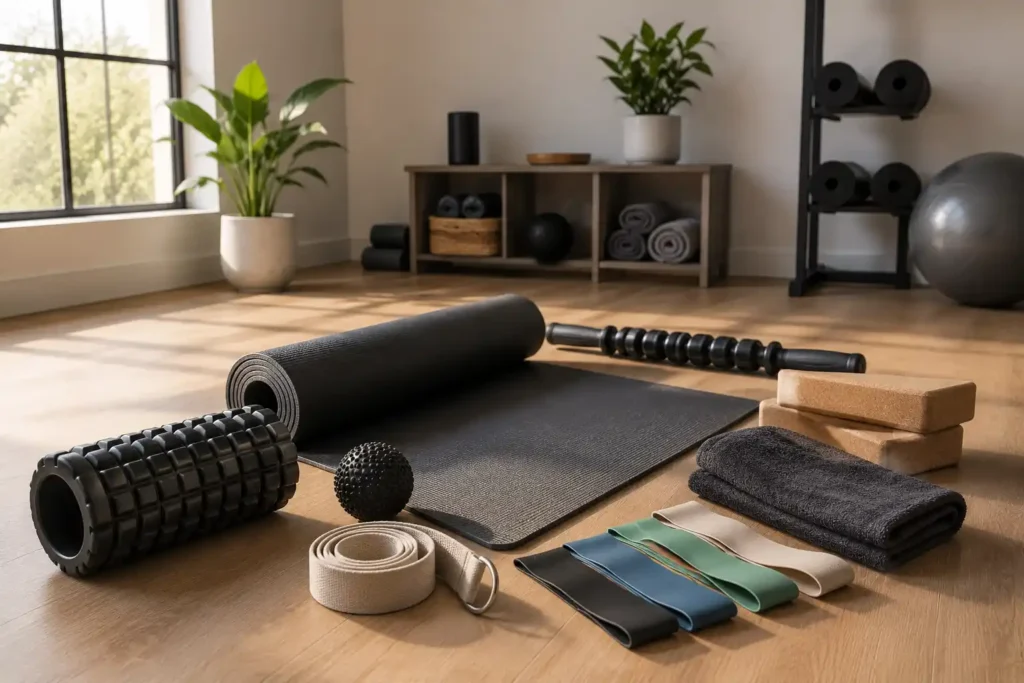
Foam rollers remain a go-to for loosening tight muscles after a workout, but they are not the only option worth considering. A well-rounded recovery toolkit typically includes a mix of pressure-based and stretch-based tools, since different types of tightness respond better to different approaches.
- Massage guns use percussive therapy to target sore spots quickly and are especially useful after leg day or long runs. They allow for more precise, localized pressure than a foam roller and can reach areas like the calves or upper back more easily.
- Balance pads improve ankle stability and proprioception, which helps prevent falls and joint strain. They are particularly useful for anyone recovering from a minor ankle or knee injury, or for older adults working on fall prevention.
- Stretching straps assist with deeper, more controlled stretches for hamstrings and shoulders. They allow you to hold a stretch with proper form even when flexibility limits how far you can reach unassisted.
- Cold therapy tools, like ice rollers or cold packs, help reduce inflammation after intense sessions. Localized cold therapy can be a lower cost, lower commitment alternative to a full cold plunge setup.
Recovery does not need to be complicated or expensive to be effective. A foam roller and a stretching strap, used consistently for ten minutes after each workout, often deliver more benefit than an expensive gadget used inconsistently. Consistency, as with most areas of fitness, tends to matter more than the specific tool.
None of these tools are medical devices, and anyone dealing with an injury or chronic pain should consult a healthcare professional before adding recovery tools to their routine. Using a massage gun on an acute injury, for example, can sometimes make inflammation worse rather than better.
In short: recovery and mobility accessories help your body bounce back faster, which keeps you training consistently instead of sitting out with soreness or tightness.
Accessories for Strength Training Support
Strength training accessories help you lift safely and with better form as the weight on the bar increases. They are not required for every workout, but they become more valuable as training intensity grows. Many beginners skip this category entirely at first, which is usually the right call, since lighter weights rarely demand extra joint or grip support.
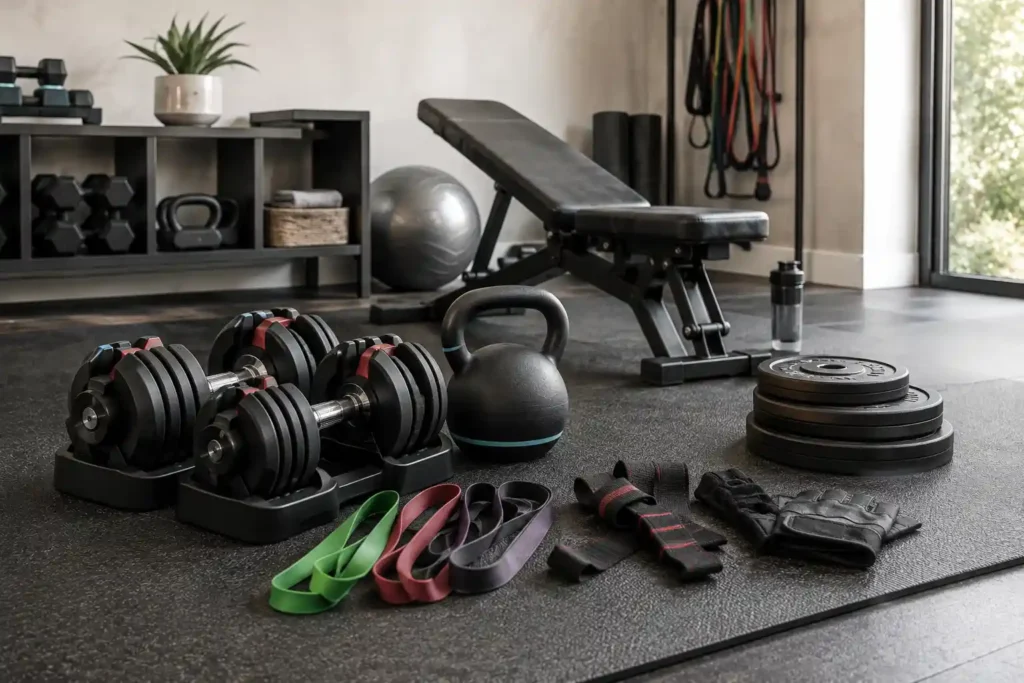
Gym gloves protect your palms from calluses and improve grip during dumbbell or barbell work. They are especially useful for anyone who trains regularly and wants to avoid the rough, thickened skin that comes with frequent bar or handle contact. Some lifters prefer chalk over gloves, since chalk improves grip without adding a layer of material between the hand and the bar, but this comes down to personal preference.
Wrist wraps stabilize the joint during heavy pressing movements, which reduces strain on tendons. They are particularly useful during overhead pressing or heavy bench work, where the wrist can hyperextend under load if left unsupported. Lifting straps help maintain grip during deadlifts and rows when hand fatigue would otherwise limit the set, allowing the larger back and leg muscles to be trained to their full capacity rather than being held back by grip strength alone.
Knee sleeves offer compression and support during squats, helping with both stability and joint comfort. Unlike knee wraps, which are stiffer and designed to add a slight rebound effect to competitive lifts, sleeves are more about warmth, blood flow, and general joint comfort during higher volume training. Weighted vests add resistance to bodyweight movements like push-ups, pull-ups, or walking, which is useful once basic strength plateaus and bodyweight alone no longer provides enough challenge.
Beginners typically do not need this full lineup right away. A good approach is:
- Start with gloves or chalk for grip comfort
- Add wrist wraps once pressing weight increases noticeably
- Introduce straps and sleeves as training intensity or volume grows
- Consider a weighted vest only after bodyweight exercises feel too easy
It is worth noting that support gear should complement good form, not replace it. Wrist wraps and knee sleeves can help with comfort and stability, but they are not a substitute for learning proper lifting mechanics, and relying on them too early can mask technique issues that should be addressed directly.
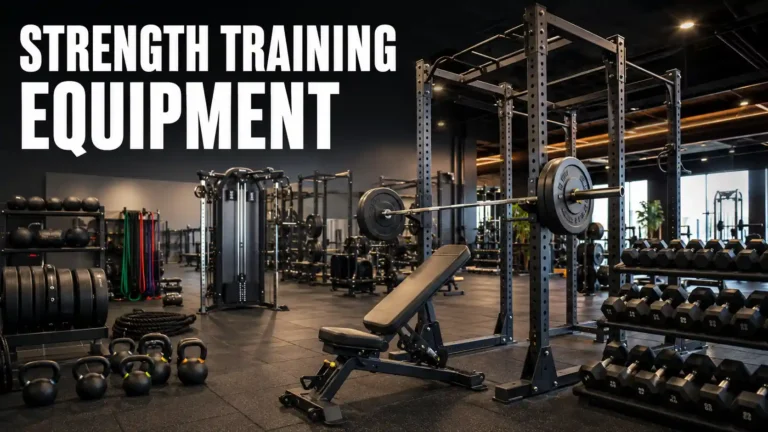
In short: strength training accessories become more useful as your lifts get heavier, so it makes sense to add them gradually rather than buying everything at once. If you are ready to go beyond accessories and invest in dedicated equipment, our Strength Training Equipment guide covers racks, bars, and benches in detail.
Fitness Accessories for Small Spaces and Apartments
Limited space does not mean limited options. Many fitness accessories are designed specifically for compact living, making it possible to build a full home gym setup in a closet, corner, or under a bed. Renters in particular benefit from gear that requires no permanent installation and can be packed away completely when not in use.
Foldable and multi-use gear makes the biggest difference here. A resistance band set stores in a small pouch and replaces an entire wall of weights. Adjustable dumbbells condense a full rack into two compact blocks that take up minimal floor space. Suspension trainers anchor to a door frame and pack away in seconds, offering dozens of exercise variations without any permanent footprint. Even a folding exercise bench can tuck against a wall or slide under a bed frame when not needed.
Vertical storage is often the most overlooked space-saving strategy. Wall-mounted hooks and pegboards can hold resistance bands, jump ropes, and gloves without using any floor space at all, keeping a small room functional for purposes beyond just working out.
Storage matters just as much as the gear itself. A few practical tips:
- Use over-the-door hooks for bands and jump ropes
- Store mats rolled and upright in a closet corner
- Choose stackable or nesting weights when possible
- Pick accessories that serve more than one purpose, like a bench that also stores gear underneath
- Consider a rolling storage cart that lets you wheel your entire setup out of sight after a workout
Noise is another consideration unique to apartment living. Rubber-coated dumbbells and kettlebells reduce impact noise on shared floors compared to uncoated cast iron, which matters for anyone living above another unit. A thick mat placed under weights can further reduce vibration and sound transfer.
In short: apartment dwellers and renters can build an effective home gym accessories setup by prioritizing compact, multi-purpose gear over bulky single-use equipment.
How to Choose the Right Fitness Accessories Shop or Source
Not every fitness accessories shop offers the same quality, and picking the wrong source can mean paying for gear that wears out within weeks. A little research upfront saves money and frustration later, especially for items that see frequent use, like mats and bands, where wear and tear accumulates quickly.
Start by checking materials. Latex resistance bands should be described as anti-snap or reinforced, since standard latex can degrade and snap unexpectedly with regular use. Mats should list thickness and density, not just size, since two mats of identical dimensions can perform very differently depending on the foam used. Metal components on gloves, straps, or vests should specify the type of stitching or buckle used, as these are usually the first points of failure on lower quality gear.
Reviews matter more than star ratings alone. Look for detailed feedback that mentions durability after weeks or months of use, not just first impressions out of the box. A product with a high average rating based mostly on unboxing reviews tells you very little about how it holds up over time. Reviews that specifically mention long term use, washing, or heavy repeated sessions are far more useful for gauging real durability.
It is also worth checking whether a shop specializes in fitness gear or sells accessories as a small side category alongside unrelated products. Specialized fitness accessories shops tend to have more accurate product descriptions and are more likely to stand behind their gear with a reasonable warranty.
A quick checklist when evaluating a fitness accessories shop:
- Clear product specifications, not vague descriptions
- Verified customer reviews with photos or videos
- Reasonable return or warranty policy
- Transparent pricing without inflated “discounts”
- Positive reputation across multiple platforms, not just one
- A responsive customer service channel in case of defects
In short: a trustworthy fitness accessories shop backs up its claims with specifics, and taking a few extra minutes to check details prevents wasted money on gear that fails early. If you want to compare manufacturers before buying, our roundup of the best fitness equipment brands breaks down which companies consistently deliver on quality.
Budget Friendly Fitness Accessories That Are Worth It
You do not need a large budget to build an effective home gym accessories collection. A handful of affordable pieces cover most training needs, and starting small often works better than overbuying gear that ends up unused in a closet within a few months.
A resistance band set, a basic yoga mat, and one pair of medium weight dumbbells typically cost under 200 dollars combined and cover the majority of strength and mobility training. This combination alone handles a large share of effective home workouts, and it is often enough to sustain a consistent routine for six months or longer before any additional gear becomes necessary.
When budget is tight, prioritize based on impact:
- Start with resistance bands since they offer the most exercise variety per dollar and work for nearly every muscle group
- Add a mat next for comfort during floor work and stretching, especially if your home has hard flooring
- Choose one pair of dumbbells before considering a full rack or adjustable set, since a single moderate weight covers a wide range of exercises
- Skip recovery tools initially and add a foam roller only once soreness becomes a regular issue worth addressing directly
It is worth resisting the urge to buy every accessory at once. A slower, needs-based approach tends to result in gear that actually gets used, rather than a drawer full of items purchased on impulse and abandoned after a single session. Tracking which pieces of gear you actually reach for over a month or two is a practical way to decide what is worth expanding on next.
Secondhand marketplaces are also worth considering for larger purchases like dumbbells or kettlebells, which hold up well over time and rarely wear out the way bands or mats do. Buying used metal equipment carries far less risk than buying used fabric or foam items, which can degrade in ways that are not always visible.
In short: affordable home gym accessories can cover most training goals when you prioritize versatility over quantity, spending on the items that unlock the widest range of exercises first.
Common Mistakes to Avoid When Buying Fitness Accessories
Even well-intentioned buyers make avoidable mistakes when stocking up on fitness accessories. Knowing these pitfalls ahead of time can save both money and closet space, and it can also prevent the discouragement that comes from a pile of unused gear.
Overbuying is the most common issue. It is tempting to purchase every accessory that looks useful, especially during a sale or after seeing a compelling ad, but gear that does not match your actual training routine usually ends up unused within a few months. A more effective approach is to buy one new accessory at a time and use it consistently for several weeks before adding anything else.
Ignoring quality is another frequent misstep. A cheap, thin mat or a resistance band without reinforced stitching often fails quickly, costing more in replacements than a durable option would have upfront. This is sometimes called the false economy of buying cheap, where the lower initial price ends up costing more over time due to repeated replacements.
Some buyers skip safety-related gear entirely, assuming it is optional. Wrist wraps, knee sleeves, or proper footwear become important once training intensity increases, and skipping them can lead to avoidable strain that sidelines a routine for weeks.
Mismatched gear is a subtler issue. Buying advanced strength accessories, like heavy resistance bands or a weighted vest, before building a consistent routine often leads to frustration rather than progress, since the gear outpaces the current fitness level.
A final mistake worth mentioning is buying based purely on aesthetics or trends seen on social media. A piece of equipment that looks impressive in a video is not necessarily the right fit for your specific goals, space, or experience level.
A quick checklist to avoid these mistakes:
- Buy based on your current routine, not an imagined future one
- Prioritize durability over the lowest price
- Add safety gear as training intensity increases
- Match accessory difficulty to your current fitness level
- Avoid purchases driven purely by trends or social media
In short: the biggest fitness accessory mistakes come from buying too much, too soon, or too cheap, rather than choosing gear that matches actual training needs.
How to Maintain and Care for Your Fitness Accessories
Proper care extends the life of your fitness accessories significantly, which means fewer replacements and better long-term value from your home gym gear. Maintenance does not need to be time consuming, but it does need to be consistent to make a real difference.
Mats should be wiped down after every use with a mild soap solution and left to air dry, since trapped sweat breaks down material faster and encourages odor and bacterial growth. Avoid harsh chemical cleaners, which can degrade the surface texture and reduce grip over time. Resistance bands need to be kept away from direct sunlight and extreme heat, as UV exposure and warmth cause latex to degrade and crack over time. Storing bands in a drawer or bag rather than leaving them out also helps preserve their elasticity.
Metal accessories, like dumbbells or kettlebells, benefit from an occasional wipe to prevent rust, especially in humid climates or homes without climate control in the workout area. Rubber-coated versions are more forgiving here, but the metal handles and connection points still benefit from periodic attention.
Fabric items, like gloves and wrist wraps, should be washed according to their care label and fully dried before storage to prevent bacterial buildup, which is a common cause of odor and premature wear in frequently used gear.
General replacement guidelines:
- Resistance bands: replace when you notice small cracks or reduced elasticity, often every 6 to 12 months with regular use
- Yoga mats: replace once the surface feels slick or worn, typically after 1 to 2 years
- Foam rollers: replace when the material becomes noticeably compressed or uneven
- Gloves and wraps: replace once stitching frays or padding thins out
- Jump ropes: replace when the cable shows fraying or the handles no longer spin smoothly
Storing gear properly, off the floor and away from moisture, also reduces wear significantly. For care routines specific to larger equipment as your collection grows, see our equipment maintenance resources. A dedicated storage bin, wall rack, or shelf keeps accessories organized and easy to find, which in turn makes it more likely you will actually use them regularly.
A simple habit that pays off over time is doing a quick monthly inspection of your entire collection. Check bands for small nicks or thinning spots, run a hand along mat edges for fraying, and check that buckles and stitching on gloves or straps remain intact. Catching early signs of wear means you can plan a replacement before a piece of gear fails mid-workout, which is both safer and less disruptive to your routine than discovering a problem in the middle of a session.
In short: consistent cleaning and correct storage keep fitness accessories functional longer, protecting both your investment and your training consistency.
Fitness Accessories by Training Goal
Different training goals call for different accessory priorities. Rather than buying a generic collection of gear, it helps to think about what you are actually training for and build outward from there.
For general fitness and consistency, the priority is comfort and low barrier to entry. A mat, a set of light to medium resistance bands, and a water bottle cover most needs. The goal here is removing friction so that showing up regularly feels easy, not building maximum strength or endurance right away.
For strength building, dumbbells or kettlebells become the priority, supported by grip and joint accessories like gloves, wrist wraps, and eventually lifting straps as weights increase. A weighted vest can extend bodyweight training once basic strength plateaus, adding progressive overload without requiring a full barbell setup.
For cardio and conditioning, a jump rope and a set of resistance bands for interval-style strength work cover most needs without requiring a treadmill or bike. Heart rate tracking gear also becomes more valuable in this category, since conditioning work benefits from monitoring intensity across a session.
For mobility and flexibility, stretching straps, a foam roller, and a quality mat take priority over strength-focused gear. This group benefits most from consistency, since mobility work tends to show results gradually rather than immediately, unlike strength gains which can feel more noticeable session to session.
For recovery-focused training, such as programs designed around active recovery days, massage tools, balance pads, and cold therapy accessories become more relevant. This category is often the last one people invest in, but it can meaningfully improve consistency in the other categories by reducing downtime from soreness or minor strain.
Matching accessories to your specific goal, rather than buying broadly, tends to produce a more useful collection with less wasted spending. It also makes it easier to evaluate whether a new purchase is actually necessary or simply appealing in the moment.
It is also worth noting that goals often overlap rather than existing in isolation. Someone training primarily for strength still benefits from mobility work to maintain healthy range of motion, and someone focused on general fitness will eventually want at least a little strength-focused gear as their body adapts to the demands of regular exercise. Treat these categories as starting points rather than rigid boxes, and let your actual experience in the gym guide which accessories you add next.
In short: identifying your primary training goal first makes it much easier to choose which fitness accessories are actually worth buying, rather than accumulating gear that does not align with what you are training for.
Fitness Accessories vs. a Full Gym Membership: A Cost Comparison
One common question when building a home setup is whether accessories can genuinely replace a gym membership, at least for a period of time. The answer depends heavily on training goals, but the cost comparison is worth understanding clearly.
A typical gym membership in the United States ranges from roughly 30 to 60 dollars per month for a standard commercial gym, which adds up to 360 to 720 dollars per year. Over three years, that totals well over 1,000 dollars, often significantly more once initiation fees and annual increases are factored in.
By comparison, a well-chosen set of fitness accessories, covering resistance bands, a mat, dumbbells, and basic recovery tools, typically costs between 300 and 500 dollars as a one-time investment. Even accounting for periodic replacement of items like bands or mats every one to two years, the ongoing cost remains far lower than a gym membership over the same period.
That said, accessories are not a complete substitute for every type of training. Heavy barbell work, specialized machines, and certain cardio equipment like a full-sized treadmill or rowing machine are difficult to replicate with accessories alone, which is where our complete guide to gym equipment is useful for understanding what each machine actually does before you invest. For many people, a hybrid approach works best: using accessories for the bulk of regular training, with occasional gym access or a single larger equipment purchase for the specific movements accessories cannot cover.
Time savings are also worth factoring into any cost comparison. Working out at home eliminates commute time to and from a gym, which for many people adds up to several hours saved per week, time that can be redirected toward the workout itself or simply reclaimed.
There is also a consistency argument worth considering alongside the pure cost comparison. Research on exercise adherence consistently points to convenience as one of the strongest predictors of whether someone sticks with a routine long term. Removing the barrier of travel time, parking, and crowded equipment can be the difference between a habit that lasts years and one that fades after a few months, regardless of which option costs less on paper.
In short: a well-chosen set of fitness accessories can replace a significant portion of a gym membership’s value at a fraction of the long-term cost, particularly for anyone whose training does not depend on specialized machines.
How to Build a Complete Home Gym Accessories Kit Step by Step
Knowing which accessories exist is one thing. Actually building a functional kit without overspending or overbuying is another. A step by step approach helps avoid both extremes, and it gives your routine time to reveal what you genuinely need before you commit to a larger purchase.
Step 1: Start with a foundation kit. Begin with a mat, a set of resistance bands with at least three tension levels, and one pair of medium weight dumbbells. This trio covers strength, mobility, and most bodyweight-assisted movements. Use this foundation exclusively for at least three to four weeks before adding anything else, so you can genuinely assess what your routine is missing.
Step 2: Identify your actual gaps. After a few weeks of consistent training, patterns usually emerge. Maybe your knees ache during floor work, which points toward a thicker mat or knee pads. Maybe grip fatigue is limiting your sets before your target muscles are fully worked, which points toward gloves or straps. Buying based on an identified gap, rather than a hypothetical future need, tends to produce gear that actually gets used.
Step 3: Add support gear as intensity increases. Once your training weight or volume increases noticeably, this is the point to introduce wrist wraps, knee sleeves, or lifting straps. Adding these too early, before your body is placing real demand on the joints involved, rarely provides much benefit.
Step 4: Layer in recovery tools. A foam roller is usually the first recovery accessory worth adding, followed by a stretching strap if flexibility becomes a limiting factor in your training. Massage guns and cold therapy tools are worth considering later, once you have a clear sense of where your body tends to hold tension or recover slowly.
Step 5: Reassess every few months. Fitness routines evolve, and accessory needs evolve with them. What served you well as a beginner may not fully support you six months later as strength, volume, or training goals shift. A brief quarterly check-in, asking what gear gets used regularly and what has been sitting unused, keeps your collection lean and genuinely useful.
This staged approach also naturally controls spending. Rather than a single large purchase upfront, costs spread out over months as needs become clear, which is both easier on a budget and more likely to result in a kit that matches how you actually train, rather than how you imagined you might train when you first started.
In short: building a home gym accessories kit works best as a gradual, needs-based process, starting with a small foundation and expanding only once a genuine gap in your routine becomes clear.
Frequently Asked Questions
What are the most important fitness accessories for beginners? Beginners should start with a yoga mat, a set of resistance bands, and one pair of medium weight dumbbells. This combination covers strength, mobility, and basic conditioning without a large upfront investment or overwhelming choice.
Do I need fitness accessories if I already have gym equipment? Yes. Major equipment like racks or treadmills handles specific movements, but accessories like mats, bands, and recovery tools fill gaps in comfort, mobility, and injury prevention that larger equipment does not address.
What is the difference between fitness equipment and fitness accessories? Fitness equipment refers to major, often stationary items like treadmills or power racks. Fitness accessories are smaller, supporting tools like bands, gloves, and mats that enhance comfort, safety, and workout variety.
How much should I budget for home gym accessories? A solid starter set, including a mat, resistance bands, and one pair of dumbbells, typically costs between 150 and 250 dollars. Costs rise with recovery tools or advanced strength accessories added later.
Are resistance bands as effective as dumbbells? Resistance bands offer comparable muscle activation for many exercises and add variable resistance throughout a movement. They work well alongside dumbbells rather than as a complete replacement for heavier strength training.
What fitness accessories help with muscle recovery? Foam rollers, massage guns, balance pads, and stretching straps all support recovery. They ease muscle tightness, improve circulation, and help maintain mobility between training sessions.
How often should I replace fitness accessories like mats and bands? Yoga mats typically last 1 to 2 years, while resistance bands often need replacing every 6 to 12 months depending on use. Watch for cracking, reduced elasticity, or a worn, slick surface.
What accessories are best for small apartments? Resistance bands, suspension trainers, and adjustable dumbbells work well in small spaces since they store compactly and offer wide exercise variety without requiring a dedicated room.
Can fitness accessories help prevent workout injuries? Yes. Items like wrist wraps, knee sleeves, and supportive mats reduce joint strain and improve stability during exercise, lowering the risk of common training injuries.
What should I look for when buying from a fitness accessories shop online? Check for clear product specifications, verified customer reviews, a reasonable return policy, and transparent pricing. These signals typically indicate a shop that sells durable, accurately described gear.
Conclusion
Building a home gym does not require a garage full of equipment. The right exercise and fitness accessories, from resistance bands and mats to recovery tools and strength support gear, cover most training needs without a major investment.
Start small, prioritize versatile pieces, and add gear as your routine and intensity grow. Quality matters more than quantity, and proper care keeps your accessories working longer. Matching your purchases to a clear training goal, rather than buying broadly, is one of the simplest ways to avoid wasted spending.
As home fitness continues evolving toward compact, multi-purpose gear, choosing accessories that adapt to your space and goals will keep your routine sustainable for years to come. The next step is simple: pick one or two essentials from this guide and start building a setup that actually fits how you train. When you are ready to plan a full setup, our best home exercise equipment buying guide is a good next stop.