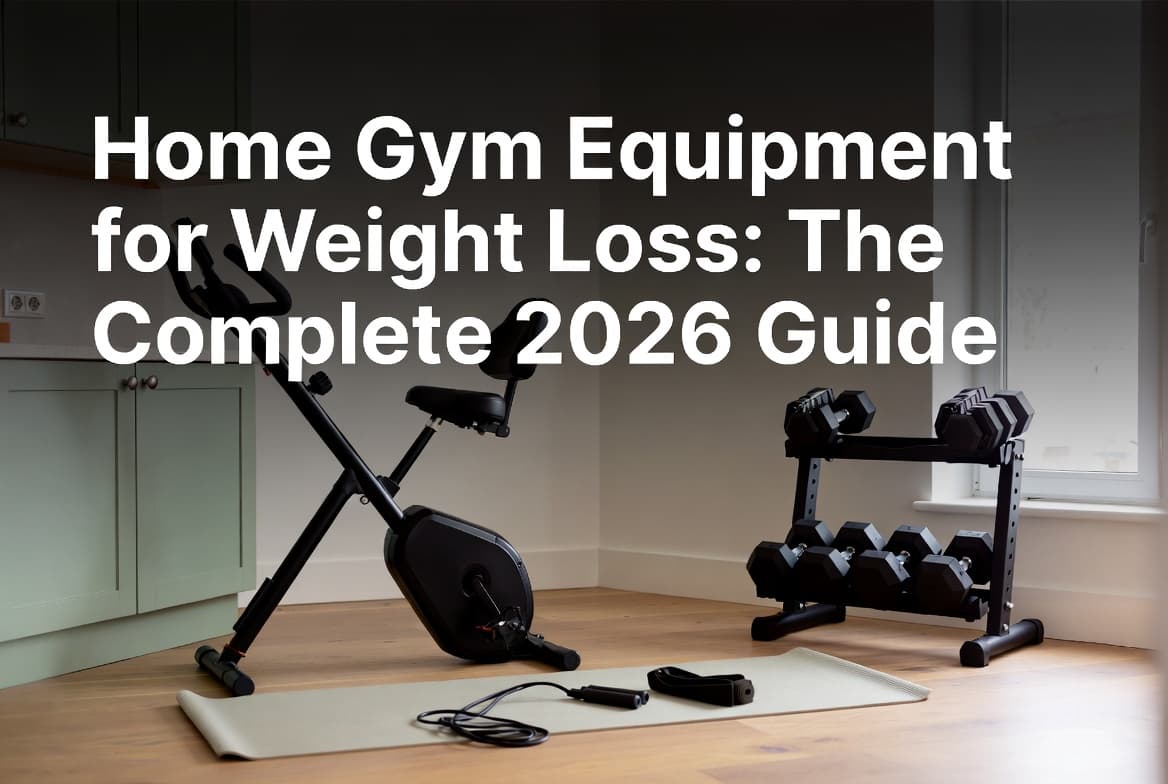
Home Gym Equipment for Weight Loss The Complete 2026 Guide
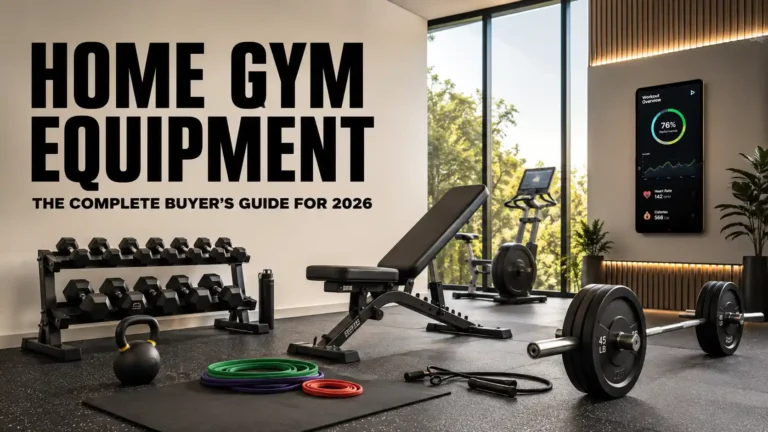
Building a home gym without a clear plan often means ending up with equipment that collects dust within a few months. Choosing the right home gym equipment for weight loss means picking pieces that fit your actual space, budget, and fitness level, not just whatever looks impressive online.
This guide breaks down the most effective cardio and strength equipment for a home setup, organized by budget and space requirements. You will learn what to prioritize first, what fits in small apartments, and how to combine equipment for faster results without overspending.
In short, the best home gym equipment for weight loss combines one solid cardio machine with a few versatile strength tools like dumbbells and resistance bands. By the end of this guide, you will know exactly what to buy first and what you can safely skip.
What to Consider Before Buying Home Gym Equipment
Buying home gym equipment without thinking through a few practical factors first often leads to wasted money and unused machines taking up space.
Available Space
Measure your actual available space before buying anything, not just the equipment’s listed dimensions. Treadmills and ellipticals need clearance space around them for safe use, not just the footprint of the machine itself. If space is tight, prioritize equipment that folds flat or stores easily, such as resistance bands, jump ropes, or foldable exercise bikes.
Budget
Home gym budgets can range from under fifty dollars to several thousand, and spending more does not automatically mean better results for weight loss. A disciplined routine using dumbbells and a jump rope often outperforms an expensive treadmill that goes unused. Start with versatile, lower cost items and upgrade only once you have built a consistent habit.
Noise Level
Noise matters far more at home than in a commercial gym, particularly in apartments or shared living spaces. Treadmills and ellipticals tend to be the loudest options due to motors and moving parts, while resistance bands, dumbbells, and jump ropes on a padded mat stay much quieter. If noise is a concern, consider equipment with adjustable resistance rather than impact based cardio machines.
Best Cardio Equipment for Weight Loss at Home
Cardio equipment remains the fastest way to create a calorie deficit at home, and several options work well even in limited space.
Treadmill
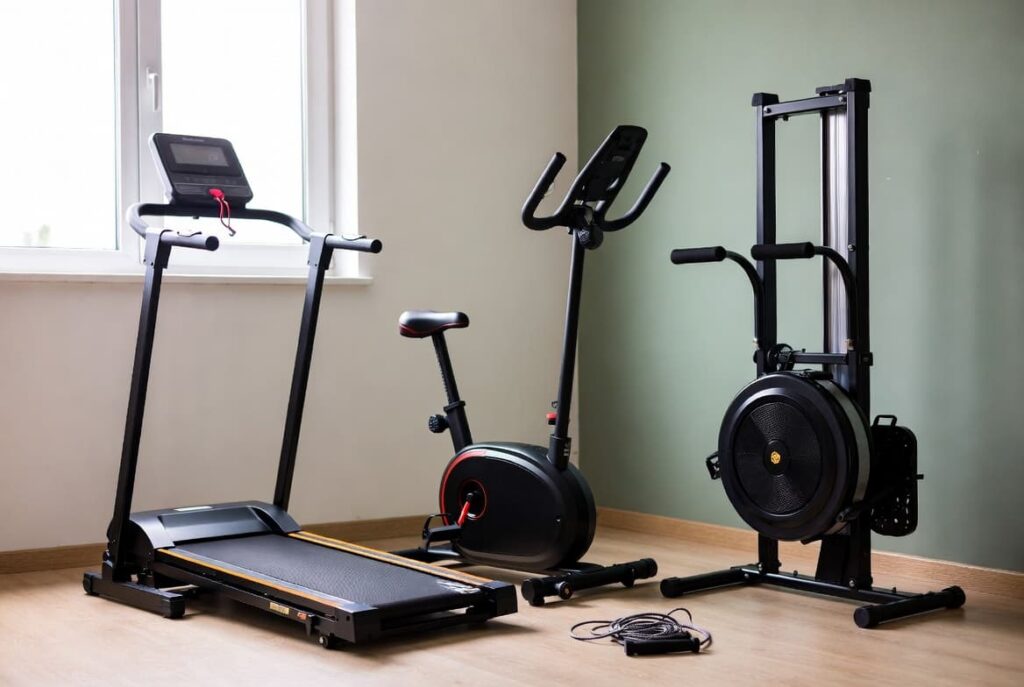
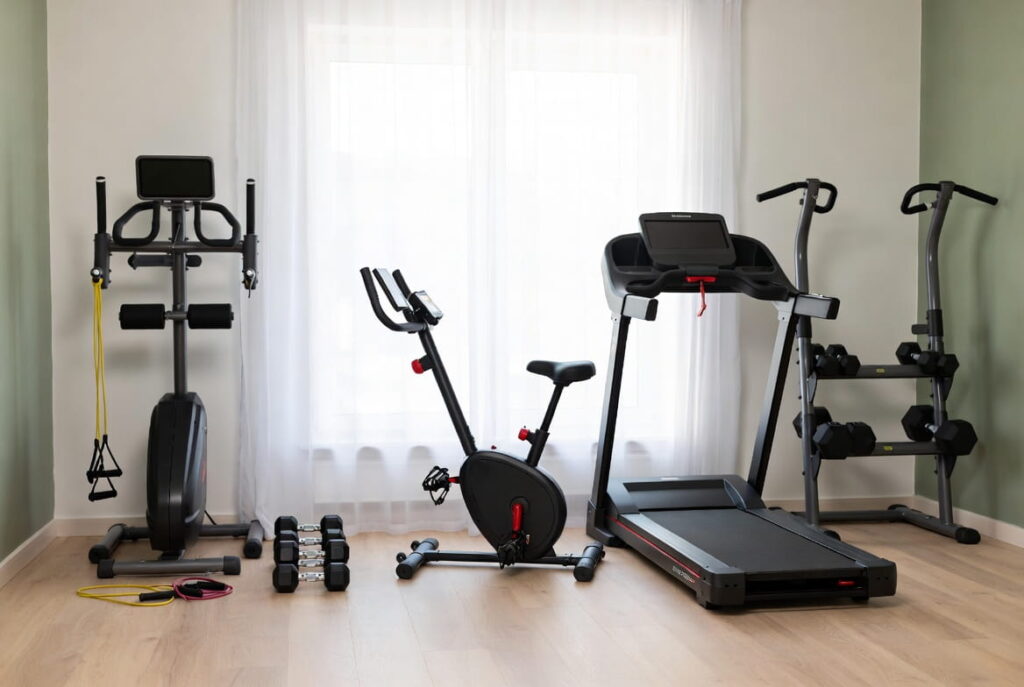
A treadmill offers the most straightforward way to walk, jog, or run indoors regardless of weather or time of day. For home use, folding models save significant space when not in use, though they typically come with slightly lower weight capacities and motor power than commercial versions.
Exercise Bike
Exercise bikes place minimal stress on the joints while still delivering strong calorie burn, making them a practical choice for people managing knee or hip concerns. Upright models take up less floor space than recumbent versions, which matters in smaller homes.
Rowing Machine
Rowing machines deliver a full body workout in a compact footprint, and many home models fold upright for storage against a wall when not in use. This makes rowing one of the most space efficient cardio options for apartments.
Elliptical Trainer
Home ellipticals provide low impact cardio with reduced joint stress compared to running, though they tend to require more floor space than bikes or rowers. Compact or foldable elliptical models exist specifically for smaller homes.
Jump Rope
A jump rope costs almost nothing and requires virtually no storage space, yet it delivers one of the highest calorie burns per minute of any cardio option. It works particularly well for short, intense interval sessions when time is limited.
Best Strength Equipment for Weight Loss at Home
Strength equipment supports weight loss by building the muscle mass that keeps your metabolism elevated, and several options fit easily into a home setup without requiring a dedicated room.
Dumbbells and Kettlebells
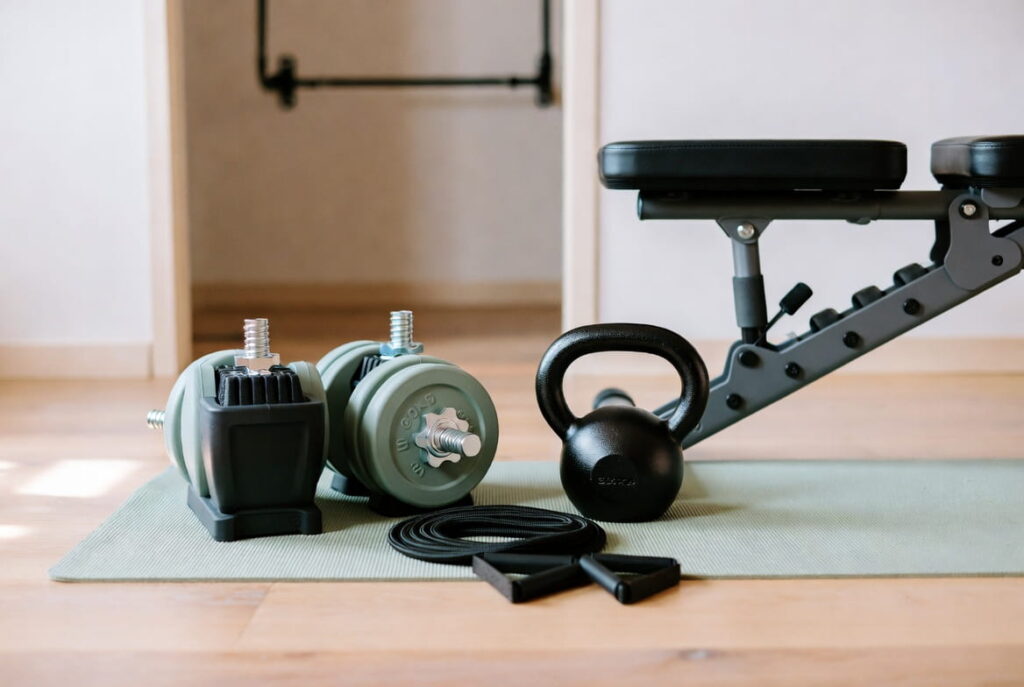
Adjustable dumbbells replace an entire rack of fixed weights in a fraction of the space, making them ideal for home use. Kettlebells add dynamic, full body movements like swings and cleans that combine strength and cardio benefits in a single tool.
Resistance Bands
Resistance bands cost very little and store in a small drawer, yet they provide enough tension for effective strength training across your entire body. They also travel easily, making them useful for maintaining a routine while away from home.
Multifunctional Bench
A multifunctional bench supports far more exercises than its size suggests, from presses to step ups to core work. Many home models fold flat for storage, making them practical even in smaller spaces.
Pull Up Bar
A doorway pull up bar requires no dedicated floor space at all, mounting directly to a door frame. It supports upper body strength training that complements lower body focused cardio equipment, rounding out a home routine without adding bulk to your space.
Home Gym Equipment by Budget
Budget expectations vary widely for a home gym, but most setups fall into one of three practical tiers.
Starter Budget Setup
A lean starter setup typically costs between $100 and $300. This covers resistance bands, a jump rope, and a basic set of dumbbells or a single kettlebell. It requires minimal space and gets you fully operational within days of ordering.
Mid Range Setup
A mid range setup usually falls between $500 and $1,200. This adds a folding exercise bike or rowing machine, an expanded dumbbell range, and a multifunctional bench. This tier suits anyone with a dedicated corner or small spare room.
Premium Setup
Premium setups range from $2,000 to $5,000 or more. This includes a full size treadmill or elliptical, a complete adjustable dumbbell system, and additional strength tools like a pull up bar and cable attachment. This tier makes sense once you have a consistent routine and a dedicated space to support it.
Building gradually based on actual usage protects your budget far better than buying a full premium setup before establishing a consistent habit.
Sample Weekly Home Workout Using This Equipment
Combining the equipment covered in this guide into a structured weekly routine produces better results than using pieces randomly without a plan.
Monday: Cardio Focus. Twenty five minutes on the exercise bike or rowing machine, alternating one minute of higher effort with one minute of easier pace throughout the session.
Tuesday: Strength Focus. Full body dumbbell circuit covering squats, presses, rows, and lunges, using the multifunctional bench for support where needed.
Wednesday: Active Recovery. Fifteen minutes of resistance band work at a light pace, focused on mobility and muscle recovery rather than intensity.
Thursday: Cardio Focus. Fifteen to twenty minutes on the treadmill or a jump rope interval session, alternating short bursts of high effort with brief recovery periods.
Friday: Strength Focus. Kettlebell circuit combining swings, cleans, and presses, finished with a set of pull ups or assisted pull ups using the doorway bar.
Saturday: Combined Circuit. Alternate short rounds of strength moves with brief cardio bursts, such as dumbbell squats followed by thirty seconds of jump rope, repeated for several rounds.
Sunday: Rest.
This structure balances cardio and strength across the week while keeping each session short enough to fit realistically into a home routine, even on busy days.
FAQs
What is the best home gym equipment for weight loss?
The best home gym equipment for weight loss combines one cardio machine, such as a rowing machine or exercise bike, with versatile strength tools like dumbbells and resistance bands.
Can you lose weight with just a few pieces of home gym equipment?
Yes. Consistent use of even minimal equipment, such as resistance bands and a jump rope, can support meaningful weight loss when combined with a calorie deficit and regular training.
What is the best budget friendly equipment for weight loss at home?
Resistance bands, jump ropes, and a basic set of dumbbells offer the most effective weight loss training per dollar spent, typically costing under $150 combined.
Is a treadmill or exercise bike better for a small apartment?
An exercise bike generally suits small apartments better than a treadmill, since it produces less noise and often requires a smaller footprint.
What home gym equipment is best for beginners?
Beginners often do well starting with resistance bands, a jump rope, and adjustable dumbbells, since these options are affordable, low risk, and easy to learn.
How much space do I need for home gym equipment?
A functional starter setup can fit in as little as fifty square feet using foldable or compact equipment like resistance bands, dumbbells, and a rowing machine.
Is resistance band training effective for weight loss?
Yes. Resistance bands provide enough tension to build strength effectively, which supports long term metabolic rate and complements calorie burning cardio work.
What is the quietest cardio equipment for an apartment?
Exercise bikes and rowing machines tend to be quieter than treadmills, since they avoid the repetitive impact and motor noise associated with running based equipment.
How many pieces of equipment do I really need for a home gym?
Most people see strong results with just two or three versatile pieces, such as a cardio machine, adjustable dumbbells, and resistance bands, rather than a large collection of equipment.
What is the best home gym equipment for weight loss on a tight budget?
A jump rope, resistance bands, and a basic pair of dumbbells cover most weight loss training needs for under $100 combined, making them ideal for tight budgets.
Conclusion
Building an effective home gym for weight loss comes down to choosing versatile, space conscious equipment that matches your budget and living situation, rather than trying to replicate a full commercial gym. Combining one solid cardio option, such as a rowing machine or exercise bike, with strength tools like dumbbells and resistance bands covers most of what you need to see real progress.
The key takeaway is that consistency with a few well chosen pieces outperforms an expensive collection of equipment that goes unused. Starting small and expanding gradually as your routine solidifies protects both your budget and your motivation.
As home fitness continues growing through 2026, the fundamentals covered in this guide will remain the foundation of an effective home gym, whether you are working with a spare room or a small apartment corner.