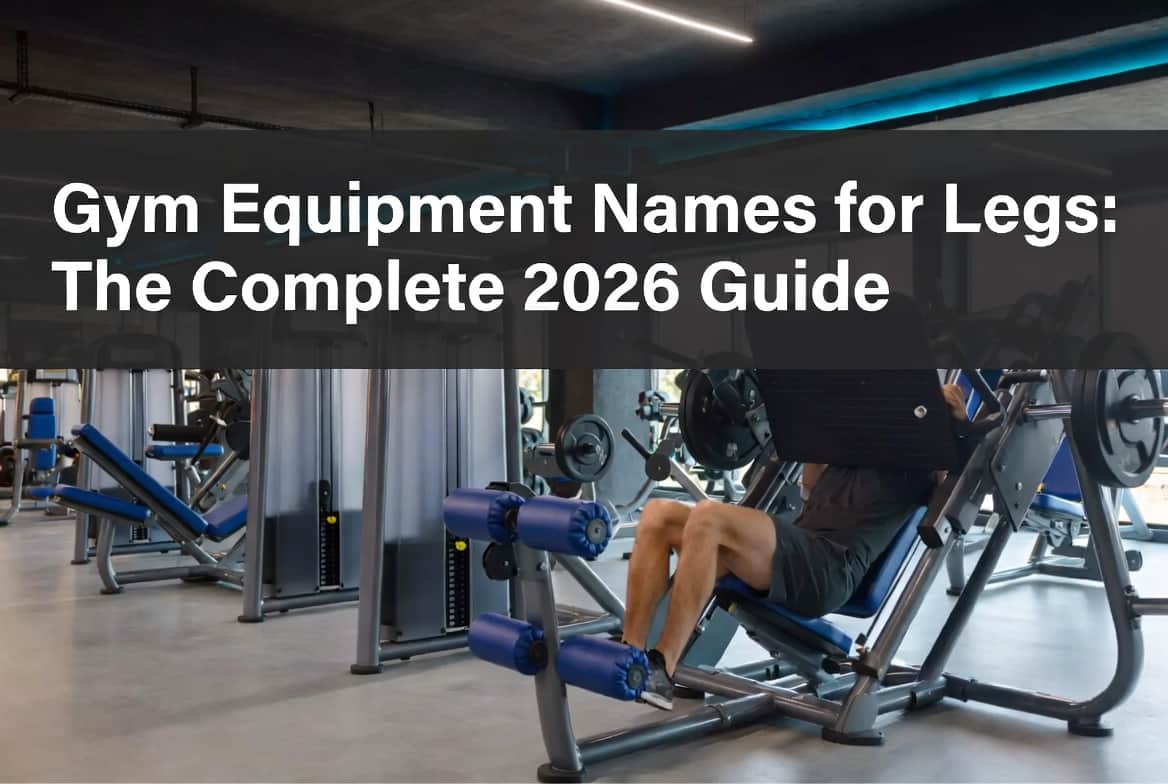
Gym Equipment Names for Legs The Complete 2026 Guide
Walking into a gym and staring at a row of unfamiliar leg machines can feel intimidating, especially when you are not sure what each one actually does. Learning the right gym equipment names for legs solves that problem instantly and helps you train with confidence instead of guessing.
This guide breaks down every major leg machine you will encounter in a commercial gym, from quad focused machines like the leg press and leg extension to hamstring, glute, and calf specific equipment. You will learn what each machine targets, how to use it correctly, and which one fits your specific fitness goal.
In short, gym equipment names for legs fall into five categories: quadriceps machines, hamstring machines, glute machines, calf machines, and full lower body compound machines. By the end of this guide, you will know exactly which machine to reach for on leg day.
Hamstring Focused Machines
The hamstrings run along the back of the thigh and are frequently undertrained compared to the quads, making dedicated hamstring machines an important part of any leg day.
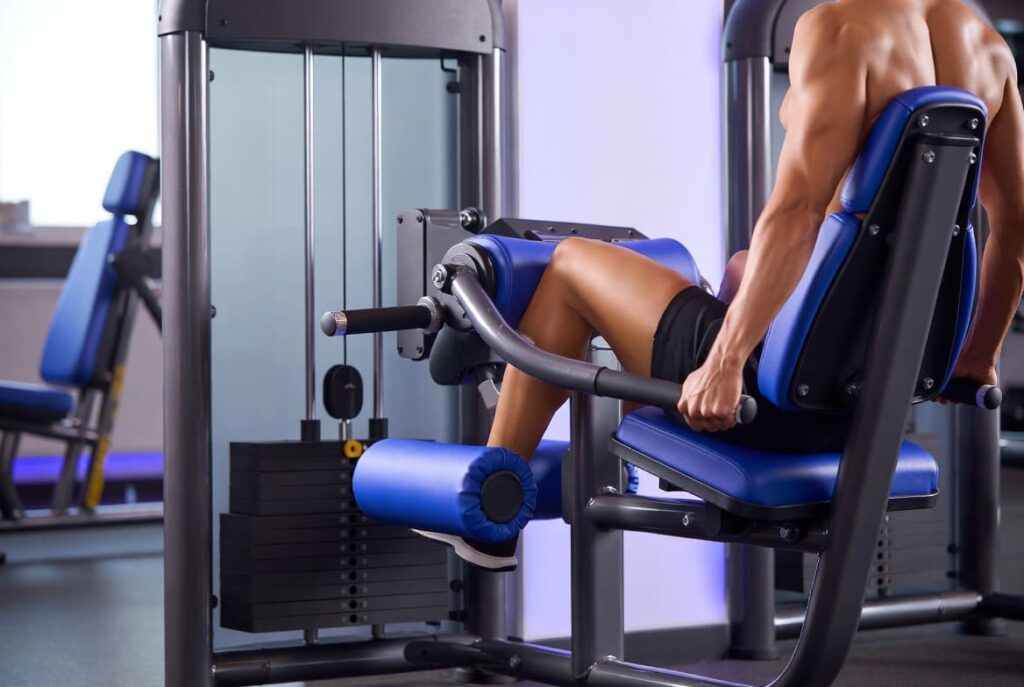
Leg Curl Machine
The leg curl machine isolates the hamstrings through a curling motion and comes in three main variations: seated, lying, and standing.
The seated leg curl has you sit upright with the leg pad positioned above your heels, then curl your legs downward. The lying leg curl has you face down on a bench, curling your heels toward your glutes. The standing leg curl works one leg at a time, which makes it useful for correcting strength imbalances between legs.
Across all three variations, the key technique point is control. Swinging the weight or lifting your hips off the pad reduces hamstring activation and increases injury risk.
Nordic Ham Curl Machine
The Nordic ham curl machine supports one of the most effective hamstring exercises available. Your ankles are secured in padded supports while you slowly lower your torso forward, using your hamstrings to control the descent, then pull yourself back up.
This exercise builds eccentric hamstring strength, which research links to reduced hamstring strain injuries in athletes. It is a demanding movement best suited for intermediate and advanced trainees rather than complete beginners.
Reverse Hyper Machine
The reverse hyper machine targets the hamstrings, glutes, and lower back simultaneously. You lie face down with your legs hanging free, then raise them behind you using your posterior chain muscles.
Beyond muscle building, this machine is valued for its spinal decompression effect, since the hanging position gently traction the lower back while you train. It is less common in smaller gyms but highly effective where available.arm and shoulder machine names
Glute Focused Machines
The glutes are the largest and strongest muscle group in the body, and several machines exist specifically to train them without relying on free weight hip thrusts.
Hip Thrust Machine
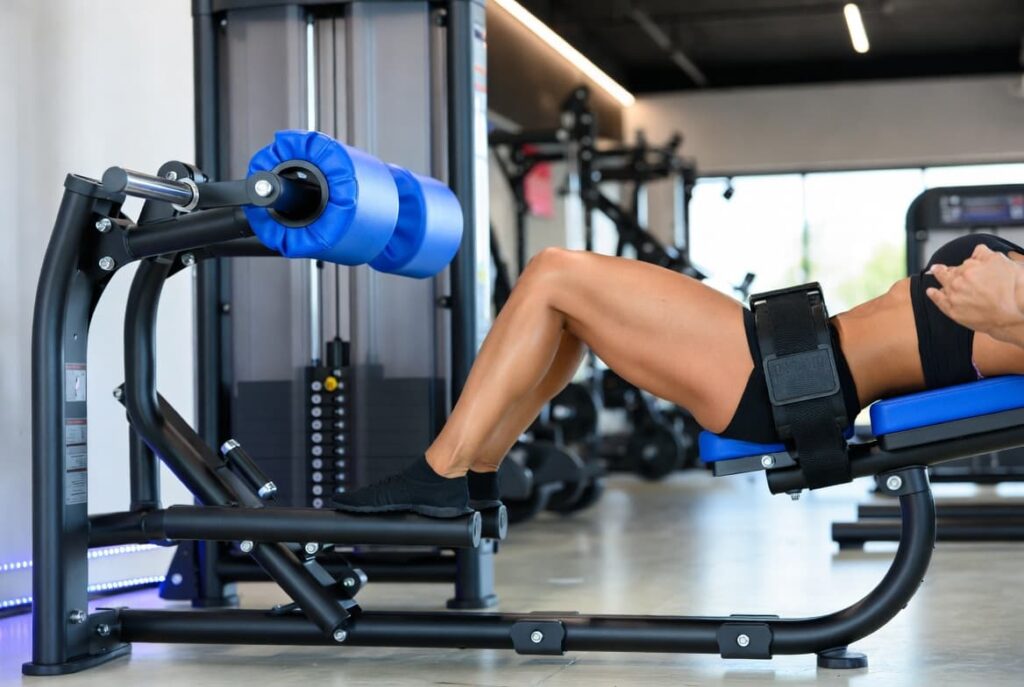
The hip thrust machine replicates the barbell hip thrust in a guided, padded setup. You sit with your back against the pad, secure the belt across your hips, then drive your hips upward while squeezing your glutes at the top.
This machine is considered one of the most effective tools for glute strength and size because it allows heavy loading without the setup difficulty of a barbell hip thrust. It also carries over well to athletic performance, particularly sprinting and jumping power.
Hip Abductor Machine
The hip abductor machine trains the muscles that move your legs outward, primarily the gluteus medius and gluteus minimus. You sit with your legs inside padded supports and push outward against resistance.
Beyond aesthetics, strong abductors play a key role in hip and knee stability, which is why this machine is often recommended for injury prevention alongside muscle building.
Hip Adductor Machine
The hip adductor machine works the opposite motion, training the inner thigh muscles as you squeeze your legs together against resistance. It uses the same seated setup as the abductor machine but reverses the movement direction.
Both abductor and adductor machines require lighter loads than most leg equipment, since these muscle groups are smaller and more prone to strain when overloaded too quickly.
Cable Hip Abduction and Adduction
This variation uses an ankle strap attached to a cable machine instead of a seated pad. Standing cable abduction and adduction provide constant tension throughout the movement and a more natural range of motion compared to the seated machine versions, though they require more balance and core stability to perform correctly.
Calf Focused Machines
Calves are made up of two main muscles, the gastrocnemius and the soleus, and different calf machines emphasize each one depending on your body position.
Standing Calf Raise Machine
The standing calf raise machine places resistance across your shoulders while you rise onto your toes. This position primarily targets the gastrocnemius, the larger, more visible calf muscle.
To use it correctly, place the balls of your feet on the platform with your heels hanging off the edge, then raise up fully before lowering slowly for a deep stretch. Rushing through short, choppy reps significantly reduces the effectiveness of this exercise.
Seated Calf Raise Machine
The seated calf raise machine positions resistance across your knees rather than your shoulders. This bent knee position shifts emphasis toward the soleus, the smaller muscle underneath the gastrocnemius.
Training both the standing and seated variations ensures complete calf development, since relying on only one machine leaves part of the calf undertrained.
Rotary Calf Machine
The rotary calf machine uses a rotating footplate instead of a straight up and down motion. As you push against the platform with your toes, it rotates through an arc, providing a different resistance curve than traditional calf machines.
This variation is less common in gyms but offers a useful way to add variety once standard calf raises stop producing results.
Calf Raise Block or Platform
This is the simplest option on the list, a raised block or platform that lets you perform calf raises using just your body weight, a barbell, or dumbbells. Standing on the block with your heels hanging off allows a deeper stretch at the bottom of the movement than doing calf raises on flat ground.
It requires no dedicated machine, making it a practical option for smaller studios or home gym setups with limited equipment budgets.
Full Lower Body and Compound Machines
Beyond isolation equipment, several machines allow for compound leg movements that train multiple muscle groups at once, often serving as guided alternatives to free weight exercises.
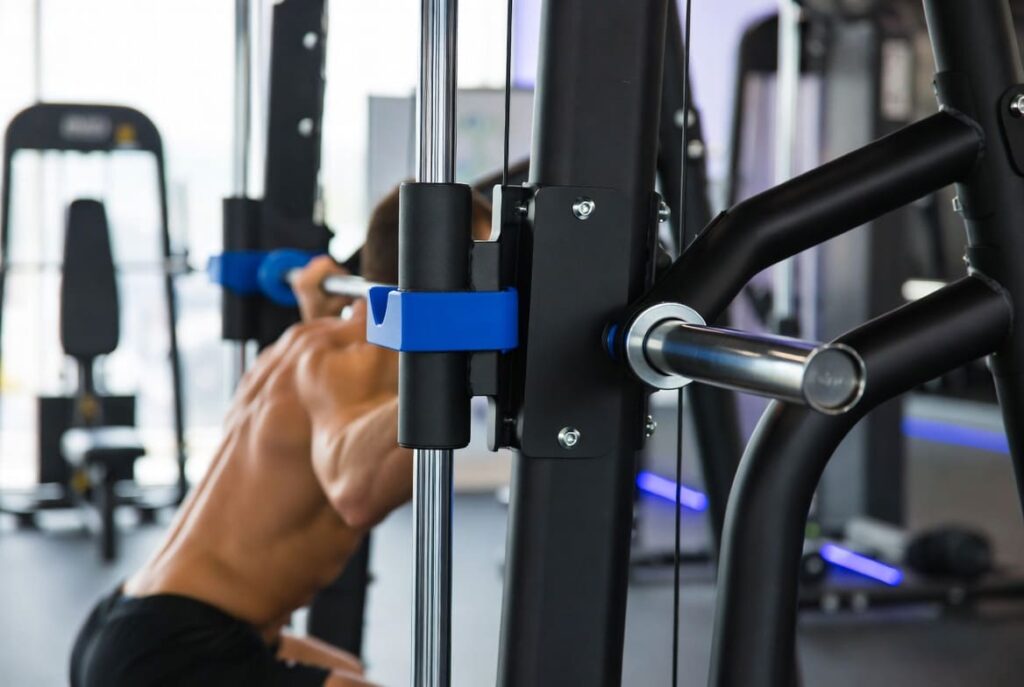
Smith Machine
The Smith machine consists of a barbell fixed within a steel frame that moves along vertical rails. Because the bar path is fixed, it offers more stability than a free barbell, making it useful for squats, lunges, and Romanian deadlifts.
This versatility makes the Smith machine one of the most recognized gym equipment names for legs, though the fixed path means it does not train stabilizer muscles the way free weights do. It works well for beginners learning proper squat depth or for lifters training alone without a spotter.
Belt Squat Machine
The belt squat machine loads weight through a belt worn around your hips instead of across your shoulders or back. You stand on a platform, squat down, and press back up while the load pulls straight down through your hips.
This design removes spinal compression entirely, making it a strong option for lifters dealing with lower back issues who still want to train quads, glutes, and hamstrings heavily. The main drawback is size, since these machines take up significant floor space and tend to cost more than standard leg equipment.
Single Leg Machines
Several machines, including single leg press and single leg extension variations, allow you to train one leg at a time. This isolates each side individually, making it easier to identify and correct strength imbalances between your left and right leg.
Training unilaterally also improves balance and coordination, and these machines are frequently used in rehabilitation settings following injury to one leg specifically.
Safety Tips for Using Leg Machines
Most leg machine injuries come from a small set of repeated mistakes rather than the equipment itself being unsafe.
Never lock your knees at full extension. This applies to the leg press, leg extension, and hack squat machine in particular. Locking out under load places direct stress on the knee joint instead of the muscle.
Adjust the machine to your body before adding weight. Seat position, pad placement, and range of motion settings vary between users. Skipping this step is one of the most common reasons people feel discomfort in the wrong area during an exercise.
Control the descent on every rep. Letting weight drop quickly on machines like the leg curl or calf raise reduces muscle engagement and increases the risk of jerking a joint out of proper alignment.
Start lighter than you think you need. Machines can create a false sense of safety that leads to loading more weight than your form can handle. Master the movement pattern first, then increase load gradually.
Keep your lower back against the pad throughout the movement. This applies especially to the leg press and hack squat, where an arched or lifted lower back signals the weight is too heavy for your current position.
FAQs
What are the main gym equipment names for legs?
The main gym equipment names for legs include the leg press, leg extension, leg curl, hack squat, hip thrust, hip abductor and adductor machines, calf raise machines, and the Smith machine. Each targets specific lower body muscle groups.
What machine works the quads the most?
The leg extension machine isolates the quadriceps most directly, while the leg press and hack squat machine work the quads as part of a larger compound movement involving glutes and hamstrings.
What is the best gym machine for hamstrings?
The leg curl machine is the most direct hamstring isolation tool, while the Nordic ham curl machine offers a more advanced option for building eccentric hamstring strength.
What machine is best for toning legs?
Isolation machines like the leg extension, leg curl, hip abductor, and calf raise machines work best for toning, since moderate weight with higher repetitions builds definition without maximizing bulk.
Is leg press or squat better for building leg muscle?
Both are effective. The leg press allows heavier loading with less balance demand, while the squat engages more stabilizer muscles and core strength. Many programs use both for complete development.
What machine targets the inner and outer thighs?
The hip adductor machine targets the inner thighs, while the hip abductor machine targets the outer thighs and hip stabilizers.
How many leg machines should a home gym have?
A home gym typically only needs one versatile option, such as an adjustable bench with resistance bands or a compact leg press, since space and budget are usually limited compared to commercial gyms.
What is the difference between a hack squat and a leg press?
The hack squat has you standing with your back against a pad while squatting, engaging more core stability, while the leg press has you seated or reclined, pushing a platform away with less balance required.
Can leg machines help with knee rehab?
Yes. The leg extension and seated leg curl machines are commonly used in physical therapy because they allow controlled strengthening without the joint stress of compound movements like squats.
What free weight exercise can replace a leg curl machine?
A Romanian deadlift or a stability ball hamstring curl can effectively replace a leg curl machine when one is not available.
Conclusion
Learning the right gym equipment names for legs takes the guesswork out of leg day and helps you build a balanced lower body routine instead of randomly picking machines. From quad focused equipment like the leg press and leg extension to hamstring, glute, and calf specific machines, each piece serves a distinct purpose in a complete leg training program.
The key takeaway is that no single machine covers every muscle group. Combining compound options like the leg press or hack squat with isolation machines for hamstrings, glutes, and calves produces far better results than relying on one or two familiar pieces of equipment.
As gyms continue adding specialized equipment through 2026, understanding these machine names will only become more valuable, whether you are training on your own or communicating with a personal trainer about your goals.