
How to Use Gym Equipment Beginner Guide 2026
Walking up to a machine covered in pads, pulleys, and pins can make anyone freeze, even if you have been meaning to start working out for months. Knowing how to use gym equipment safely starts with a few simple rules that apply to almost every machine, not memorizing dozens of separate instructions.
This guide walks you through exactly what to do on your first few gym visits, from adjusting a machine to your body to picking the right starting weight. You will also get a priority list of the five machines worth learning first, so you are not trying to figure out the entire gym floor on day one.
How to Use Gym Equipment Safely
If you only remember one thing, remember this: adjust the machine to fit your body first, then start light and move slowly.
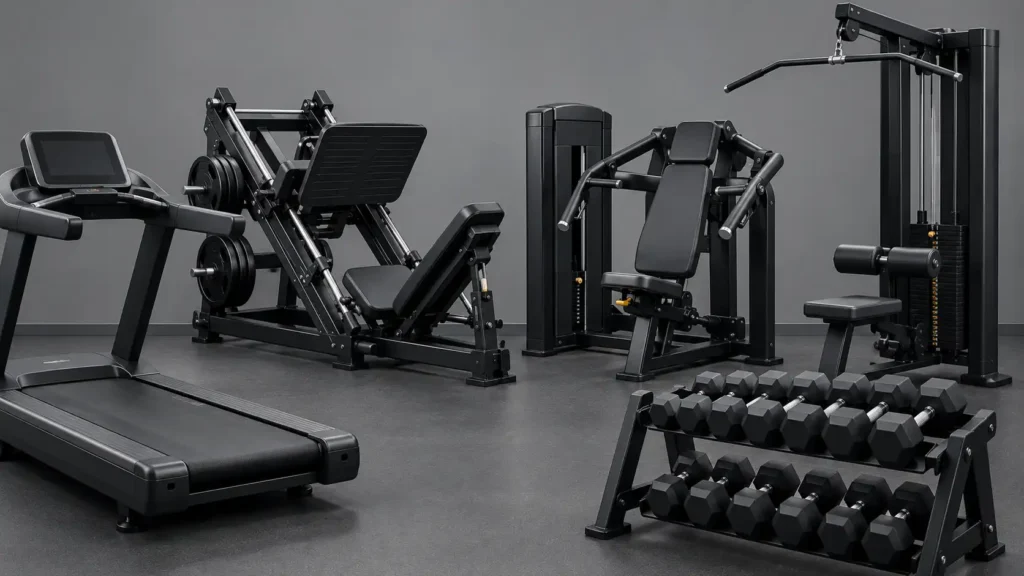
| Machine | What It Targets | One Line How To |
| Treadmill | Cardiovascular fitness | Start slow, then raise speed or incline gradually |
| Elliptical | Low impact cardio | Stand upright, hold handles lightly, set your own pace |
| Stationary Bike | Legs and endurance | Adjust seat so knees stay slightly bent at the bottom |
| Leg Press | Quads, hamstrings, glutes | Sit back fully, push through your heels, do not lock knees |
| Chest Press | Chest, shoulders, triceps | Set handles to chest height, press forward and return slowly |
| Lat Pulldown | Back and biceps | Pull the bar to your chest, elbows moving down and back |
| Dumbbells | Full body, adjustable | Start light, control both the lift and the lowering |
This table covers the machines almost every beginner encounters first, and mastering just these seven gives you a solid, confident starting point before touching anything more advanced.
Why the Gym Floor Feels Overwhelming (And How to Fix That)
The gym floor feels overwhelming because it packs dozens of unfamiliar machines into one open space with no instructions on where to start, which is a layout problem, not a sign you are unprepared.
Most people freeze up for one of three reasons: they do not know which machine matches their goal, they are afraid of using something wrong in front of others, or they simply feel like everyone else already knows what they are doing. In reality, most gym goers are focused on their own workout and barely notice what machine a newcomer picks.
The fix is not confidence you build overnight. It is a plan. Walking in with a short list of two or three machines you already understand removes the need to figure everything out on the spot. Many gyms also post basic instructions directly on each machine, and most staff expect and welcome questions from new members rather than seeing them as a bother.
Once you learn a handful of machines well, the rest of the gym floor starts to feel far less like a maze and more like a set of tools you already understand the basics of.
Your First Day Priority List: 5 Machines to Learn First
Trying to learn every machine in the gym on your first visit is exactly what makes the experience feel impossible. Start with these five instead.
1. Treadmill. It requires no complex setup, works for any fitness level, and gives you an easy way to warm up before anything else.
2. Leg Press Machine. It trains three major lower body muscle groups at once and uses a guided, fixed path that removes most of the balance and form concerns free weights involve.
3. Chest Press Machine. It mirrors a bench press without needing a spotter, making it one of the safest ways to train your upper body as a beginner.
4. Lat Pulldown Machine. It builds pulling strength in your back and arms, which balances out the pushing movements from the chest press and prevents muscle imbalances early on.
5. Dumbbells. Even a light pair opens up dozens of simple exercises and teaches you movement patterns that carry over to almost every other piece of equipment in the gym.
Spending your first two or three sessions on just these five builds real familiarity with how machines feel and adjust, so the rest of the gym floor becomes far less intimidating once you are ready to explore it.
General Rules That Apply to Every Machine
Nearly every machine in the gym follows the same small set of rules, which means you do not need separate instructions memorized for each one.
Adjust the machine to your body before adding any weight. Seat height, pad position, and handle placement all affect whether an exercise feels natural or awkward, and skipping this step is the most common reason beginners feel discomfort in the wrong muscle group.
Start with a lighter weight than you think you need. A resistance level that lets you complete 10 to 15 controlled repetitions with good form is the right starting point, not the heaviest setting the machine allows.
Move slowly and stay in control the entire time. Rushing through reps or letting a machine’s weight stack drop quickly reduces muscle engagement and increases the chance of strain, especially on machines involving your knees, shoulders, or lower back.
Breathe normally throughout each movement. Holding your breath during effort raises blood pressure unnecessarily and can leave you lightheaded, particularly on your first few visits.
Once these habits become automatic, you can approach a machine you have never used before and figure out most of it just by applying these same principles.
How to Use Cardio Machines
Cardio machines are usually the easiest starting point for beginners since most require little more than stepping on and adjusting your pace.
Treadmill
Step onto the treadmill while it is off or moving very slowly, then select a manual speed or built in program. Start at a comfortable walking pace before gradually increasing speed or incline, and use the side rails only for balance rather than gripping them throughout your workout, since leaning on them reduces the actual effort of your session. For a deeper look at treadmill options and other [cardio machine names](internal link), see our full cardio equipment guide.
Elliptical Trainer
Step onto the pedals, hold the moving handles lightly, and begin moving in a smooth, controlled motion rather than forcing speed right away. Set the resistance low for your first few sessions, since the combined arm and leg movement can feel more demanding than it looks even at a slow pace.
Stationary Bike
Adjust the seat height first so your knee has a slight bend at the bottom of each pedal stroke, since a seat set too low or too high strains your knees over time. Begin pedaling at a steady, comfortable pace, then increase resistance gradually rather than starting on a high setting that forces you to strain with each rotation.
How to Use Strength Training Machines
Strength machines guide your movement along a fixed path, which makes them a safer entry point into resistance training than free weights for most beginners.
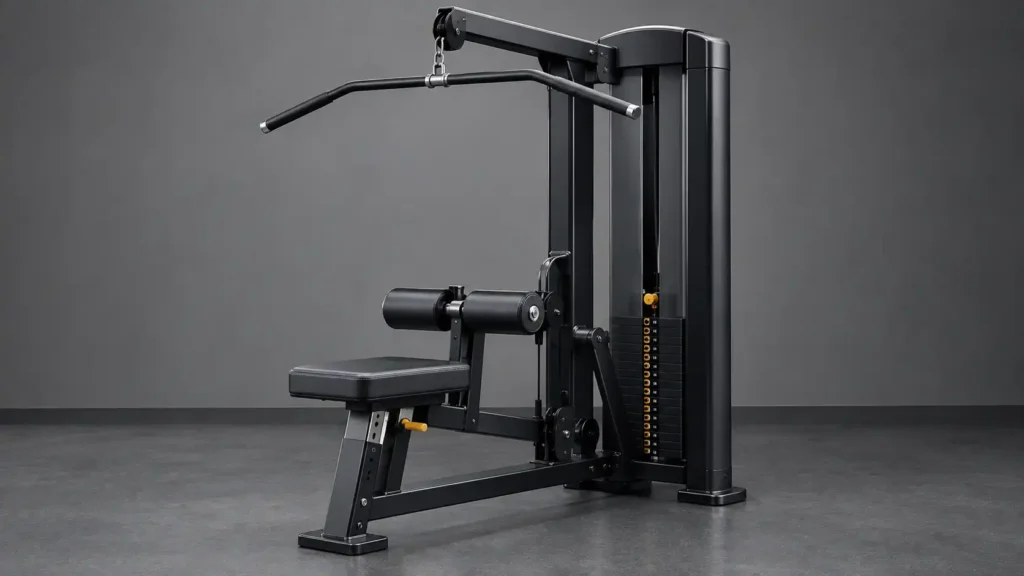
Leg Press Machine
Sit back fully against the pad with your hips staying in contact with the seat throughout the movement, and place your feet shoulder width apart on the platform. Release the safety handles, lower the platform until your knees form roughly a 90 degree angle, then push back up through your heels without locking your knees at the top. For more detail on this machine and other [leg machine names](internal link), check our complete leg equipment guide.
Chest Press Machine
Adjust the seat so the handles line up with your chest height, then sit with your back flat against the pad and feet planted on the floor. Push the handles forward until your arms are extended without locking your elbows, then return slowly to the starting position, keeping the movement controlled rather than letting the weight stack drop.
Lat Pulldown Machine
Secure your thighs under the pad and grip the bar slightly wider than shoulder width. Pull the bar down toward your upper chest by driving your elbows down and back, focusing on squeezing your back muscles rather than pulling with your arms alone, then let the bar rise slowly under control.
Cable Machine
Select the appropriate attachment and set the pulley height based on the exercise you plan to perform, whether that is high for pulldowns or low for rows. Keep tension on the cable throughout the entire movement rather than letting the weight stack rest between reps, since this constant resistance is what makes cable machines effective for controlled, targeted training.
How to Use Free Weights Safely
Free weights demand more control than machines since your muscles handle both the lifting and the stabilizing, which makes starting light especially important.
Dumbbells
Choose a weight light enough to complete every rep with clean form, since dumbbells offer no fixed path to correct poor technique the way machines do. Keep movements slow and deliberate in both directions, since lowering a dumbbell with control builds as much strength as lifting it does.
Basic Compound Movements
A handful of simple dumbbell movements cover most of what a beginner needs. A standing bicep curl, keeping your elbows tucked against your sides, builds arm strength without involving your back or shoulders. A dumbbell shoulder press, pushing the weights overhead from shoulder height, targets your deltoids while requiring your core to stay engaged for balance.
A single arm row, performed with one knee and hand resting on a bench for support, trains your back safely without straining your lower back the way a bent over row can for beginners. Never swing or use momentum to move a dumbbell into position, since ballistic movements remove the muscle control that makes free weight training effective in the first place.
How to Use Gym Equipment for Specific Goals
Matching equipment to your specific goal makes your time in the gym far more productive than moving between machines without a plan.
For Weight Loss
Cardio machines like the treadmill and elliptical create the most direct calorie burn, especially when you alternate between higher and lower effort in short intervals rather than staying at one steady pace. Pairing this with strength machines like the leg press adds muscle that supports your metabolism between workouts.
For Abs and Core
A cable machine set to a high pulley position allows for controlled rotational core exercises, while a stability ball or simple floor based plank works well if machines are not available. Avoid relying on ab specific machines alone, since visible core definition depends more on overall body fat than on any single piece of equipment.
For Arms
Dumbbell curls and the lat pulldown machine cover most beginner arm training needs, targeting both the front and back of your upper arm. For a full breakdown of dedicated equipment, see our guide to [arm workout equipment names](internal link).
The most effective approach for any goal combines a few pieces of equipment consistently rather than switching machines constantly in search of the one perfect option.
Cleaning Equipment After Use
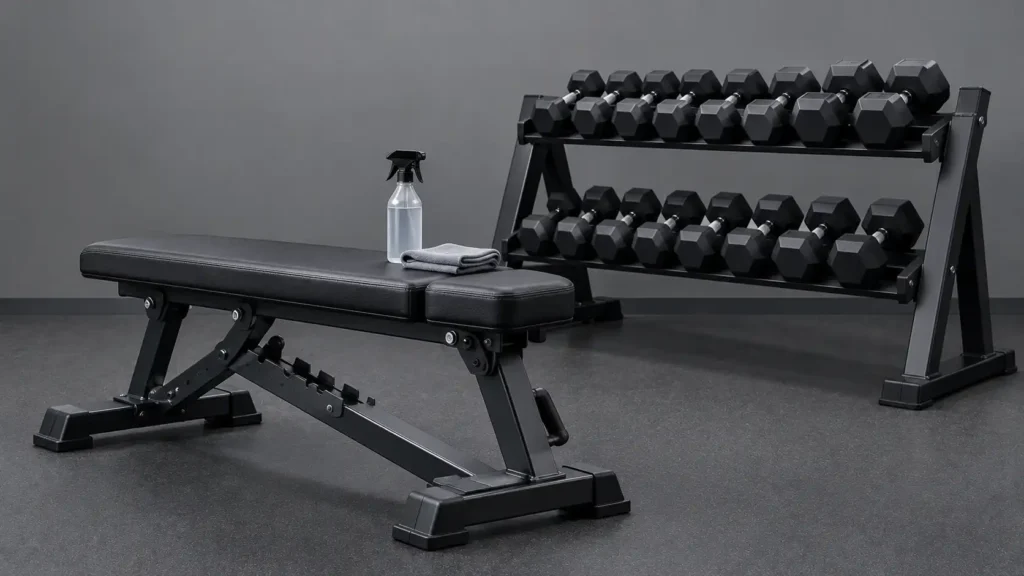
Wiping down equipment after use is one of the simplest habits that separates confident regulars from first time visitors, and most gyms expect it as standard practice.
Most gyms provide disinfectant spray or wipes at stations placed around the floor, usually near entrances or beside popular equipment clusters. After finishing on any machine, spray or wipe down the seat, handles, and any surface your skin or sweat touched, paying particular attention to padded areas where moisture collects.
This habit matters beyond courtesy. Shared gym equipment carries a real risk of spreading bacteria and skin infections when left unwiped, which is why most gyms post visible signage reminding members to clean up after themselves.
Beyond wiping down machines, basic etiquette includes re-racking dumbbells and weight plates after use and avoiding resting on a machine between sets if others are waiting. These small habits make the gym floor feel more comfortable for everyone, including you, since following them removes the worry about being seen as inconsiderate on your early visits.
Common Questions About Age, Access, and Different Gym Chains
Several practical questions come up around who can use gym equipment and where, and the answers vary more than most people expect.
Age requirements differ by gym rather than following one national standard. Many commercial gyms set a minimum age of 13 to 16 for supervised use and 18 for unsupervised access, though some family focused gyms allow younger members with a parent present. Always check the specific policy at your location before assuming a general rule applies.
HSA and FSA funds can sometimes cover home gym equipment or gym memberships, but only when a doctor provides a letter of medical necessity tying the purchase to a diagnosed condition. Without that documentation, most standard gym equipment and membership fees are not eligible expenses. This topic involves enough detail on its own that it deserves a dedicated guide rather than a quick summary here.
Equipment layout and machine brands vary noticeably between gym chains. A Planet Fitness location typically uses different machine models than an Anytime Fitness or a YMCA, which means the exact button placement or adjustment mechanism can differ even though the core exercise stays the same. The general principles covered throughout this guide apply everywhere, even when the specific machine brand or gym chain changes.
FAQs
What gym equipment should beginners use first?
Beginners should start with the treadmill, leg press, chest press, and lat pulldown machines. These offer guided, fixed movement paths that reduce injury risk while building foundational strength and confidence.
How can I make sure I am using gym equipment with correct form?
Read the instruction panel on each machine, start with lighter weight, and check your posture in nearby mirrors. Asking gym staff for a quick demonstration is also a normal and welcomed request.
How old do you have to be to use gym equipment?
This varies by gym, typically ranging from 13 to 16 for supervised use and 18 for unsupervised access. Always confirm the specific age policy at your particular gym location.
Can I use HSA or FSA funds for gym equipment?
Only with a doctor’s letter of medical necessity linking the purchase to a diagnosed condition. Without that documentation, gym equipment and memberships generally do not qualify as eligible expenses.
How often should I use gym equipment as a beginner?
Most beginners see good results training three to four times per week, allowing at least one rest day between sessions to support muscle recovery and long term consistency.
Is it okay to ask gym staff for help with equipment?
Yes. Gym staff expect and welcome questions from new members, and asking for a quick demonstration is far safer than guessing your way through unfamiliar equipment.
Conclusion
Learning how to use gym equipment comes down to a small set of habits, adjusting each machine to your body, starting light, and moving with control, rather than memorizing separate instructions for every piece of equipment on the floor. Starting with just five machines, the treadmill, leg press, chest press, lat pulldown, and dumbbells, builds enough familiarity to approach the rest of the gym with real confidence.
The next time you walk onto the gym floor, you will already know where to start and how to move safely through your workout.