Home Gym Essentials: The Complete 2026 Beginner’s Guide
Staring at an empty room and wondering where to even start? You are not alone. Most people who try to build a home gym end up buying too much, too soon, and using half of it.
The good news is that real home gym essentials are simpler than the ads make them look. You do not need a warehouse of machines. You need a small set of tools that cover strength, movement, and safety, matched to your space and your goals.
This guide breaks down exactly what belongs in a smart home gym setup, what to skip, and how to build it in the right order so your money goes toward equipment you will actually use for years, not gear that ends up as a clothes rack by March.
Quick answer: the core home gym essentials for most beginners are supportive flooring, adjustable dumbbells or resistance bands, a stable bench or bar for bodyweight work, and simple storage. Everything else depends on your goals.
Table of Contents
What Are the Real Home Gym Essentials? (Quick Answer)
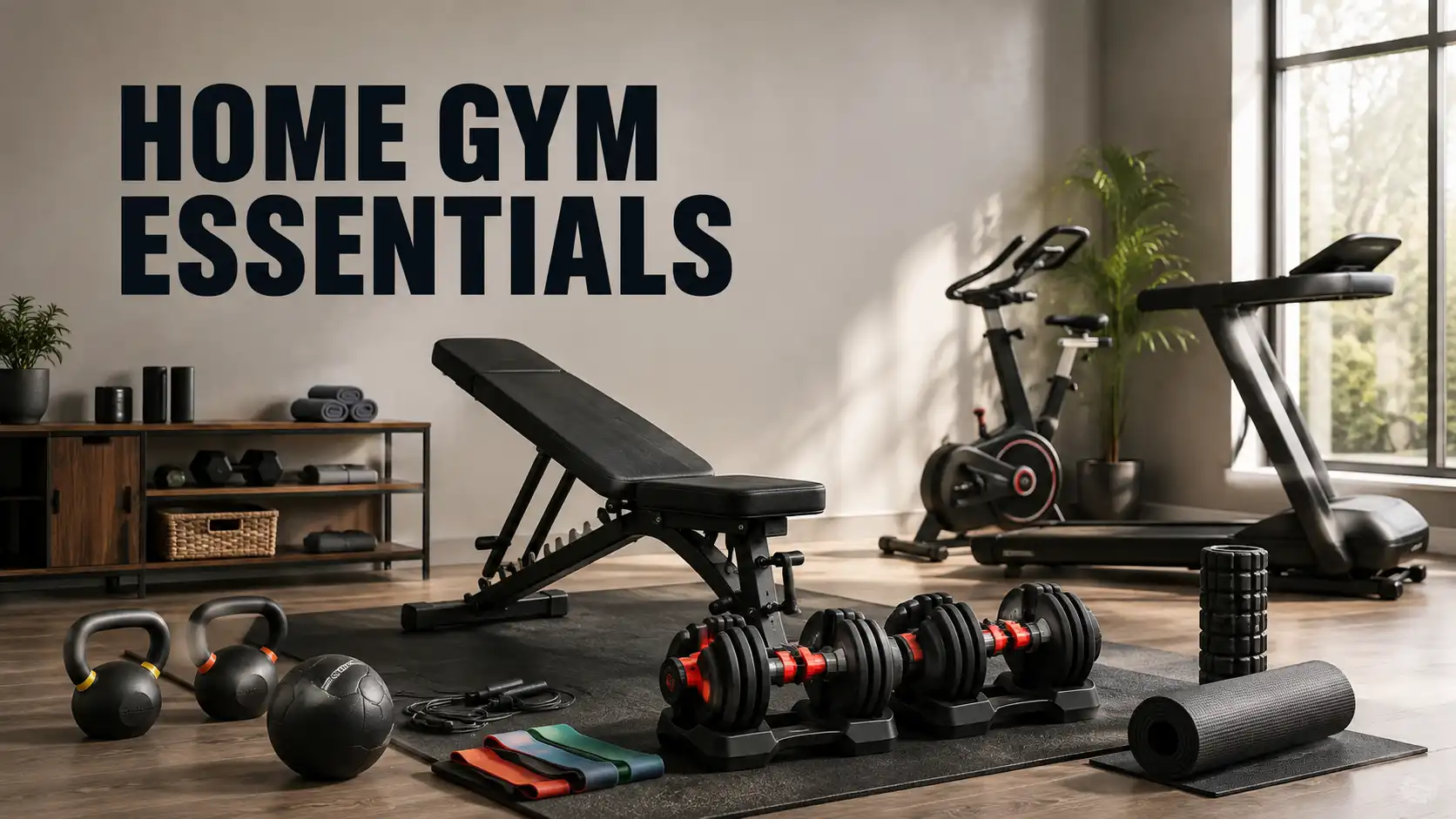
At a minimum, a functional home gym needs five things: safe flooring, a resistance tool, a way to train your whole body, basic recovery gear, and a place to store it all. Everything beyond that is a bonus, not a requirement.
Here is the short list that covers almost every beginner situation:
- Flooring: interlocking foam tiles or a rubber mat to protect joints and floors
- Resistance training tool: adjustable dumbbells, a kettlebell, or a set of resistance bands
- Full body support: a pull up bar, adjustable bench, or simply floor space for bodyweight moves
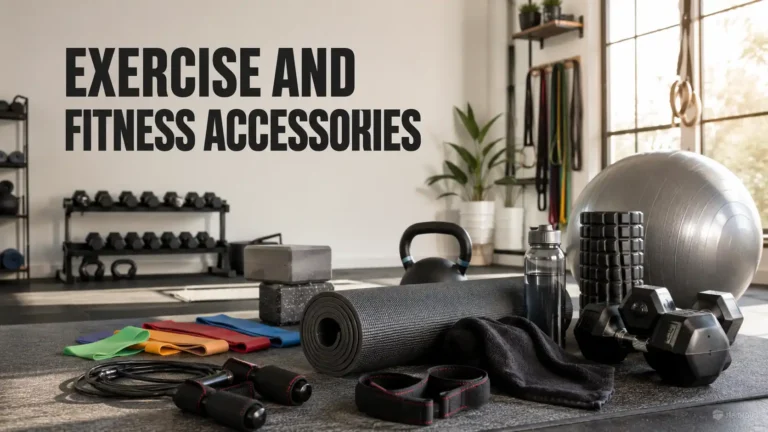
- Recovery basics: a mat and a foam roller for stretching and mobility work
- Storage: a rack, shelf, or basket to keep equipment organized and out of the walking path
This combination works because it lets you train legs, back, chest, shoulders, and core without needing a single machine. A 2026 review of beginner setups found that most people own fewer than three pieces of equipment when they start, and that is often enough to run a full body program for months before anything else is needed.
The mistake most beginners make is skipping straight to a barbell and rack before they have built a training habit. Start with the essentials above, then let your actual workouts tell you what to add next.
How to Plan Your Home Gym Space Before Buying Anything
Buying equipment before measuring your space is one of the most common and costly home gym mistakes. A rack that looked reasonable online can turn out to be too wide for your doorway, or a bench press setup can eat up a room you actually needed for storage.
Start with these basics before you spend a dollar:
- Floor area: most functional setups fit in 50 to 150 square feet, depending on equipment
- Ceiling height: overhead presses and pull ups need extra clearance, so measure up, not just across
- Doorway width: check this if you plan to move a rack, bench, or treadmill into the room later
- Flooring type: concrete, carpet, and hardwood each need different protection
- Ventilation and lighting: a stuffy, dim room kills motivation faster than a lack of equipment
A spare bedroom, garage corner, or large closet can all work as a home gym. What matters more than square footage is whether the space is usable every day without moving furniture first. If setup takes ten minutes, most people simply will not do it.
One practical tip: mark out your equipment footprint with painter’s tape on the floor before buying anything. It takes five minutes and prevents a very common and expensive layout mistake.
Home Gym Essentials for Strength Training
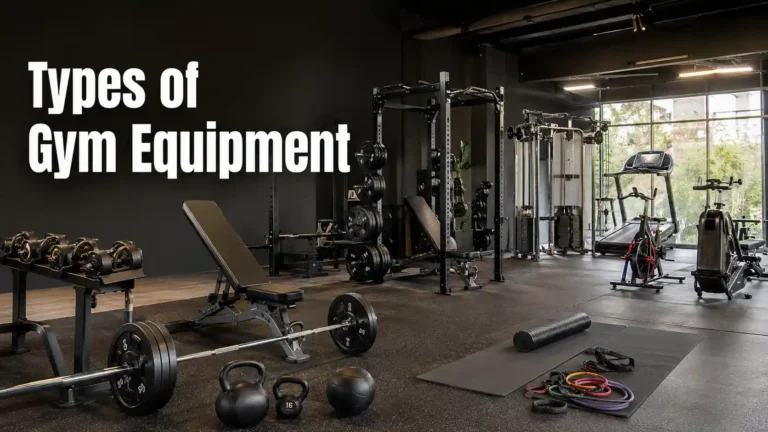
Strength equipment forms the backbone of most home gym setups. You do not need all four items below on day one, but understanding what each one does will help you buy in the right order. If you want a full breakdown of what every piece is actually called on the gym floor, our companion resource, Gym Equipment Names: The Complete 2026 List & Guide, covers that in detail.
Adjustable Dumbbells
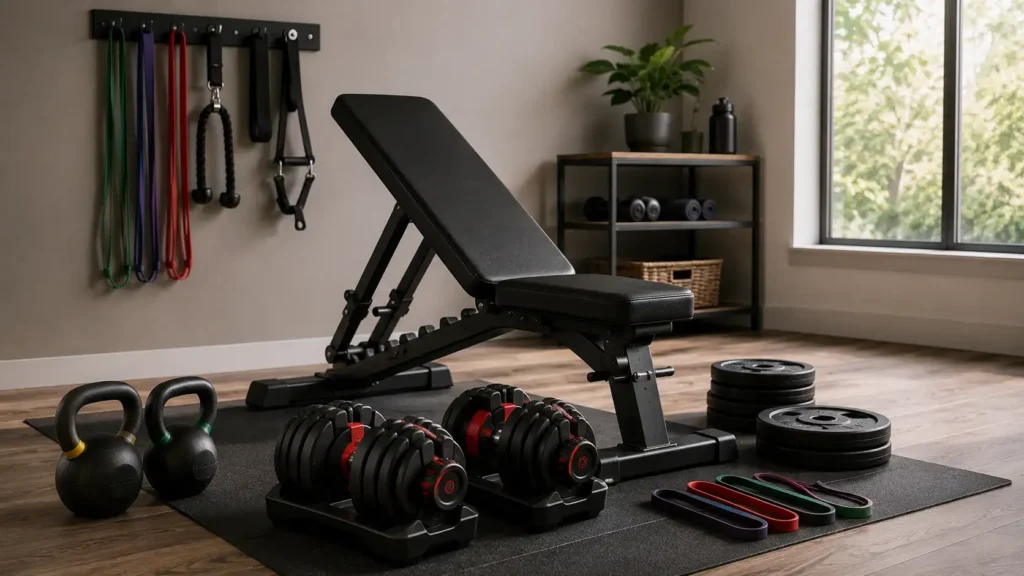
Adjustable dumbbells solve the biggest space problem in strength training: fitting a full weight range into one compact tool. Instead of ten pairs of fixed dumbbells lining a wall, one adjustable set can typically cover 5 to 50 pounds per hand.
They work for presses, rows, lunges, curls, and shoulder work, which makes them one of the highest value purchases for a small space lifter. Look for a quick change mechanism, since fumbling with pins or dials mid workout breaks momentum fast.
Resistance Bands
Resistance bands are the most portable and budget friendly strength tool available. A set typically costs under $50, weighs almost nothing, and provides multiple resistance levels for strength work, mobility, and warm ups alike.
Bands are especially useful for apartment dwellers, frequent travelers, or anyone easing into training after time off. They also pair well with dumbbells later, adding variable resistance to presses and squats.
Barbell and Weight Plates
A barbell with plates unlocks true progressive overload, meaning you can add small, precise weight increases over time. This matters once bodyweight and dumbbell work stops feeling challenging, usually a few months into consistent training.
A basic barbell and plate set runs roughly $200 to $300 and supports squats, deadlifts, presses, and rows, the compound lifts most training programs are built around.
Adjustable Bench
An adjustable bench expands what your dumbbells and barbell can do. Incline, decline, and flat positions open up chest presses, rows, step ups, and core work that floor training cannot replicate.
Buy a bench once you are already using dumbbells regularly and want more pressing and rowing variety, not before. It solves a specific limitation rather than adding equipment for its own sake.
Home Gym Essentials for Cardio and Conditioning
Cardio does not require a machine room. A few smart, low cost tools can build real conditioning capacity without eating up your entire budget or floor space.
Practical guidance: if budget or space is tight, start with a jump rope and bodyweight conditioning circuits, such as squats, mountain climbers, and burpees. Add a machine only once you know you will use it several times a week, not just in January.
Jump Rope
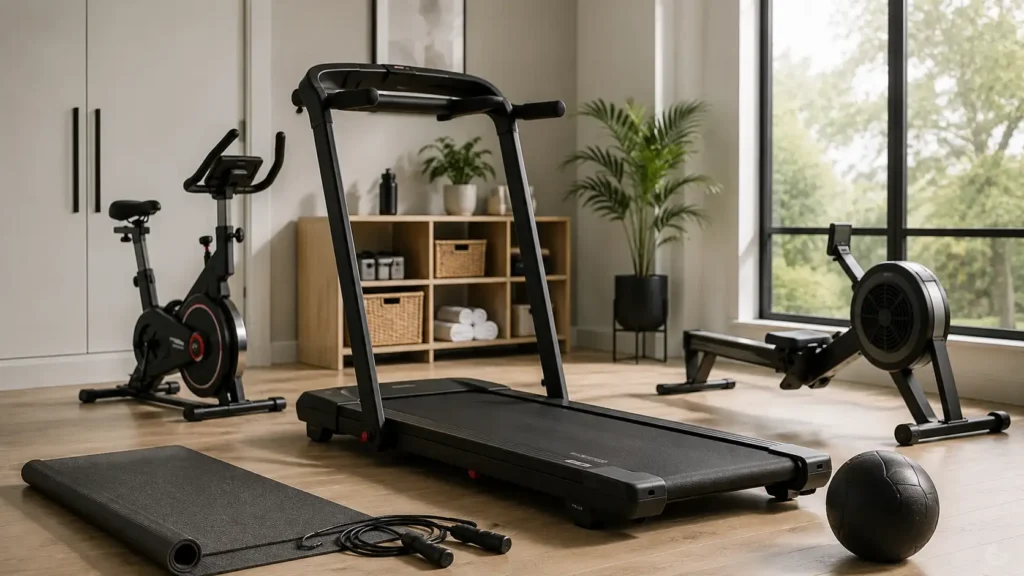
A jump rope is one of the most efficient conditioning tools money can buy. It costs under $20, takes up almost no storage space, and a focused 15 minute session can rival a much longer steady state cardio workout for calorie burn and heart rate response.
It also doubles as a warm up tool, raising body temperature and priming coordination before a strength session. Few pieces of equipment offer that much return for that little investment.
Compact Cardio Machines
For those who want equipment based cardio, compact options like a folding treadmill, an air bike, or a rowing machine bring commercial gym style training home. These cost more, usually $300 to $1,000 or more, and need dedicated floor space.
Choose based on your joints and preferences rather than trends. Someone with knee sensitivity may prefer rowing or cycling over running, while someone who dislikes low impact motion may find an air bike more engaging.
Flooring, Safety, and Support Equipment
Flooring is easy to overlook, but it is one of the highest value purchases in any home gym. The right flooring protects your joints, protects the floor underneath it, and reduces noise, which matters if you share walls or floors with neighbors.
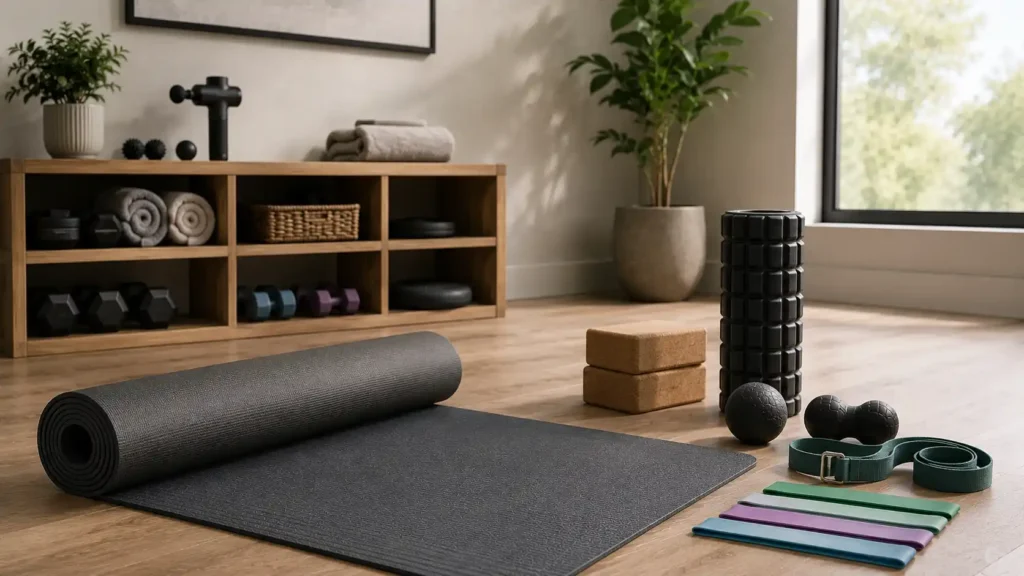
Interlocking rubber or foam tiles are the most common choice for home setups. They typically cost $50 to $150 for a room sized area, cushion dropped weights, and provide better traction than bare concrete, hardwood, or carpet. Concrete in particular is unforgiving on joints during high impact movement, so a mat is not optional if that is your base surface.
Beyond flooring, a few safety and support items round out a well built home gym:
- Weightlifting collars: keep plates locked onto a barbell during heavier lifts
- A spotter arm or safety pins: useful once bench pressing without a training partner
- A yoga or exercise mat: separate from gym flooring, used for stretching, core work, and mobility
- A foam roller: helps with recovery and reduces soreness between sessions
A 2026 guide to beginner setups noted that skipping large machines is often the better decision early on, since smaller, safety focused equipment keeps a setup simpler and easier to adjust as training habits change. Safety gear rarely feels exciting to buy, but it is what allows you to train heavier and longer without setbacks.
Storage and Organization Essentials
A home gym without a storage plan quickly turns into a hazard. Dumbbells left on the floor, bands tangled in a drawer, and plates leaning against a wall all create trip risks and make workouts harder to start, since digging for equipment is its own small barrier to consistency.
A few simple options solve most storage needs:
- A dumbbell rack or tray: keeps adjustable dumbbells off the floor and easy to grab
- A wall mounted rack: stores resistance bands, jump ropes, and mats without using floor space
- A vertical plate rack: organizes weight plates by size, which also makes loading a barbell faster
- A storage basket or shelf: catches smaller items like grips, chalk, or wraps that otherwise clutter the room
Vertical storage is usually the better choice for small rooms, since it keeps the floor clear for actual training. A gym that takes ten minutes to tidy before every session loses out to one where everything has an obvious place.
Storage is not glamorous, but it directly affects whether a home gym gets used consistently. The setups that last are usually the ones that stay easy to walk into and start training immediately.
Home Gym Kits vs. Buying Piece by Piece
Once you know your basic needs, you will face a choice: buy a home gym set that is already assembled, or select each piece individually. Both approaches work, but they suit different situations.
Gym kits bundle dumbbells, bands, a mat, and sometimes a bench or storage rack into one purchase. The main advantage is convenience. Someone new to training does not need to research a dozen categories separately, and kits are often priced lower than buying the same items individually.
The tradeoff is flexibility. A kit might include a jump rope you never use while missing the resistance band tension you actually needed. If your goals are still undefined, that mismatch is common.
Buying piece by piece takes more research time but lets you match every purchase to a real need. This approach suits people who already know their main training goal, whether that is strength, general fitness, or rehab focused movement.
A practical middle ground: buy a small starter kit for the basics, such as bands and a mat, then add individual pieces like dumbbells or a bench once your routine reveals what you are missing. This avoids overbuying while still giving you a fast start.
Budget Breakdown: What to Spend at Each Stage
Home gym costs vary widely, but most people fall into one of three clear tiers based on training experience and goals. Knowing which tier fits you prevents both overspending and underbuying.
A useful rule: only move up a tier once your current equipment is limiting your training, not simply because a bigger setup looks appealing. A home gym built in $500 layers over a year almost always gets used more than a $2,000 gym bought all at once and left half explored.
Beginner tier: $150 to $500
This covers flooring tiles, a set of resistance bands, an exercise mat, and either an adjustable dumbbell set or a pair of kettlebells. It is enough to run a complete full body program for several months.
Intermediate tier: $500 to $1,500
Once consistency is established, this tier adds a barbell with plates, an adjustable bench, and possibly a pull up bar or basic storage rack. This range supports the core compound lifts most strength programs are built around.
Advanced tier: $1,500 to $3,000+
This tier includes a power rack, a compact cardio machine, and specialty tools like a spotter arm or a rowing machine. It suits people who have trained consistently for a year or more and know exactly what limitations they are solving for.
Common Home Gym Mistakes to Avoid
Even well intentioned buyers make the same handful of mistakes when building a home gym. Knowing them in advance can save both money and frustration.
- Buying too much too soon. A rack, bench, barbell, and cardio machine bought in the first week often sit half used while a training habit is still forming. Equipment does not build consistency. Consistency justifies more equipment.
- Skipping flooring. Bare concrete or hardwood under dropped weights damages both joints and floors. Flooring is inexpensive relative to the protection it provides, which makes skipping it a costly shortcut.
- Ignoring space measurements. A rack that is too wide for a doorway or a bench that blocks a walking path turns a gym into a source of daily friction rather than a place people want to train.
- Copying someone else’s setup. A social media influencer’s garage gym reflects their goals and space, not necessarily yours. Matching equipment to your own training goal matters more than matching a trend.
- Overlooking storage. Equipment left on the floor creates trip hazards and makes starting a workout feel like a chore, which quietly reduces how often the space actually gets used.
Avoiding these mistakes matters more than any single equipment purchase. A simple setup that gets used five days a week outperforms an elaborate one that gets used once.
Frequently Asked Questions
What equipment do I really need for a home gym?
Most beginners need supportive flooring, a resistance tool such as adjustable dumbbells or bands, a way to train the full body, basic recovery gear, and simple storage. This covers legs, back, chest, shoulders, and core without requiring machines or a large room.
How much does it cost to build a basic home gym?
A functional beginner setup typically costs $150 to $500. That budget covers flooring tiles, resistance bands, an exercise mat, and either adjustable dumbbells or kettlebells, enough to run a complete training program for several months.
What is the best flooring for a home gym?
Interlocking rubber or foam tiles work best for most home gyms. They cushion dropped weights, protect the surface underneath, reduce noise, and improve traction compared to bare concrete, hardwood, or carpet.
Can I build an effective home gym in a small apartment?
Yes. A functional setup needs roughly 50 to 150 square feet. Adjustable dumbbells, resistance bands, a mat, and vertical storage all fit well in spare bedrooms, closets, or apartment corners without requiring a dedicated large room.
Are resistance bands as effective as weights?
Resistance bands provide variable, continuous tension rather than fixed weight, which makes them effective for strength, mobility, and warm ups. They are not a full replacement for heavy loading but complement dumbbells and barbells well.
What is the difference between a home gym kit and buying equipment separately?
Kits bundle several items into one convenient, often lower cost purchase, ideal for undefined goals. Buying piece by piece takes more research but lets every purchase match a specific, known training need.
How much space do I need for a home gym?
Most functional home gyms fit in 50 to 150 square feet. The exact amount depends on equipment choices, though ceiling height and doorway width matter as much as raw floor area for larger items.
What home gym equipment is best for beginners on a tight budget?
A jump rope, resistance bands, an exercise mat, and bodyweight training cover most beginner needs for under $100 combined. This setup supports strength, conditioning, and mobility without requiring a large upfront investment.
Do I need a bench for a home gym?
Not immediately. A bench expands pressing, rowing, and step up variations once dumbbells are already part of a regular routine. Add it when floor based training starts limiting exercise variety, not before.
How do I avoid overbuying home gym equipment?
Start with a small core setup, train consistently for several weeks, then add equipment only to solve a specific limitation in your current routine. Letting actual training reveal gaps prevents wasted purchases.
Conclusion
Building a home gym does not require guesswork or a big upfront investment. The real home gym essentials, supportive flooring, a resistance tool, a way to train your whole body, and simple storage, cover far more training than most people expect.
Start small, measure your space, and let consistency guide your next purchase rather than trends or influencer setups. A modest gym used five days a week will always outperform an elaborate one gathering dust in the corner.
As home training tools and space efficient equipment keep improving through 2026, the smartest approach remains the same: build in layers, solve real limitations, and invest only where your training actually demands it. Your home gym should grow with you, not ahead of you.