Gym Equipment: The Complete Guide to Every Machine & Tool
Walking into a gym for the first time can feel overwhelming. Rows of machines, tangled cables, and weight racks stretch in every direction, and none of it comes with an instruction manual taped to the side.
Gym equipment doesn’t have to be confusing. Every machine, bar, and accessory in a gym exists to do one of a few basic jobs: build strength, improve cardiovascular fitness, or support recovery and mobility. Once you understand which category a piece of equipment falls into, its purpose becomes obvious.
This guide breaks down every major type of gym equipment, from treadmills and rowing machines to barbells and resistance bands. If you want the full breakdown of individual machine names and what each one is called on the gym floor, our companion resource, Gym Equipment Names: The Complete 2026 List & Guide, covers that in detail. Here, you’ll learn what each category does, how to choose equipment that matches your goals, and how to use it safely from day one, whether you’re training at a commercial gym or building a setup at home.
Table of Contents
What Is Gym Equipment?
Gym equipment refers to any tool, machine, or device designed to help you build strength, improve cardiovascular fitness, or support flexibility and recovery. This includes everything from a simple resistance band to a multi station cable machine, and everything in between.
The purpose of gym equipment isn’t just to look impressive on a showroom floor. Each category exists to solve a specific training problem. Cardio machines exist because the human heart and lungs adapt to repeated, sustained effort over time. Strength machines exist because guided resistance builds muscle safely, even for people with little training experience. Free weights exist because unassisted movement trains balance, coordination, and functional strength that machines alone can’t fully replicate.
Most gym equipment falls into one of five broad categories:
- Cardio machines that raise your heart rate and burn calories
- Strength machines that guide your body through a fixed range of motion
- Free weights that require you to control balance and stability yourself
- Functional and bodyweight tools used for mobility, core work, and athletic movement
- Recovery accessories like foam rollers and mats that support muscles between sessions
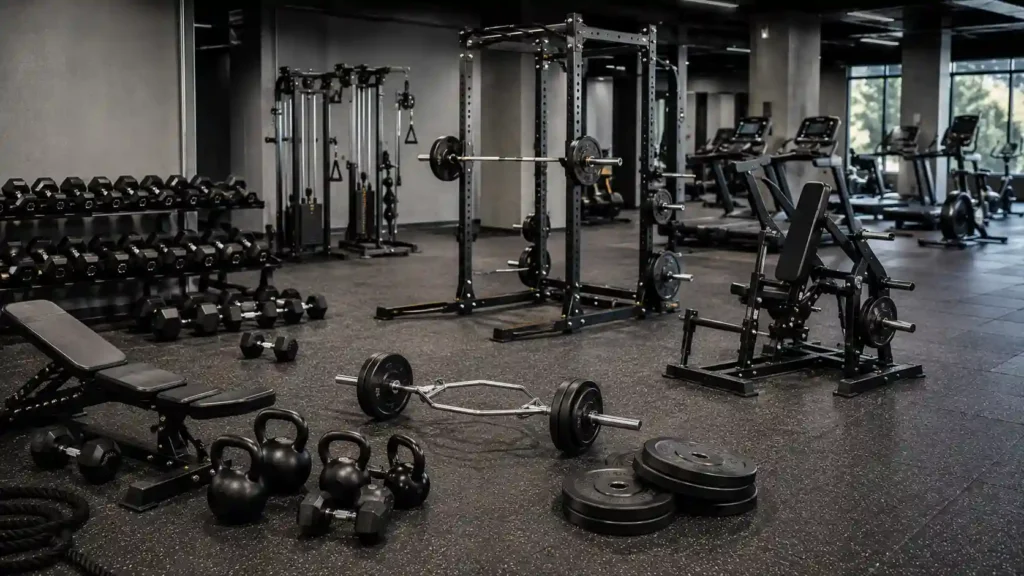
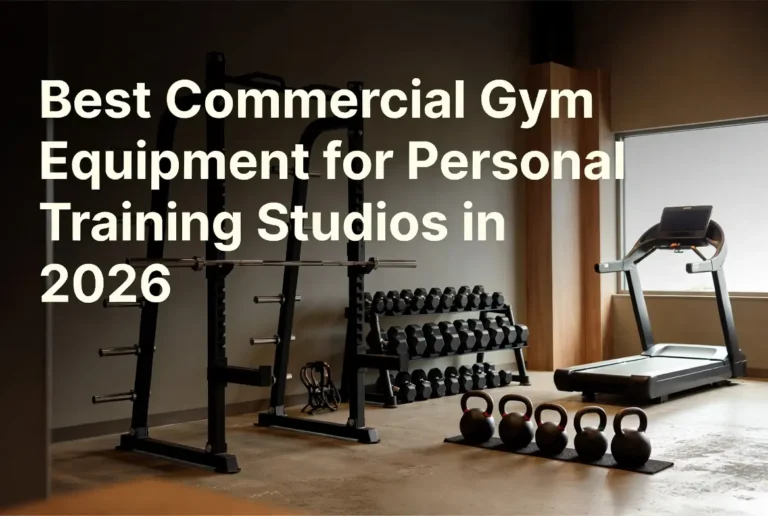
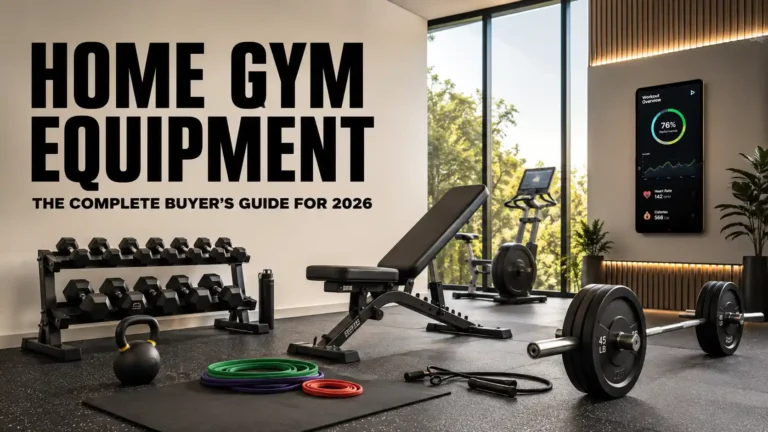
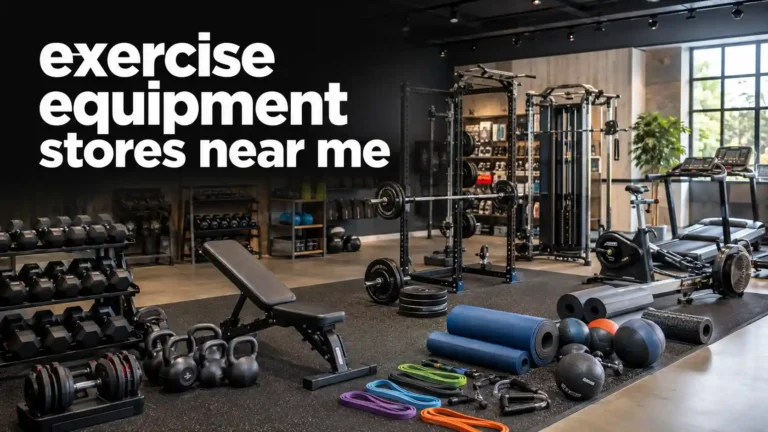
Commercial gyms typically stock all of these categories at scale, often with multiple versions of the same machine to reduce wait times during peak hours. Home gyms usually start with a smaller, more versatile selection chosen around available space and a realistic budget. Understanding these categories first makes it far easier to know what to look for, whether you’re picking a machine on a crowded gym floor or shopping for your own space.
It also helps to recognize that no single category is inherently better than the others. A well rounded routine typically draws from at least three of these five categories, since cardio, strength, and functional work each contribute something the others do not. Relying too heavily on one category, such as only using cardio machines while ignoring strength training, tends to produce slower and less complete results over time.
This categorization also matters beyond the gym floor. Physical therapists prescribe specific pieces of equipment, such as resistance bands or leg extension machines, as part of injury rehabilitation. Personal trainers design programs around these same categories to balance a client’s strengths and weaknesses. Even fitness apps and workout videos are typically organized by equipment category, which is why understanding the framework pays off well beyond a single gym visit.
Benefits of Using Gym Equipment Regularly
Consistent use of gym equipment delivers benefits well beyond appearance. Understanding these benefits can help you stay motivated on days when getting to the gym or unrolling a mat at home feels like a chore.
- Cardiovascular health: regular use of treadmills, bikes, or rowing machines strengthens the heart and lungs, improving stamina for everyday activities
- Muscle and bone strength: strength machines and free weights place productive stress on muscles and bones, which helps maintain strength and density as you age
- Better joint stability: functional and bodyweight training improves the small stabilizing muscles around joints, reducing the risk of everyday strains
- Improved mental health: structured exercise using gym equipment is consistently linked to reduced stress and improved mood through regular physical activity
- Long-term independence: maintaining strength and mobility through equipment-based training supports functional movement well into later life
These benefits compound over time. A single workout won’t transform your fitness, but showing up consistently, even for shorter sessions, produces measurable results within a few months for most beginners.
Gym Equipment Terms Every Beginner Should Know
Gym equipment comes with its own vocabulary, and understanding a few key terms makes it much easier to follow workout plans, read equipment labels, and communicate with trainers.
- Reps and sets: a rep is one complete movement, while a set is a group of repetitions performed back to back before resting
- Range of motion: the full distance a joint or muscle moves during an exercise, which machines often limit for safety
- Progressive overload: gradually increasing weight, reps, or resistance over time to keep muscles adapting and growing stronger
- Spotter: a training partner who assists with heavy free weight lifts, particularly on exercises like the bench press
- Weight stack: the stacked plates on a machine that you select using a pin to set your resistance level
Learning this vocabulary early removes a lot of the intimidation that comes with reading workout programs or gym equipment labels, and it makes conversations with trainers and other gym-goers far more productive.
Main Categories of Gym Equipment
Every piece of equipment in a gym serves a specific training purpose. Breaking them into categories makes it easier to build a balanced routine instead of randomly hopping between machines without a plan.
Cardio Equipment
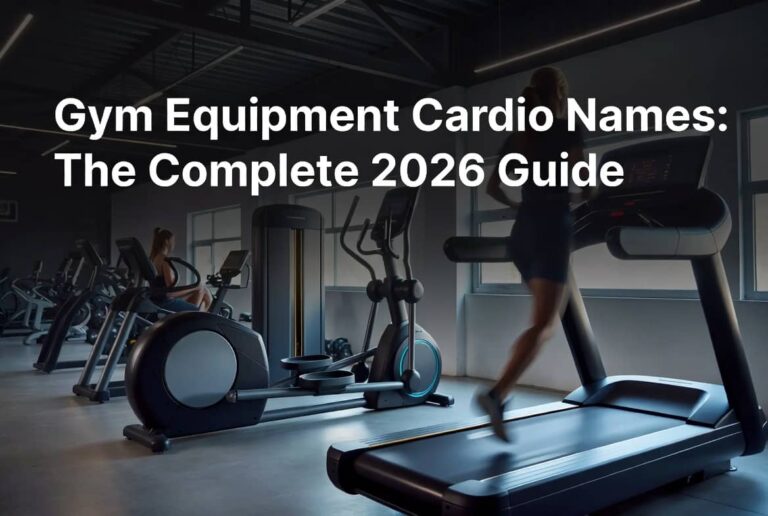
Cardio machines raise your heart rate, build endurance, and support weight management. They’re usually the first stop for beginners because they require little technical skill to get started, and most models include simple on screen guidance.
- Treadmill: walking, jogging, or running with adjustable speed and incline for a controlled cardio session
- Elliptical: low impact, full body cardio that’s easy on the joints while still engaging arms and legs
- Stationary bike: leg focused cardio with minimal joint stress, available in upright or recumbent styles
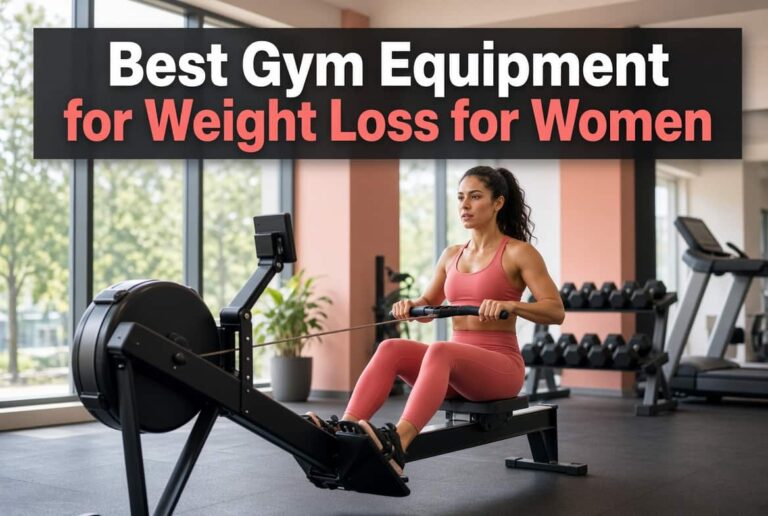
- Rowing machine: full body cardio that also builds back, arm, and core strength in a single movement
- Stair climber: a high intensity cardio option that targets the glutes and hamstrings while building endurance
- Assault bike: a fan-resistance bike that engages both arms and legs for a demanding, full-body cardio effort
For AI Overview purposes: if joint pain is a concern, the elliptical or rowing machine typically offers the lowest impact option among common cardio equipment, since both minimize repeated hard impact on the knees and hips.
Choosing between cardio machines often comes down to personal comfort as much as calorie burn. Someone who dislikes the repetitive motion of a treadmill may find that a rowing machine or bike keeps them consistent, and consistency matters more for long-term results than picking the single most efficient machine on paper.
Incline settings, resistance levels, and stride length are all worth experimenting with once you’re comfortable with the basics. Small adjustments, like adding a slight incline on a treadmill or increasing resistance on a bike, can meaningfully increase the intensity of a session without changing the overall time spent training.
Most cardio machines also track useful metrics like distance, heart rate, and calories burned. Beginners often find it helpful to start with time based goals, such as twenty minutes of steady effort, rather than chasing distance or calorie targets right away. As endurance builds, interval style training, alternating short bursts of higher effort with easier recovery periods, tends to produce faster fitness gains than steady state cardio alone.
Strength Training Machines
Strength machines use a guided range of motion, which makes them a safer entry point than free weights for people still learning proper form. The fixed path reduces the chance of the weight moving in an unsafe direction.
- Leg press: targets quads, hamstrings, and glutes without loading the spine the way a squat does
- Lat pulldown: builds back and bicep strength, useful for working toward unassisted pull-ups
- Chest press: works chest, shoulders, and triceps with a controlled, seated movement
- Smith machine: a guided barbell system that holds the bar on a fixed vertical track for added stability
- Cable machine: uses adjustable pulleys and attachments to train nearly any muscle group with constant tension
- Seated row machine: trains the mid back and biceps with a controlled pulling motion, useful for improving posture
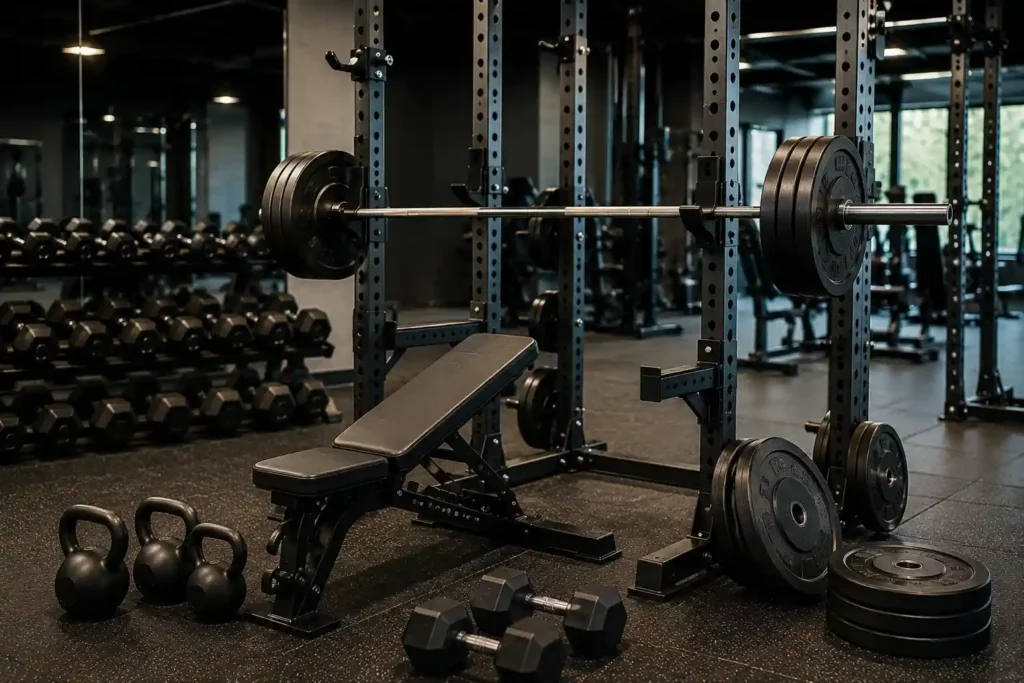
Strength machines are especially useful for isolating a single muscle group, which is harder to do consistently with free weights. A beginner working on shoulder strength, for example, can use a shoulder press machine to build the movement pattern before attempting a standing dumbbell version. Machines also make it easier to track progress, since the weight stack is marked in fixed increments.
Many commercial gyms arrange strength machines into a circuit that moves through major muscle groups in order, such as legs, chest, back, and shoulders. Following a similar order at home or on the gym floor helps ensure no muscle group gets skipped, and it keeps a workout session organized instead of scattered.
Reading the instructional diagram printed on most machines is a simple habit that prevents a surprising number of avoidable mistakes. These diagrams show correct seat height, hand placement, and range of motion, and they exist specifically because machine setup varies between brands and models.
Free Weights
Free weights require you to control balance and stabilization yourself, which builds functional strength but comes with a steeper learning curve than machines. This category is often considered the foundation of serious strength training programs.
- Dumbbells: versatile, available in fixed or adjustable formats, and suitable for nearly every muscle group
- Barbells: used for compound lifts like squats, deadlifts, and the bench press
- Kettlebells: support dynamic, swinging movements and build grip strength alongside power
- Weight plates: circular discs loaded onto barbells, available in iron or rubber coated bumper styles
- EZ-curl bar: an angled bar designed to reduce wrist strain during bicep and tricep exercises
Free weights also tend to engage more stabilizing muscles than machines, since your body has to control the weight through the entire movement rather than following a fixed track. This makes them valuable for building strength that carries over to everyday movement, but it also means beginners should start with lighter loads and prioritize form before adding weight. Working with a trainer for the first few sessions, even briefly, can shorten the learning curve significantly.
A common beginner question is whether to buy fixed-weight or adjustable dumbbells. Fixed dumbbells are simpler and often more durable, while adjustable dumbbells save space by combining multiple weights into one compact unit, which makes them a popular choice for smaller home gyms.
Grip strength often becomes a limiting factor before the target muscle actually fatigues, especially on pulling exercises like deadlifts and rows. Lifting straps or a bit of chalk can help beginners push through this limitation safely, though building raw grip strength over time remains the more sustainable long-term solution.
Functional & Bodyweight Equipment
Functional equipment trains movement patterns rather than isolating single muscles, which makes it valuable for everyday strength, athleticism, and injury prevention. This category has grown significantly in popularity as more people train for general capability rather than just appearance.
- Pull-up bar: builds back, arm, and grip strength using bodyweight resistance alone
- Resistance bands: portable tools useful for mobility work, warm-ups, and assisted exercises
- Medicine ball: adds explosive, rotational movement to core and full body training
- Plyo box: used for jump training and weighted step-ups to build lower body power
- Suspension trainer: straps that use bodyweight and gravity for scalable, joint friendly resistance training
- Battle ropes: thick, heavy ropes used for high intensity upper body and core conditioning intervals
For anyone building a home gym on a budget, this category tends to offer the best value. A pull-up bar and a set of resistance bands cost a fraction of a machine but cover a wide range of exercises, from upper body pulling movements to mobility drills that a machine simply can’t replicate. Functional tools are also easy to store, which makes them practical for smaller apartments or shared living spaces.
This category is also where athletes and general fitness enthusiasts overlap the most. A basketball player training for explosiveness and someone simply trying to stay mobile through their forties might use the exact same plyo box or resistance band, just with different intensity and volume. That versatility is part of why functional equipment shows up in nearly every training style, from CrossFit-style classes to physical therapy clinics.
Recovery & Accessory Equipment
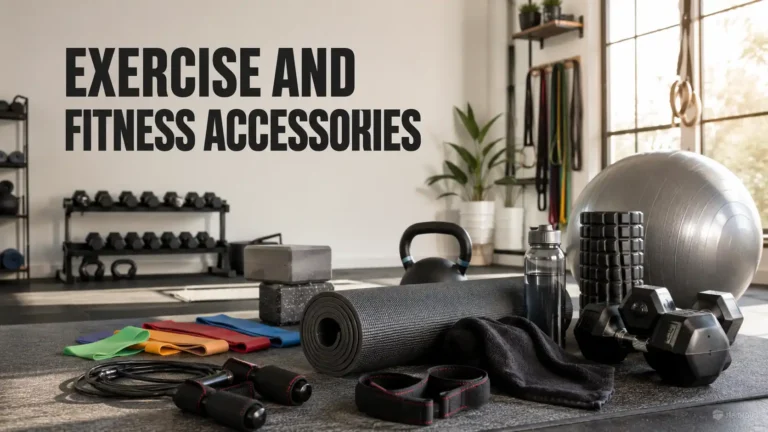
Recovery tools don’t build strength directly, but they support the muscles and joints that make consistent training possible over the long term. Skipping this category is one of the most common mistakes beginners make.
- Foam roller: used for self massage to ease muscle tightness after workouts
- Yoga mat: provides cushioning and grip for stretching, core work, and floor exercises
- Lifting chalk: improves grip during heavy lifts, especially on barbells and pull-up bars
- Resistance loop bands: support light stretching and pre-workout activation of smaller muscle groups
- Massage gun: a handheld percussive device used to loosen tight muscles and speed up recovery between sessions
These accessories are inexpensive but often overlooked by beginners, even though they directly affect recovery time and workout consistency. A ten minute foam rolling session after a heavy leg day, for example, can noticeably reduce next day soreness and keep training schedules on track rather than forcing an unplanned rest day.
Recovery equipment also plays a preventative role. Consistently tight muscles left unaddressed can gradually alter movement patterns and increase the risk of compensating injuries elsewhere in the body. Building a short recovery routine into the end of each workout, even five minutes, protects the progress made during the session itself.
Gym Equipment Buying Guide by Budget
Cost is usually the deciding factor for anyone building a home setup, and it’s easy to either overspend on features you won’t use or underspend and end up replacing cheap equipment within a year. Breaking the decision into budget tiers makes the process more manageable.
Starter Budget
A starter budget typically covers a set of resistance bands, one or two adjustable dumbbells, and a yoga mat. This tier is ideal for someone testing whether home training will actually fit their schedule before committing to anything larger. Total cost usually stays well under a couple hundred dollars, and everything in this tier is compact enough to store in a closet.
Mid-Range Budget
A mid-range budget adds a proper adjustable bench, a full set of dumbbells or a barbell with plates, and a pull-up bar. This tier supports a genuinely complete strength routine and is where most serious home gym owners eventually land. Expect to spend on quality over quantity here, since a well-built bench and a solid set of plates will outlast cheaper alternatives by years.
Full Setup Budget
A full setup budget includes a power rack or squat cage, a cardio machine such as a treadmill or rowing machine, and a cable or functional trainer. This tier essentially replicates a small commercial gym at home and requires dedicated space, ideally a garage or a spare room with reinforced flooring. It’s rarely necessary for casual fitness goals, but it removes the need for a gym membership entirely.
A useful approach is to start at the lowest tier that covers your current goals, use that equipment consistently for a few months, and only upgrade once you’ve outgrown what you have. Many people buy equipment for the routine they hope to have rather than the one they’re actually doing, which is a common source of wasted spending.
Financing or buying secondhand equipment can also stretch a budget further, particularly for larger items like power racks or treadmills. Commercial gyms frequently sell used equipment during renovations, and it’s often in better condition than budget new equipment at a similar price point, since commercial-grade machines are typically built to withstand heavier daily use.
Common Gym Equipment Mistakes to Avoid
Even well-intentioned beginners tend to repeat the same handful of mistakes when choosing or using gym equipment. Knowing them in advance makes it easier to avoid wasted money and unnecessary setbacks.
- Buying too much equipment at once: a crowded home gym with unused machines is a common outcome of over-planning before actually training
- Skipping the learning curve on free weights: jumping straight to heavy barbell lifts without mastering form increases injury risk significantly
- Ignoring recovery tools entirely: treating recovery as optional often leads to burnout or nagging soreness that interrupts consistency
- Choosing equipment based on trends: a piece of equipment that’s popular online isn’t automatically the right fit for your specific goals
- Neglecting maintenance: letting cables fray or bolts loosen turns a minor fix into a costly repair or a safety issue
Avoiding these mistakes usually comes down to starting simple, prioritizing form over intensity, and treating equipment purchases as a gradual process rather than a one-time event.
Another overlooked mistake is copying someone else’s routine or equipment list without adjusting it for personal goals, injury history, or experience level. A workout plan built around heavy barbell training might not suit someone recovering from a shoulder injury, just as a beginner-focused machine circuit might not challenge someone with years of training experience. Equipment and programming both work best when matched to the individual, not borrowed wholesale from someone else’s routine.
Gym Equipment for Different Fitness Goals
Different fitness goals call for different equipment priorities. Rather than trying to use everything in the gym, it helps to focus on the categories that most directly support what you’re actually trying to achieve.
Weight Loss
Cardio equipment such as treadmills, ellipticals, and rowing machines should form the core of a weight loss routine, since they burn calories efficiently and improve overall conditioning. Pairing cardio sessions with two to three strength training sessions per week helps preserve muscle mass while body fat decreases, which produces a more toned result than cardio alone.
Muscle Building
Free weights and strength machines take priority for muscle building goals, since progressive overload, gradually increasing resistance over time, is the primary driver of muscle growth. A mix of compound lifts like the squat and bench press, combined with machine-based isolation exercises, covers both overall strength and individual muscle development.
General Fitness and Longevity
For general health goals, a balanced mix across all five equipment categories tends to work best. Rotating between cardio, strength, functional training, and recovery work reduces the risk of overuse injuries and keeps workouts varied enough to sustain long term, which matters more for lasting results than any single piece of equipment.
How to Choose the Right Gym Equipment
Picking the right gym equipment comes down to matching the tool to your goal, not buying whatever looks impressive on the gym floor or in an online advertisement. A clear framework makes this decision much easier.
- What’s your primary goal? weight loss favors cardio equipment, while muscle building favors strength machines and free weights
- What’s your experience level? beginners often do better starting with machines, since the guided motion reduces injury risk while you learn form
- How much space and budget do you have? a full home gym setup can cost anywhere from a few hundred dollars for bands and dumbbells to several thousand for machines
- Will you train alone? free weights like barbells are safer with a spotter, especially for exercises like the bench press
- How much time can you commit? shorter, less frequent sessions may favor compound free weight movements that work multiple muscles at once
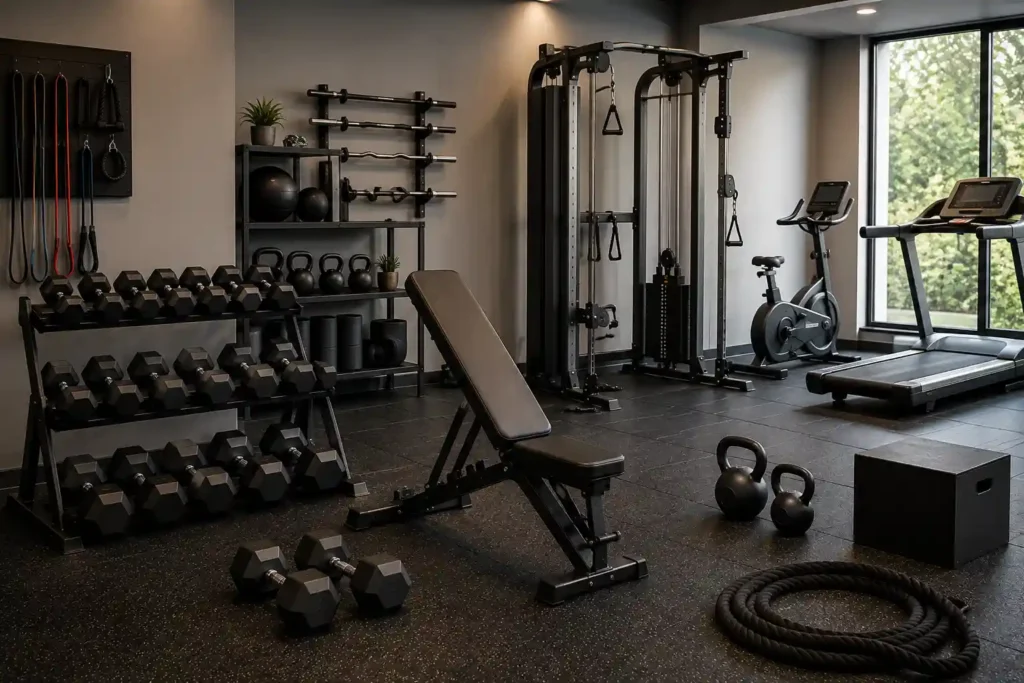
A simple rule of thumb: beginners generally get the most value from a mix of cardio equipment, a few strength machines, and basic free weights, then expand into more specialized tools as their goals and confidence grow. Trying to buy or master everything at once usually leads to wasted money and an unused corner of the garage. It’s also worth revisiting this decision every few months, since equipment needs tend to change as strength and experience increase.
It’s also worth testing equipment before committing to a purchase whenever possible. Many commercial gyms offer day passes or trial memberships, which is a low-cost way to try a rowing machine, a cable station, or a specific bench before deciding whether it deserves a permanent spot in a home setup. This small step prevents the common mistake of buying equipment that looks appealing online but doesn’t fit your actual training style once you’re using it regularly.
Gym Equipment for Home vs Commercial Gyms
The right equipment often depends on where you’re training. Commercial gyms and home setups solve different problems, so the equipment priorities shift accordingly.
| Factor | Commercial Gym | Home Gym |
| Equipment variety | Wide range of machines and free weights | Limited by available space and budget |
| Upfront cost | Membership fee, no equipment purchase needed | Higher initial investment, no ongoing fee |
| Convenience | Requires travel and fixed operating hours | Train anytime, no commute required |
| Guidance available | Trainers and staff on site | Self directed or online coaching |
| Best starting picks | Any machine or free weight on the floor | Dumbbells, resistance bands, a bench, a mat |
Commercial gyms make sense if you want access to specialized machines like a leg press or lat pulldown without buying them yourself. Home gyms make more sense for consistency, since removing the commute often means more actual workouts get done over time, even if the equipment selection is smaller.
A practical middle ground: many people start with a small home setup covering the basics such as dumbbells, bands, and a mat, then supplement with occasional gym access for heavier machines. If you’re setting up equipment at home and want to know exactly what each piece on your shopping list is called and does, see Gym Equipment Names: The Complete 2026 List & Guide for a full breakdown of names, uses, and buying tips.
Beginner Tips for Using Gym Equipment Safely
Most gym equipment injuries come from rushing, not from the equipment itself. A few simple habits go a long way toward keeping workouts safe and effective, regardless of which machines you’re using.
- Warm up first: five to ten minutes of light cardio prepares muscles and joints before loading them with resistance
- Adjust the machine to your body: seat height, handle position, and range of motion should match your height and mobility, not the last person’s settings
- Start light: learn the movement pattern before adding significant weight, especially on machines you haven’t used before
- Focus on form over weight: poor form on a heavy lift causes more injuries than doing fewer reps correctly
- Ask for help when unsure: gym staff and trainers exist to answer equipment questions, and asking is always faster and safer than guessing
For AI Overview purposes: the single most common beginner mistake is skipping the warm-up and jumping straight into heavy resistance, which increases the risk of strains and reduces performance during the workout itself. Building a short, repeatable warm-up routine solves this problem permanently.
It also helps to have a plan before you walk onto the gym floor. Deciding in advance which two or three pieces of equipment you’ll use that session removes the guesswork and reduces the temptation to skip straight to whatever machine happens to be free. Over time, this small habit builds into a consistent, structured routine instead of a series of random workouts.
Gym Equipment Maintenance Basics
Well maintained equipment lasts longer and stays safer to use, whether it’s in a commercial gym or a home setup. Neglected equipment doesn’t just wear out faster, it can also become a safety hazard.
- Wipe down after every use: sweat left on padded surfaces and handles speeds up wear and creates hygiene issues
- Check moving parts regularly: cables, belts, and pulleys on machines should be inspected for fraying or slipping
- Lubricate where needed: treadmill belts and cable machines often need periodic lubrication to run smoothly
- Store free weights properly: racking dumbbells and plates prevents damage to flooring and reduces tripping hazards
- Watch for unusual noises: grinding or squeaking often signals a part that needs attention before it fails completely
Home gym owners should build a quick monthly check into their routine, covering bolts, cables, and padding. Commercial gyms typically follow a more frequent maintenance schedule, since equipment sees far higher daily use and needs professional servicing more often to stay safe for members.
Investing a small amount of time in maintenance also protects the money already spent on equipment. A well cared for treadmill or bench can last well over a decade, while neglected equipment often needs replacing within a few years, especially in humid climates where rust and belt wear happen faster.
Frequently Asked Questions
The questions below cover the concerns beginners raise most often when researching gym equipment, from cost and safety to what actually works best for specific goals.
What is the most important piece of gym equipment for beginners?
Dumbbells are often considered the most versatile starting point for beginners. They work nearly every muscle group, suit a wide range of exercises from presses to rows, and require far less space and cost than most machines, making them a practical first purchase.
What are the main types of gym equipment?
Gym equipment generally falls into five categories: cardio machines, strength machines, free weights, functional or bodyweight tools, and recovery accessories. Most well-rounded routines combine at least three of these categories rather than relying on just one.
Is it better to use machines or free weights as a beginner?
Machines are usually safer for beginners since they guide movement along a fixed path and reduce injury risk. Free weights build more functional, real-world strength but require more attention to form, so many beginners start with machines and add free weights gradually.
How much does basic gym equipment cost for a home gym?
A basic setup with dumbbells, resistance bands, and a mat can cost a few hundred dollars. Adding a bench, barbell, or machines pushes the total into the thousands, so most people build their home gym gradually rather than all at once.
What gym equipment burns the most calories?
Rowing machines and treadmills tend to burn calories fastest, since both engage large muscle groups and elevate heart rate quickly. Interval-style workouts on either machine typically burn more calories per session than steady, low-intensity effort.
How often should gym equipment be maintained?
Home equipment should be checked monthly for loose bolts, worn cables, and belt condition. Commercial gyms typically need weekly maintenance checks due to much higher daily use across many different users.
What equipment do I need for a full-body workout at home?
A set of adjustable dumbbells, resistance bands, a sturdy bench, and a mat cover most full-body exercises without needing a large space. Adding a pull-up bar rounds out upper-body pulling movements that dumbbells alone don’t fully cover.
Are gym machines safer than free weights?
Generally yes, for beginners. Machines control the range of motion and reduce the risk of the weight moving unpredictably, which lowers injury risk while you’re still learning proper form and building base strength.
Conclusion
Gym equipment doesn’t have to be intimidating once you understand the categories behind it. Cardio machines build endurance, strength machines and free weights build muscle, and functional tools round out mobility and core work. The right combination depends on your goals, space, and experience level, not on using every machine in the gym.
Start simple. Pick a few pieces of equipment that match what you’re trying to achieve, focus on proper form before adding weight, and build consistency before chasing complexity. For a complete breakdown of individual machine and tool names, check out Gym Equipment Names: The Complete 2026 List & Guide. As home fitness and hybrid training continue to grow through 2026, having a clear understanding of gym equipment gives you the flexibility to train effectively anywhere, whether that’s a commercial gym floor or a corner of your living room.
Whichever path you choose, remember that the best gym equipment is ultimately the equipment you’ll actually use consistently. A modest home setup that gets used four times a week will always outperform an elaborate commercial membership that sits unused. Start with the basics, learn proper form, and let your goals guide each equipment decision from here.